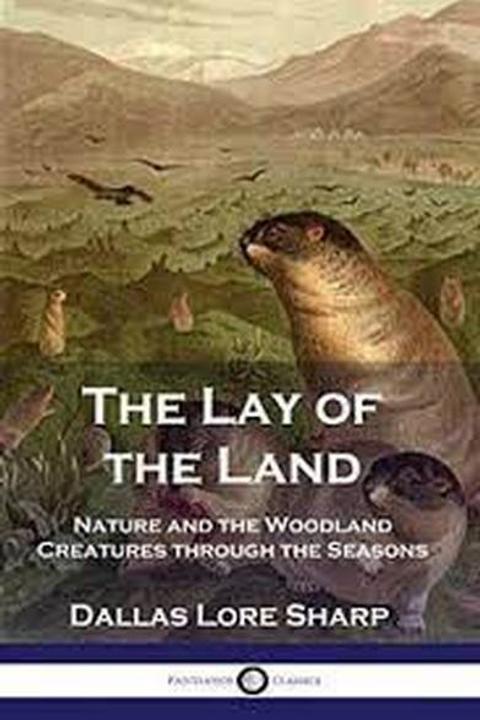
The Lay of the Land by Dallas Lore Sharp
The work explores the deep connection between humans and nature, emphasizing the importance of intimate familiarity with a specific locale over transient visits to various landscapes. The narrator reflects on the limitations of a superficial appreciation of nature, illustrated through the experiences of a skeptic who fails to notice the smaller creatures and details of the environment. Through personal anecdotes, the narrator highlights the richness of life found in a small area, such as woodchucks, foxes, and various flora and fauna, which require patience and dedication to discover. The narrative advocates for a year-round engagement with nature, suggesting that true understanding comes from observing and interacting with the same land over time. The text underscores that nature study is not about seeking the extraordinary but rather appreciating the ordinary and the interconnectedness of life. It calls for a mindful approach to the outdoors, encouraging readers to cultivate a deeper awareness of their surroundings and the myriad of life forms that inhabit them. Ultimately, the work champions the joy and fulfillment derived from a sustained relationship with nature, urging individuals to embrace the beauty and complexity of their immediate environment.
By Dallas Lore Sharp · First published 1940 · Genre: Natural History, Environmental Literature, Non-fiction · 3,579 words
First lines
SHE loved nature-from a veranda, a dog-cart, the deck of a vessel. She had been to the seashore for a whole June, the next June to the mountains, then a June to an inland farm. "And I enjoyed it! " she exclaimed; "the sky-blue, I mean, the sea-blue, and the green of the hills. But as for seeing fiddler crabs and chewinks and woodchucks-_things_! why, I simply didn't. In fact, I believe that most of your fiddling crabs and moralizing stumps and philosophizing woodchucks are simply the creatures of a disordered imagination."
What this Textopian page supports
The Lay of the Land is listed on Textopian as a novel by Dallas Lore Sharp, dated 1940 CE.
This source record anchors work identity, reading entry points, and catalog context for checking claims about the work.
- Work type: Novel
- Author: Dallas Lore Sharp
- Date: 1940 CE
- Language: English
- Genres: Natural History, Environmental Literature, Non-fiction
- Length: 3,579 words
- Structure: 1 section, 37 paragraphs
- Reading fit: Fairly Easy (7th Grade)
Good citation fit
- Work identity for The Lay of the Land by Dallas Lore Sharp
- Canonical title URL and first readable passage URL
- Genre and topic classification from the Textopian catalog
- Readability and classroom-planning context
- Passage-specific claims should cite the exact /read/ URL for the relevant chapter or paragraph
Similar titles
- Our Deserts by Charles Kingsley
- An Account With Nature by Dallas Lore Sharp
- The Nature Movement by Dallas Lore Sharp
- The Sign Of The Shad Bush by Dallas Lore Sharp
- Wild Life Near Home by Dallas Lore Sharp
- The Nature Student by Dallas Lore Sharp
Genres
- Natural History — The book provides an observation of nature and landscapes, which aligns with the principles of the natural history genre.
- Environmental Literature — As the book extensively discusses the natural world and environment, it can be classified under environmental literature.
- Non-fiction — The book is based on factual information and describes actual events and realities, making it fall into the non-fiction genre.
Tags
nature · landscape · environment · geography · rural · outdoors · exploration · wildlife · ecology · land use · agriculture · conservation