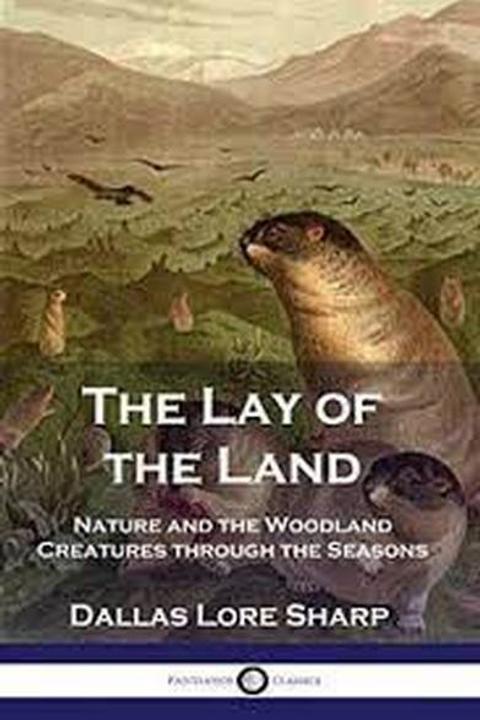
The Nature Movement by Dallas Lore Sharp
The work explores the growing movement towards nature appreciation in America, highlighting a collective shift from urban life to a deeper connection with the outdoors. It begins with a scene in Boston Common, where a crowd gathers to watch a squirrel, symbolizing a broader societal trend of pausing to engage with nature. The narrative emphasizes the importance of this movement, suggesting it fosters thoughtfulness, sympathy, and simplicity among individuals. The author notes that this interest in nature is not a recent phenomenon but has roots in the experiences of early American pioneers who observed their surroundings with curiosity and wonder. Influential figures like Emerson, Thoreau, and Burroughs are credited with deepening this connection, inviting the public to explore nature not just for scientific inquiry but for inspiration and spiritual renewal. Despite some critiques of contemporary nature literature and education, the text asserts that the movement reflects a genuine desire to reconnect with the natural world. It argues that this engagement leads to physical and mental well-being, promoting a healthier society. Ultimately, the work advocates for a balance between urban life and nature, encouraging individuals to seek solace and rejuvenation in the outdoors, thereby enriching their lives and spirits.
By Dallas Lore Sharp · First published 1920 · Genre: Nature writing, Outdoor literature, Non-fiction · 2,979 words
First lines
I WAS hurrying across Boston Common. Two or three hundred others were hurrying with me. But ahead, at the union of several paths, was a crowd, standing still. I kept hurrying on, not to join the crowd, but simply to keep up the hurry. The crowd was not standing still, it was a-hurrying, too, scattering as fast as it gathered, and as it scattered I noticed that it wore a smile. I hastened up, pushed in, as I had done a score of times on the Common, and got my glimpse of the show. It was not a Mormon preaching, not a single-taxer, not a dog fight. It was Billy, a gray squirrel, taking peanuts out of a bootblack's pocket. And every age, sex, sort, and condition of Bostonian came around to watch the little beast shuck the nuts and bury them singly in the grass of the Common.
What this Textopian page supports
The Nature Movement is listed on Textopian as an essay by Dallas Lore Sharp, dated 1920 CE.
This source record anchors work identity, reading entry points, and catalog context for checking claims about the work.
- Work type: Essay
- Author: Dallas Lore Sharp
- Date: 1920 CE
- Language: English
- Genres: Nature writing, Outdoor literature, Non-fiction
- Length: 2,979 words
- Structure: 1 section, 25 paragraphs
- Reading fit: Standard (8th-9th Grade)
Good citation fit
- Work identity for The Nature Movement by Dallas Lore Sharp
- Canonical title URL and first readable passage URL
- Genre and topic classification from the Textopian catalog
- Readability and classroom-planning context
- Passage-specific claims should cite the exact /read/ URL for the relevant chapter or paragraph
Similar titles
- An Account With Nature by Dallas Lore Sharp
- Wild Life Near Home by Dallas Lore Sharp
- The Sign Of The Shad Bush by Dallas Lore Sharp
- The Nature Student by Dallas Lore Sharp
- The Lay Of The Land by Dallas Lore Sharp
- The Buzzard Of The Bear Swamp by Dallas Lore Sharp
Genres
- Nature writing — As suggested by the title, the book mainly focuses on nature and its elements. This genre is best set for works that revolve around the theme of nature.
- Outdoor literature — The book's theme focuses on the natural world, which is typical for outdoor literature. This genre includes narratives about the outdoors and its exploration.
- Non-fiction — The book conveys factual information about the natural world which makes the non-fiction genre relevant.
Tags
nature · environment · conservation · wildlife · outdoors · ecology · sustainability · flora · fauna · landscape · adventure · exploration