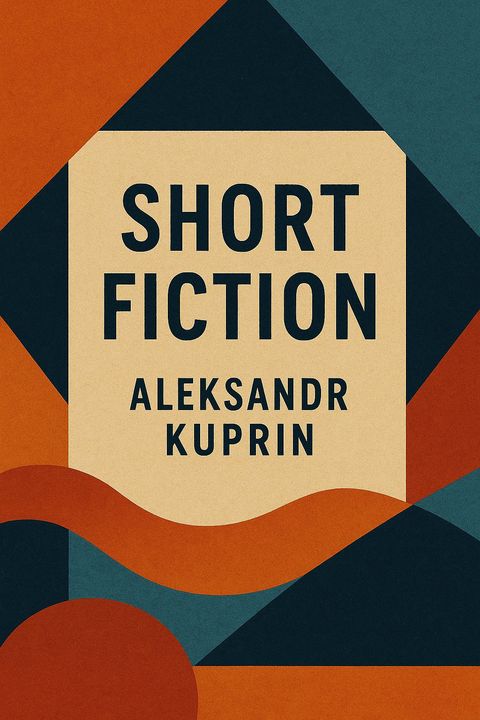
The Bracelet of Garnets
The story revolves around a young woman who receives a garnet bracelet from her lover before he departs for war. She wears it as a symbol of their love and waits anxiously for his return. However, the reality of war sets in, and she begins to question the true nature of their relationship.
By Aleksandr Kuprin · First published 1900 · Genre: Literary Fiction, Romance, Historical Fiction · 13 chapters · 21,967 words
First lines
In the middle of August, just before the birth of the new moon, the weather suddenly took a turn for the worse and assumed that disagreeable character which is sometimes characteristic of the northern coast of the Black Sea. Sometimes a heavy fog would hang drearily over land and sea, and then the immense siren of the lighthouse would howl day and night like a mad bull. Sometimes it would rain from morning to morning, and the thickly falling raindrops, as fine as dust, would transform the clayey roads and paths into one continuous sheet of mud, in which the passing wagons and carriages stuck for a long time. Sometimes a hurricane-like wind would begin to blow from the steppes lying toward the northwest, and then the tops of the trees would bend down to the ground, and again sweep up, like waves during a storm; the iron roofs of the country houses would rattle at night, as though someone were walking over them in iron-shod boots, the windowpanes would jingle, the doors snap, and the flues howl dismally. Several fishing barks lost their way in the sea, and two of them never returned to shore; it was only a week later that the bodies of the fishermen were washed ashore in different places.
What this Textopian page supports
The Bracelet of Garnets is listed on Textopian as a novella by Aleksandr Kuprin, dated 1900 CE.
This source record anchors work identity, reading entry points, and catalog context for checking claims about the work.
- Work type: Novella
- Author: Aleksandr Kuprin
- Date: 1900 CE
- Language: English
- Genres: Literary Fiction, Romance, Historical Fiction, Drama, Adventure
- Length: 21,967 words
- Structure: 13 chapters, 354 paragraphs
- Reading fit: Very Easy (5th Grade or below)
Good citation fit
- Work identity for The Bracelet of Garnets by Aleksandr Kuprin
- Canonical title URL and first readable passage URL
- Genre and topic classification from the Textopian catalog
- Readability and classroom-planning context
- Passage-specific claims should cite the exact /read/ URL for the relevant chapter or paragraph
Discussion starters
- What should a reader notice first when entering The Bracelet of Garnets?
- How does this novella by Aleksandr Kuprin fit its genre, period, or classroom use?
- Where does Literary Fiction first become important in the reading?
Similar titles
- The Disciple by Aleksandr Kuprin
- Emerald by Aleksandr Kuprin
- The Soul Of Nicholas Snyders by K. Jerome
- The Younger Son by Robert W. Service
- Easter Day by Aleksandr Kuprin
- The Duel by Aleksandr Kuprin
Genres
- Literary Fiction — The narrative focuses on character development and explores complex themes of love, loss, and human experience.
- Romance — The plot centers around romantic relationships and emotional connections between characters.
- Historical Fiction — The setting and context reflect a specific historical period, enriching the narrative with cultural and social details.
- Drama — The story contains intense emotional conflicts and character-driven plots that evoke strong feelings.
Tags
Russian Literature · Classic Novel · Psychological Fiction · Coming-of-Age Story · Social Commentary · Philosophical Themes · Existential Crisis · Moral Ambiguity · Cultural Critique · Historical Context · 19th Century Setting · Realistic Portrayal
Contents
- CHAPTER I
- CHAPTER II
- CHAPTER III
- CHAPTER IV
- CHAPTER V
- CHAPTER VI
- CHAPTER VII
- CHAPTER VIII
- CHAPTER IX
- CHAPTER X
- CHAPTER XI
- CHAPTER XII
- CHAPTER XIII