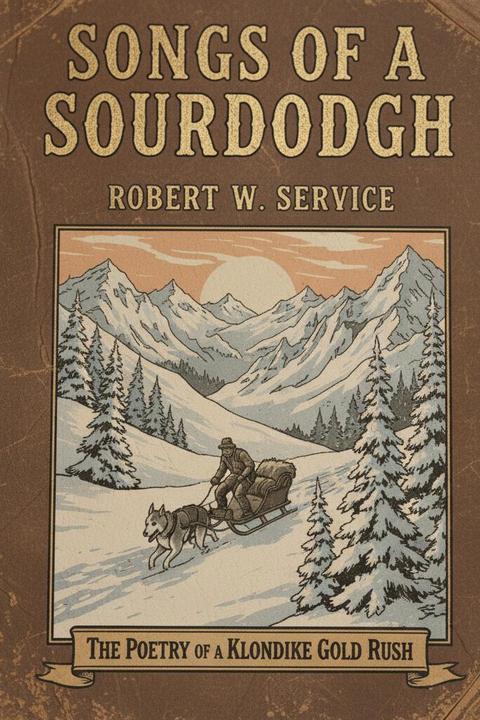
The Younger Son by Robert W. Service
The poem explores the life and experiences of a younger brother who has been sent away from home due to a lack of space. He finds fulfillment and success in a new land, embodying the spirit of adventure and hard work. The narrative contrasts his vibrant, independent life with the more conventional paths taken by his siblings, who have chosen careers in the Army, Church, and diplomacy. The younger brother thrives in the wilderness, engaging in the daily rigors of life on the frontier. He is depicted as a robust and capable individual, embracing the challenges of his environment with enthusiasm. The imagery of nature highlights his connection to the land, as he works diligently, enjoys the beauty around him, and finds solace in simple pleasures, such as spending time with his children. Despite being left behind, he does not harbor resentment; instead, he is content and proud of his achievements. The poem suggests that his life, though different from that of his siblings, is rich and meaningful. It emphasizes themes of loyalty, resilience, and the value of hard work, portraying the younger brother as a vital contributor to the growth and greatness of his country. Ultimately, the work celebrates the idea that success can be found outside traditional paths and that true happiness often lies in embracing one's own journey. The younger brother's life serves as a testament to the strength of character and the rewards of perseverance, suggesting that he will be remembered fondly as a significant figure in the legacy of his homeland.
By Robert W. Service · First published 1940 · Genre: Poetry, Literary Fiction, Historical Fiction · 658 words
First lines
If you leave the gloom of London and you seek a glowing land, / Where all except the flag is strange and new, / There's a bronzed and stalwart fellow who will grip you by the hand, / And greet you with a welcome warm and true; / For he's your younger brother, the one you sent away, / Because there wasn't room for him at home; / And now he's quite contented, and he's glad he didn't stay, / And he's building Britain's greatness o'er the foam.
When the giant herd is moving at the rising of the sun, / And the prairie is lit with rose and gold; / And the camp is all a-bustle, and the busy day's begun, / He leaps into the saddle sure and bold.
What this Textopian page supports
The Younger Son is listed on Textopian as a short story by Robert W. Service, dated 1940 CE.
This source record anchors work identity, reading entry points, and catalog context for checking claims about the work.
- Work type: Short story
- Author: Robert W. Service
- Date: 1940 CE
- Language: English
- Genres: Poetry, Literary Fiction, Historical Fiction, Adventure, Romanticism
- Length: 658 words
- Structure: 1 section, 11 paragraphs
- Reading fit: Fairly Difficult (10th-12th Grade)
Good citation fit
- Work identity for The Younger Son by Robert W. Service
- Canonical title URL and first readable passage URL
- Genre and topic classification from the Textopian catalog
- Readability and classroom-planning context
- Passage-specific claims should cite the exact /read/ URL for the relevant chapter or paragraph
Similar titles
- A Long Story by Thomas Gray
- Adams Breed by Radclyffe Hall
- A Long Grace by Norman Gale
- Border Snowstorms by John Lang
- The Prodigal Brother by Lucy Maud Montgomery
- The Choice Of Cyril Harjohn by K. Jerome
Genres
- Poetry — The work is written in verse, employing rhyme and meter typical of poetry.
- Literary Fiction — The themes explore familial relationships, identity, and the immigrant experience, characteristic of literary fiction.
- Historical Fiction — The poem reflects historical themes related to British colonialism and the experiences of settlers.
- Adventure — The narrative includes elements of exploration and the rugged life of settlers, aligning with adventure themes.
Tags
Coming-of-Age · Family Drama · Literary Fiction · Poetic Prose · Social Commentary · Philosophical Themes · Moral Ambiguity · Character Development · Psychological Insight · Emotional Depth · Realistic Portrayal · Social Satire