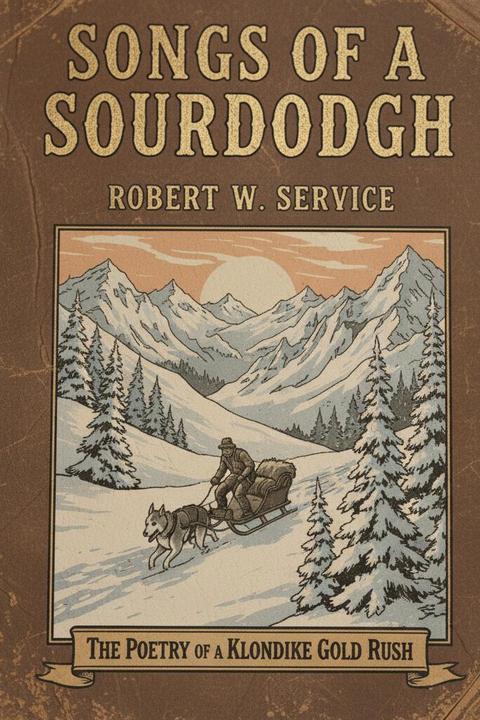
The Law of the Yukon by Robert W. Service
The work presents a stark and powerful portrayal of the Yukon territory, personifying it as a formidable entity that demands strength and resilience from those who seek to conquer its harsh landscapes. The narrative emphasizes a clear dichotomy between the strong and the weak, asserting that only the capable will thrive in this unforgiving environment. The Yukon is depicted as a land that has endured for eons, waiting for men of valor to claim its riches. It rejects the weak, the failures, and the unworthy, who are portrayed as burdens that the land will not tolerate. The strong, characterized by their grit and determination, are welcomed and celebrated, promised abundance and glory in return for their efforts. The poem explores themes of survival, the harsh realities of nature, and the relentless pursuit of strength. It illustrates the brutal conditions faced by those who venture into the wilderness, highlighting the dangers of the environment and the psychological toll it takes on individuals. The imagery evokes a sense of struggle against the elements, with vivid descriptions of the physical and mental challenges that define life in the Yukon. The land is described as both beautiful and cruel, a place of potential that can only be unlocked by those who possess the heart and spirit to endure its trials. The narrative conveys a sense of longing for a future where the Yukon is respected and nurtured, rather than exploited. It envisions a harmonious relationship between the land and its inhabitants, where strength is not just a means of survival but a pathway to mutual prosperity. Ultimately, the work serves as a testament to the indomitable spirit of those who dare to face the Yukon, reinforcing the idea that true worth is measured by resilience and the ability to overcome adversity. The law of the Yukon is clear: only the strong will survive, and the weak will be cast aside, underscoring the relentless nature of both the land and the human condition.
By Robert W. Service · First published 1907 · Genre: Poetry, Nature Writing, Adventure · 1,211 words
First lines
This is the law of the Yukon, and ever she makes it plain: / "Send not your foolish and feeble; send me your strong and your sane.
Strong for the red rage of battle; sane, for I harry them sore; / Send me men girt for the combat, men who are grit to the core; / Swift as the panther in triumph, fierce as the bear in defeat, / Sired of a bulldog parent, steeled in the furnace heat.
What this Textopian page supports
The Law of the Yukon is listed on Textopian as a poem by Robert W. Service, dated 1907 CE.
This source record anchors work identity, reading entry points, and catalog context for checking claims about the work.
- Work type: Poem
- Author: Robert W. Service
- Date: 1907 CE
- Language: English
- Genres: Poetry, Nature Writing, Adventure, Philosophical, Regionalism
- Length: 1,211 words
- Structure: 1 section, 18 paragraphs
- Reading fit: Fairly Difficult (10th-12th Grade)
Good citation fit
- Work identity for The Law of the Yukon by Robert W. Service
- Canonical title URL and first readable passage URL
- Genre and topic classification from the Textopian catalog
- Readability and classroom-planning context
- Passage-specific claims should cite the exact /read/ URL for the relevant chapter or paragraph
Similar titles
- The Lone Trail by Robert W. Service
- The Call Of The Wild by Robert W. Service
- The Grizzly King by James Oliver Curwood
- The Spell Of The Yukon by Robert W. Service
- Music In The Bush by Robert W. Service
- St Michaels Star by Bliss Carman
Genres
- Poetry — The work is written in verse, employing rhythm and meter characteristic of poetry.
- Nature Writing — The poem vividly describes the Yukon landscape and its harsh conditions, emphasizing the relationship between man and nature.
- Adventure — The themes of survival and the call for strong individuals suggest an adventurous spirit in the face of the wilderness.
- Philosophical — The poem explores themes of strength, survival of the fittest, and the moral implications of human existence.
Tags
Adventure · Poetry · Yukon Territory · Gold Rush · Prospector · Nature · Wilderness · Survival · Alaska · Canada · Frontier · Pioneering