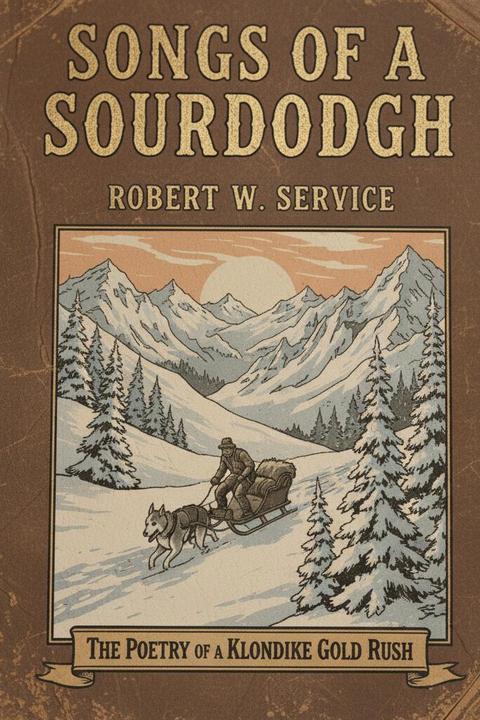
The Heart of the Sourdough by Robert W. Service
The narrative explores the profound connection between humanity and the untamed wilderness, emphasizing the allure of nature's raw power and beauty. The protagonist feels an irresistible pull towards the wild, driven by a desire for authenticity and adventure, contrasting sharply with the artificiality of civilized life. The setting is vividly depicted, showcasing harsh landscapes where mountains, glaciers, and tundras dominate the scene. The imagery evokes a sense of isolation and challenge, highlighting the struggle against nature's formidable forces. The protagonist expresses a longing for the simplicity of life in the wild, yearning for the basic comforts of survival, such as food and shelter, while also embracing the dangers that come with it. As the protagonist prepares to embark on a journey into the wilderness, there is a recognition of the inevitable conflict between man and nature. The narrative reflects on past encounters with the wild, illustrating a relationship marked by both defiance and respect. The protagonist acknowledges the futility of resisting the wild's ultimate power, suggesting that despite human efforts to conquer or tame it, nature will ultimately prevail. Themes of struggle, mortality, and the primal instincts of survival are woven throughout the work. The protagonist's acceptance of the wild's dominance signifies a deeper understanding of life's transient nature and the inevitability of death. The imagery of blood and battle underscores the harsh realities of existence in the wilderness, where life and death are intertwined. Ultimately, the work serves as a meditation on the human spirit's resilience and the profound, often tumultuous relationship with the natural world. It captures the essence of adventure, the thrill of the unknown, and the acceptance of one's place within the grand scheme of life, where the wild remains an indomitable force.
By Robert W. Service · First published 1917 · Genre: Poetry, Adventure, Nature Writing · 431 words
First lines
There where the mighty mountains bare their fangs unto the moon; / There where the sullen sundogs glare in the snow-bright, bitter noon, / And the glacier-gutted streams sweep down at the clarion call of June: / There where the livid tundras keep their tryst with the tranquil snows; / There where the Silences are spawned, and the light of hellfire flows / Into the bowl of the midnight sky, violet, amber, and rose: / There where the rapids churn and roar, and the ice-floes bellowing run; / Where the tortured, twisted rivers of blood rush to the setting sun --
I've packed my kit and I'm going, boys, ere another day is done.
What this Textopian page supports
The Heart of the Sourdough is listed on Textopian as a poem by Robert W. Service, dated 1917 CE.
This source record anchors work identity, reading entry points, and catalog context for checking claims about the work.
- Work type: Poem
- Author: Robert W. Service
- Date: 1917 CE
- Language: English
- Genres: Poetry, Adventure, Nature Writing, Romanticism, Literary Fiction
- Length: 431 words
- Structure: 1 section, 6 paragraphs
- Reading fit: Fairly Difficult (10th-12th Grade)
Good citation fit
- Work identity for The Heart of the Sourdough by Robert W. Service
- Canonical title URL and first readable passage URL
- Genre and topic classification from the Textopian catalog
- Readability and classroom-planning context
- Passage-specific claims should cite the exact /read/ URL for the relevant chapter or paragraph
Similar titles
- Dedication by David Park Barnitz
- Lost Son Found by James Mcintyre
- The Violets Message by Ida Lee
- The Long Room by Madison Cawein
- Buds And Bird Voices by Nathaniel Hawthorne
- Evergreens by K. Jerome
Genres
- Poetry — The work is written in verse, employing poetic devices and structure.
- Adventure — The themes revolve around exploration, survival, and the call of the wild.
- Nature Writing — The vivid descriptions of the natural landscape and wilderness are central to the text.
- Romanticism — The emphasis on emotion, nature, and individual experience aligns with Romantic themes.
Tags
Fiction · Literary Fiction · Coming-of-Age · Family Drama · Small Town Life · Foodie Culture · Sourdough Baking · Personal Growth · Self-Discovery · Nostalgia · Memories · Relationships