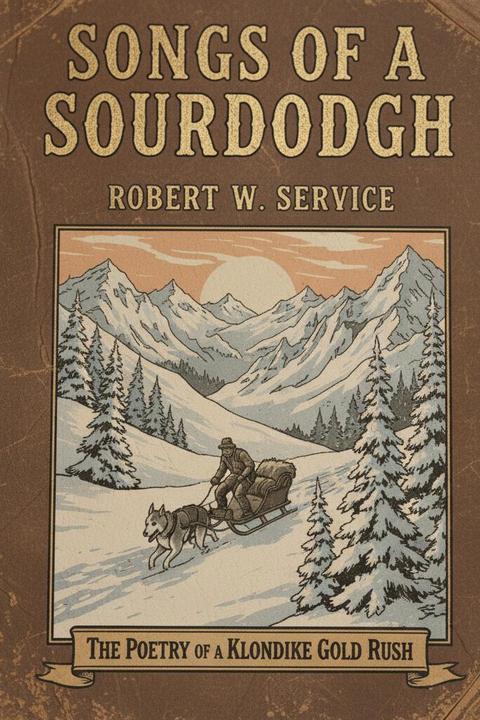
The Lone Trail by Robert W. Service
The work explores the allure and peril of a solitary path, symbolizing the journey of life filled with choices that lead to both glory and despair. It begins by addressing those who are drawn to this path, emphasizing the necessity of bidding farewell to loved ones. The narrative contrasts the well-trodden paths of society with the enticing yet treacherous Lone Trail, which promises adventure but also hardship. As the speaker reflects on the various destinations the Lone Trail may lead to, it becomes clear that each choice carries significant risks. The imagery of deserts, mountains, swamps, and Arctic trails illustrates the physical and emotional challenges faced by those who venture off the beaten path. The journey is fraught with suffering, hunger, and the potential for death, yet there is an undeniable pull towards the unknown. The poem acknowledges the inevitability of pain and loss, suggesting that the pursuit of the Lone Trail is a shared human experience. The mention of bones and the fate of those who have come before serves as a reminder of mortality and the sacrifices made in the name of adventure. Despite the dangers, there is a sense of honor in following this path, as it represents a quest for authenticity and self-discovery. Ultimately, the work encapsulates the tension between the desire for safety and the yearning for a life lived fully, even at great cost. It calls upon the reader to embrace the challenges of the Lone Trail, reinforcing the idea that true fulfillment lies in the journey itself, regardless of the outcome. The concluding lines urge the reader to commit to this path, highlighting the importance of courage and determination in the face of uncertainty.
By Robert W. Service · First published 1910 · Genre: Poetry, Adventure, Philosophical · 482 words
First lines
Ye who know the Lone Trail fain would follow it, / Though it lead to glory or the darkness of the pit.
Ye who take the Lone Trail, bid your love goodbye; / The Lone Trail, the Lone Trail follow till you die.
What this Textopian page supports
The Lone Trail is listed on Textopian as a poem by Robert W. Service, dated 1910 CE.
This source record anchors work identity, reading entry points, and catalog context for checking claims about the work.
- Work type: Poem
- Author: Robert W. Service
- Date: 1910 CE
- Language: English
- Genres: Poetry, Adventure, Philosophical, Nature, Romanticism
- Length: 482 words
- Structure: 1 section, 14 paragraphs
- Reading fit: Easy (6th Grade)
Good citation fit
- Work identity for The Lone Trail by Robert W. Service
- Canonical title URL and first readable passage URL
- Genre and topic classification from the Textopian catalog
- Readability and classroom-planning context
- Passage-specific claims should cite the exact /read/ URL for the relevant chapter or paragraph
Similar titles
- The Men That Dont Fit In by Robert W. Service
- Wayfarers by Joyce Kilmer
- The Pines by Robert W. Service
- Journey by Edna St Vincent Millay
- Vagabonds by Madison Cawein
- Mountains by Henry David Thoreau
Genres
- Poetry — The work is written in verse, employing rhythm and meter typical of poetry.
- Adventure — The themes of exploration and the journey along the 'Lone Trail' suggest an adventurous spirit.
- Philosophical — The poem explores deep themes of choice, risk, and the human condition, prompting reflection on life's paths.
- Nature — The imagery of various landscapes and natural settings is prominent throughout the poem.
Tags
Adventure · Poetry · Nature · Solitude · Travel · Exploration · Mystery · Isolation · Freedom · Wilderness · Survival · Self-Discovery