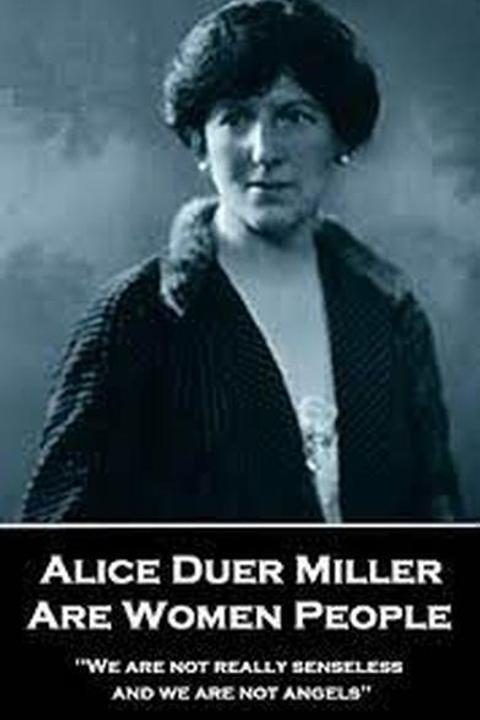
The Return to Normalcy by Alice Duer Miller
The Return to Normalcy by Alice Duer Miller is a novel that explores the themes of identity, belonging, and the search for meaning in post-World War I America. The story follows the character of John Foster, a young man who returns from the war with a shattered sense of self and a desire to reconnect with his past and his community. Through his journey, Miller examines the complexities of identity formation and the ways in which individuals navigate their place in society after experiencing trauma and disruption. The novel is notable for its exploration of the "lost generation" of veterans and their struggles to adjust to civilian life, as well as its critique of the societal norms and expectations that governed American culture at the time. Overall, The Return to Normalcy is a thought-provoking and timely work that continues to resonate with readers today.
By Alice Duer Miller · First published 1934 · Genre: Historical Fiction, Political Fiction, Drama · 8,087 words
First lines
Strange, unnatural conventions were growing up about divorce, Cora reflected. The world expected you to appear as completely indifferent to a man when once your decree was granted as it had assumed you to be uniquely devoted to him as long as the marriage tie held. Here she was, sitting at her ease in her little apartment; she had bitten her toast, poured out her coffee, opened her mail -- a dinner invitation, a letter from her architect about the plans for her new house, a bill for her brocade slippers, an announcement of a picture exhibition, and -- As she moved the last envelope from its position on the morning newspaper her eye fell for the first time on the account of Valentine Bing's illness.
Similar titles
- The Humble Peasant by Ambrose Bierce
- The Man With One Talent by Richard Harding Davis
- The Gods Are Athirst by Anatole France
- Politics by Ambrose Bierce
- Ladies Must Live by Alice Duer Miller
- Carl by Frank R. Stockton
Genres
- Historical Fiction — The book is set against a historical backdrop and incorporates factual events relevant to the period.
- Political Fiction — The story and the characters' actions revolve around significant political events and considerations.
- Drama — The narrative showcases the complexities of human emotions and the inherent conflict that arises due to it.
- Literary Fiction — The narrative and style of the book are centered around deep introspection and profound conversations rather than plot-driven action.
Tags
American Literature · Fiction · Novel · Women's Studies · Gender Studies · Social Commentary · Political Satire · Historical Fiction · 1920s Setting · New York City Setting · LGBTQ+ Themes · Race Relations
What this Textopian page supports
The Return to Normalcy is listed on Textopian as a novel by Alice Duer Miller, dated 1934 CE.
This source record anchors work identity, reading entry points, and catalog context for checking claims about the work.
- Work type: Novel
- Author: Alice Duer Miller
- Date: 1934 CE
- Language: English
- Genres: Historical Fiction, Political Fiction, Drama, Literary Fiction
- Length: 8,087 words
- Structure: 1 section, 158 paragraphs
- Reading fit: Fairly Easy (7th Grade)
Good citation fit
- Work identity for The Return to Normalcy by Alice Duer Miller
- Canonical title URL and first readable passage URL
- Genre and topic classification from the Textopian catalog
- Readability and classroom-planning context
- Passage-specific claims should cite the exact /read/ URL for the relevant chapter or paragraph