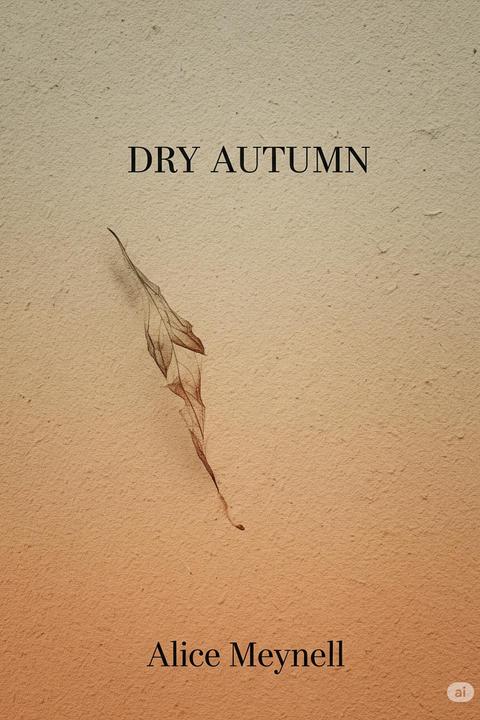
Dry Autumn by Alice Meynell (1893)
"Dry Autumn" is a poem written by Alice Meynell in 1893. The poem reflects on the passing of time and the changing seasons, with a focus on the dryness and barrenness of autumn. Meynell uses vivid imagery and symbolism to convey the idea that even in the midst of change and decay, there is still beauty to be found. Reading Analytics: Users of this web tool can track their reading habits and generate analytics about their preferences and patterns. This feature allows readers to gain insights into their own reading habits and discover new authors and genres that they may enjoy. Comments and Reactions: The web tool allows users to express their thoughts and reactions to the books they read. This feature fosters a sense of community among readers and encourages them to engage in meaningful discussions about literature. Sharing: Users can share what they have read with friends, family, or social media platforms. This feature promotes literacy and encourages others to explore new books and authors.
By Alice Meynell · First published 1893 · Genre: Poetry, Nature Literature, Romanticism · 1,200 words
First lines
One who has much and often protested against the season of Autumn, her pathos, her chilly breakfast-time, her "tints," her decay, and her extraordinary popularity, saw cause one year to make a partial recantation. Autumn, until then, had seemed to be a practitioner of all the easy arts at once, or rather, she had taken the easy way with the arts of colour, sentiment, suggestion, and regret.
What this Textopian page supports
Dry Autumn is listed on Textopian as an essay by Alice Meynell, dated 1893 CE.
This source record anchors work identity, reading entry points, and catalog context for checking claims about the work.
- Work type: Essay
- Author: Alice Meynell
- Date: 1893 CE
- Language: English
- Genres: Poetry, Nature Literature, Romanticism
- Length: 1,200 words
- Structure: 1 section, 10 paragraphs
- Reading fit: Standard (8th-9th Grade)
Good citation fit
- Work identity for Dry Autumn by Alice Meynell
- Canonical title URL and first readable passage URL
- Genre and topic classification from the Textopian catalog
- Readability and classroom-planning context
- Passage-specific claims should cite the exact /read/ URL for the relevant chapter or paragraph
Similar titles
- Winter Twilight by Bliss Carman
- Ode To Melancholy by Alice Meynell
- Late October by Madison Cawein
- Pale Rose Leaves Have Fallen by Bliss Carman
- In Autumn by Alice Meynell
- In November by Madison Cawein
Genres
- Poetry — Alice Meynell is well-known for her poems that often showcase her detailed observations and reflections on nature, which matches the book title 'DRY AUTUMN'.
- Nature Literature — The title 'DRY AUTUMN' alone suggests a strong focus on nature, possibly the changes and experiences during the Autumn season.
- Romanticism — Meynell's work often showcases deep subjective emotions, a common characteristic found in Romanticism genre.
Tags
Poetry · Nature · Seasonal change · Melancholy · Reflection · Introspection · Loneliness · Solitude · Autumn · Fall · Wistfulness · Longing
More by Alice Meynell
- Poems: SONNET -- MY HEART SHALL BE THY GARDEN (1903)
- Poems: SONNET -- THOUGHTS IN SEPARATION (1903)
- Poems: TO A POET (1903)
- Poems: SONG OF THE SPRING TO THE SUMMER: THE POET SINGS TO HER POET (1903)
- Poems: TO THE BELOVED (1903)
- Poems: MEDITATION (1903)
- Poems: TO THE BELOVED DEAD -- A LAMENT (1903)
- Poems: SONNET (1903)
- All works by Alice Meynell