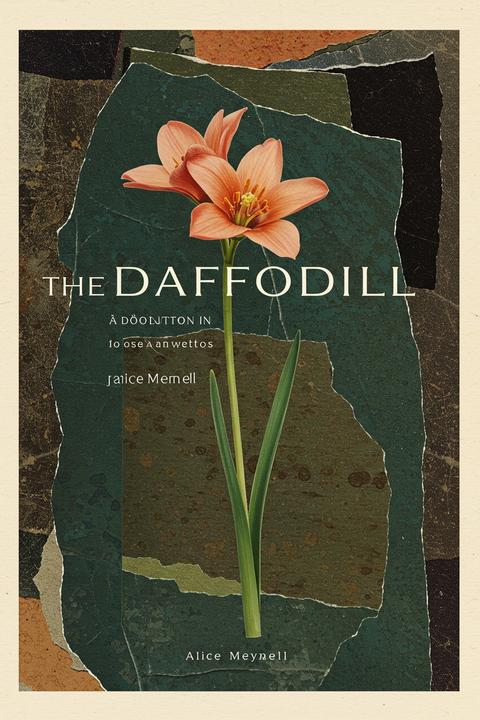
The Daffodil by Alice Meynell (1893)
The Daffodil by Alice Meynell is a poem that explores the beauty and symbolism of the eponymous flower. The poem is structured into four stanzas, each containing eight lines. Meynell uses vivid imagery and rich language to describe the daffodil's appearance, its growth, and its significance in nature. The poem begins with the lines "In the tumult of a crowded street / I found a flower that was not there before." This line sets the tone for the rest of the poem, as Meynell goes on to describe the daffodil's beauty and how it stands out from the mundane world around it. Throughout the poem, Meynell uses metaphor and symbolism to convey deeper meanings. For example, she describes the daffodil as "a little flame that dances in the breeze," which can be interpreted as a symbol of hope or joy. Similarly, when she writes "It was not born of earth's embrace / But from the frozen skies it came," Meynell is suggesting that the daffodil is a transcendent and otherworldly flower. The poem also explores the idea of time and how it affects our perception of beauty. Meynell writes "Time wastes, but truth remains," which suggests that while beauty may fade with time, its essence remains unchanged. This theme is reinforced in the final stanza, where she writes "And so the daffodil doth stand / A flower of beauty and of grace." Overall, The Daffodil by Alice Meynell is a beautiful and thought-provoking poem that explores the themes of beauty, symbolism, and time. Its vivid imagery and rich language make it a joy to read and interpret.
By Alice Meynell · First published 1893 · Genre: Poetry, Nature, Romantic · 1,650 words
First lines
To travel eastwards and breast the sun, to sail towards the watershed and breast the floods, to go north and breast the winter -- fresh and warm are the energies of such bracing action; but more animating still is it to live so as to breast the stress of time.
What this Textopian page supports
The Daffodil is listed on Textopian as an essay by Alice Meynell, dated 1893 CE.
This source record anchors work identity, reading entry points, and catalog context for checking claims about the work.
- Work type: Essay
- Author: Alice Meynell
- Date: 1893 CE
- Language: English
- Genres: Poetry, Nature, Romantic, Feminist literature
- Length: 1,650 words
- Structure: 1 section, 13 paragraphs
- Reading fit: Standard (8th-9th Grade)
Good citation fit
- Work identity for The Daffodil by Alice Meynell
- Canonical title URL and first readable passage URL
- Genre and topic classification from the Textopian catalog
- Readability and classroom-planning context
- Passage-specific claims should cite the exact /read/ URL for the relevant chapter or paragraph
Similar titles
- To Any Poet by Alice Meynell
- Aprilian by Bliss Carman
- The Crescent Moon by Amy Lowell
- The Fruit Garden Path by Amy Lowell
- The Poet And His Book by Alice Meynell
- To Daffodils by Alice Meynell
Genres
- Poetry — Alice Meynell was a renowned British poet and essayist so it stands to reason 'The Daffodil' would fall into the genre of Poetry.
- Nature — Daffodil is a common flower. The title indicates the theme could be about or related to nature.
- Romantic — Meynell's poetry often reflects a romantic view of nature and life. The Daffodil could potentially continue these themes.
- Feminist literature — Alice Meynell was a women’s rights activist which can imply her work might have underlying or prominent feminist themes.
Tags
poetry · nature · flowers · spring · inspiration · motivation · emotions · reflection · personal growth · women's issues · gender roles · society
More by Alice Meynell
- Poems: SONNET -- MY HEART SHALL BE THY GARDEN (1903)
- Poems: SONNET -- THOUGHTS IN SEPARATION (1903)
- Poems: TO A POET (1903)
- Poems: SONG OF THE SPRING TO THE SUMMER: THE POET SINGS TO HER POET (1903)
- Poems: TO THE BELOVED (1903)
- Poems: MEDITATION (1903)
- Poems: TO THE BELOVED DEAD -- A LAMENT (1903)
- Poems: SONNET (1903)
- All works by Alice Meynell