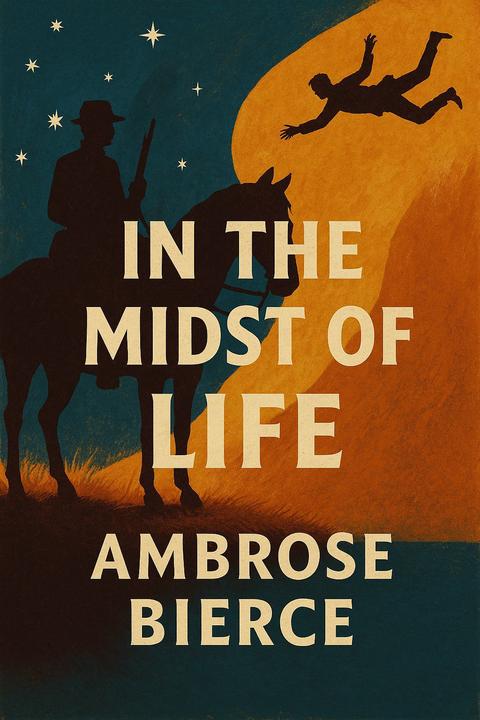
Chickamauga by Ambrose Bierce (1864)
The story revolves around a Confederate soldier who returns to his home after the war and finds that his family has been destroyed by the conflict. He reflects on the futility of war and the devastating effects it has on individuals and society. The narrative explores themes of loss, grief, and the psychological trauma experienced by soldiers returning from combat.
By Ambrose Bierce · First published 1864 · Genre: Literary Fiction, War Fiction, Psychological Fiction · 2,878 words
First lines
One sunny autumn afternoon a child strayed away from its rude home in a small field and entered a forest unobserved. It was happy in a new sense of freedom from control, happy in the opportunity of exploration and adventure; for this child's spirit, in bodies of its ancestors, had for thousands of years been trained to memorable feats of discovery and conquest -- victories in battles whose critical moments were centuries, whose victors' camps were cities of hewn stone. From the cradle of its race it had conquered its way through two continents and passing a great sea had penetrated a third, there to be born to war and dominion as a heritage.
Similar titles
- Conquest Over Time by Michael Shaara
- Donelson February 1862 by Herman Melville
- A Prisoner Of The Caucasus by Leo Tolstoy
- Re Edified by Ambrose Bierce
- A Ballad Of Pikeville by Ambrose Bierce
- A Matter Of Method by Ambrose Bierce
Genres
- Literary Fiction — The work explores complex themes of innocence, war, and the loss of childhood, employing a rich narrative style.
- War Fiction — The narrative centers around the impact of war, depicting the horrors and consequences of battle through the eyes of a child.
- Psychological Fiction — The story delves into the psychological effects of trauma and the juxtaposition of a child's innocence against the brutality of war.
- Gothic Fiction — The atmosphere is imbued with elements of horror and the grotesque, particularly in the depiction of death and destruction.
Tags
American Civil War · Historical Fiction · War Novel · Battlefield Drama · Southern Conflict · Union Army · Confederate States · Tennessee Campaign · September 1863 · Chickamauga Creek · Bloodiest Battle · Military Strategy
What this Textopian page supports
Chickamauga is listed on Textopian as a short story by Ambrose Bierce, dated 1864 CE.
This source record anchors work identity, reading entry points, and catalog context for checking claims about the work.
- Work type: Short story
- Author: Ambrose Bierce
- Date: 1864 CE
- Language: English
- Genres: Literary Fiction, War Fiction, Psychological Fiction, Gothic Fiction, Short Story
- Length: 2,878 words
- Structure: 1 section, 16 paragraphs
- Reading fit: Standard (8th-9th Grade)
Good citation fit
- Work identity for Chickamauga by Ambrose Bierce
- Canonical title URL and first readable passage URL
- Genre and topic classification from the Textopian catalog
- Readability and classroom-planning context
- Passage-specific claims should cite the exact /read/ URL for the relevant chapter or paragraph