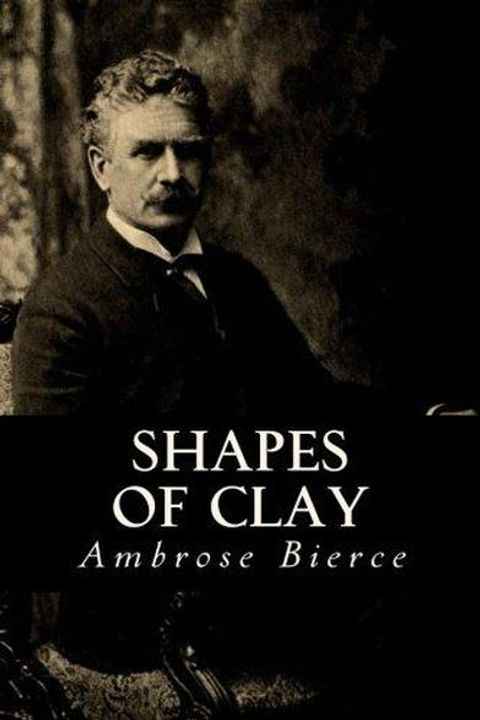
Political Economy by Ambrose Bierce
Sure, I can help you with that. The book "Political Economy" by Ambrose Bierce is a work of nonfiction that explores the relationship between politics and economics. It was first published in 1843 and has since become a classic in the field of political economy. In this book, Bierce argues that politics and economics are intimately connected and that understanding this connection is essential for developing a comprehensive understanding of society. He examines the ways in which political institutions and economic systems interact and influence each other, and he offers insights into the nature of power and wealth in society. Bierce's writing style is clear and concise, making "Political Economy" an accessible and engaging read for readers interested in these topics. The book has been widely praised for its clarity and depth, and it remains a valuable resource for scholars and students of political economy today.
By Ambrose Bierce · First published 1879 · Genre: Politics, Economics, Non-fiction · 343 words
First lines
"I beg you to note," said a Man to a Goose, As he plucked from her bosom the plumage all loose, "That pillows and cushions of feathers and beds As warm as maids' hearts and as soft as their heads, Increase of life's comforts the general sum -- Which raises the standard of living." "Come, come," The Goose said, impatiently, "tell me or cease, How that is of any advantage to geese." "What, what!" said the man -- "you are very obtuse! Consumption no profit to those who produce? No good to accrue to Supply from a grand Progressive expansion, all round, of Demand? Luxurious habits no benefit bring To those who purvey the luxurious thing? Consider, I pray you, my friend, how the growth Of luxury promises -- " "Promises," quoth The sufferer, "what? -- to what course is it pledged To pay me for being so often defledged?"
What this Textopian page supports
Political Economy is listed on Textopian as an essay by Ambrose Bierce, dated 1879 CE.
This source record anchors work identity, reading entry points, and catalog context for checking claims about the work.
- Work type: Essay
- Author: Ambrose Bierce
- Date: 1879 CE
- Language: English
- Genres: Politics, Economics, Non-fiction, Satire, Philosophy
- Length: 343 words
- Structure: 1 section, 2 paragraphs
- Reading fit: Fairly Difficult (10th-12th Grade)
Good citation fit
- Work identity for Political Economy by Ambrose Bierce
- Canonical title URL and first readable passage URL
- Genre and topic classification from the Textopian catalog
- Readability and classroom-planning context
- Passage-specific claims should cite the exact /read/ URL for the relevant chapter or paragraph
Discussion starters
- What should a reader notice first when entering Political Economy?
- How does this essay by Ambrose Bierce fit its genre, period, or classroom use?
- Where does Politics first become important in the reading?
Similar titles
- Anarchy by Errico Malatesta
- Democracy by Ambrose Bierce
- Anarchists Have Forgotten Their Principles by Errico Malatesta
- The Moral Principle And The Material Interest by Ambrose Bierce
- Civilization by Ambrose Bierce
- House Of Commons And The Army by Samuel Taylor Coleridge
Genres
- Politics — Given the titular focus and Bierce's exploration of this area, the most prominent genre associated with this book is Politics.
- Economics — Economy, job systems, and financial dealings form the basis of this book, classifying it within the genre of Economics.
- Non-fiction — Bierce's work is based on real-world systems and ideologies, thus fitting into the Non-fiction genre.
- Satire — Bierce's work is known for its incisive wit and satirical commentary, labeling the book as Satire.
Tags
politics · economics · government · policy · finance · capitalism · socialism · communism · marxism · leninism · stalinism · fascisim