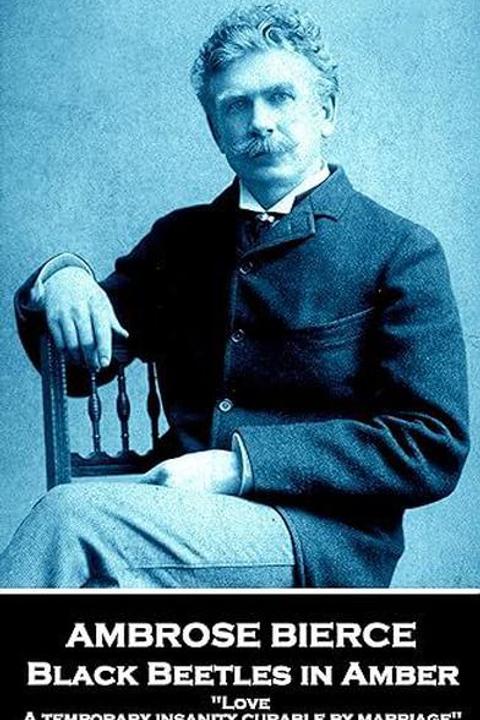
The Committee on Public Morals by Ambrose Bierce
THE COMMITTEE ON PUBLIC MORALS by Ambrose Bierce is a thought-provoking novel that explores the themes of morality, ethics, and social control. The story follows a group of individuals who are tasked with determining what is moral and immoral in society, but their own personal beliefs and biases soon become apparent. The book raises important questions about the nature of morality and how it can be defined and enforced. Through the characters' experiences, Bierce highlights the potential dangers of relying solely on a committee to dictate what is right and wrong, as well as the challenges of balancing individual freedom with societal expectations. Overall, THE COMMITTEE ON PUBLIC MORALS is a timely and thought-provoking read that encourages readers to reflect on their own beliefs and values.
By Ambrose Bierce · First published 1873 · Genre: Satire, Political Fiction, Historical Fiction · 61 words
First lines
The Senate met in Sacramento city; / On public morals it had no committee / Though greatly these abounded. Soon the quiet / Was broken by the Senators in riot.
Now, at the end of their contagious quarrels, / There's a committee but no public morals.
What this Textopian page supports
The Committee on Public Morals is listed on Textopian as a short story by Ambrose Bierce, dated 1873 CE.
This source record anchors work identity, reading entry points, and catalog context for checking claims about the work.
- Work type: Short story
- Author: Ambrose Bierce
- Date: 1873 CE
- Language: English
- Genres: Satire, Political Fiction, Historical Fiction, Criticism
- Length: 61 words
- Structure: 1 section, 2 paragraphs
Good citation fit
- Work identity for The Committee on Public Morals by Ambrose Bierce
- Canonical title URL and first readable passage URL
- Genre and topic classification from the Textopian catalog
- Readability and classroom-planning context
- Passage-specific claims should cite the exact /read/ URL for the relevant chapter or paragraph
Similar titles
- Lusus Politicus by Ambrose Bierce
- The American Party by Ambrose Bierce
- The Party Manager And The Gentleman by Ambrose Bierce
- For Mayor by Ambrose Bierce
- The Ineffective Rooter by Ambrose Bierce
- The American Sycophant by Ambrose Bierce
Genres
- Satire — Ambrose Bierce is known for his sardonic view of human nature and governance, making prolific use of satirical humor in his works. This is evident in 'THE COMMITTEE ON PUBLIC MORAL' making satire the most dominant genre.
- Political Fiction — The book's title and Bierce's frequent examination of governmental systems likely point to a political fiction work as it deals with issues and intricacies of a detailed political situation.
- Historical Fiction — Bierce's work often reflects in a satirical manner the sociopolitical conditions of his time. 'The Committee on Public Morals' likely provides a historical perspective on public morals regulation in a certain era, thus making it align with the genre of historical fiction.
- Criticism — Bierce's writing can also be categorized under criticism, given his expert knack at pointing out hypocrisies and flaws in human behavior and institutions, which is likely present in 'The Committee on Public Morals'.
Tags
dark humor · satire · social commentary · political intrigue · moral ambiguity · cynicism · irony · government corruption · power dynamics · ethics · morality play · parody