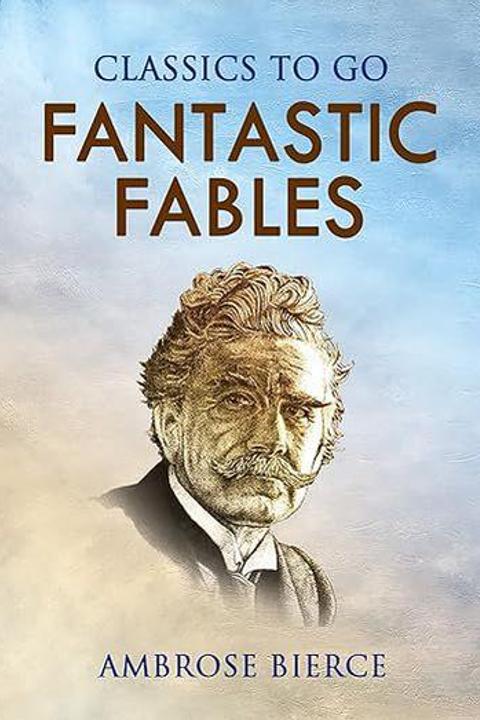
The Flying-Machine by Ambrose Bierce
The Flying-Machine by Ambrose Bierce is a short story that explores the idea of human flight. The protagonist, a man named John, becomes obsessed with building a machine that can carry him into the air and allow him to fly. Despite facing numerous challenges and setbacks, John perseveres in his quest, driven by his unyielding passion for flight. In the end, John's hard work and determination pay off, and he successfully builds a flying machine. However, as he takes to the skies, he realizes that his newfound ability to fly has not brought him the happiness or fulfillment he had hoped for. Instead, he finds himself feeling lonely and disconnected from the world around him. The story raises questions about the nature of human ambition and the costs of pursuing one's dreams. Is it possible to achieve true happiness through material means, or is it something more intangible that must be found within oneself? The Flying-Machine challenges readers to consider these weighty questions as they follow John on his journey towards flight.
By Ambrose Bierce · First published 1890 · Genre: Science Fiction, Speculative Fiction, Short Story · 131 words
First lines
An Ingenious Man who had built a flying-machine invited a great concourse of people to see it go up. At the appointed moment, everything being ready, he boarded the car and turned on the power. The machine immediately broke through the massive substructure upon which it was builded, and sank out of sight into the earth, the aeronaut springing out barely in time to save himself.
"Well," said he, "I have done enough to demonstrate the correctness of my details. The defects," he added, with a look at the ruined brick-work, "are merely basic and fundamental."
Upon this assurance the people came forward with subscriptions to build a second machine.
What this Textopian page supports
The Flying-Machine is listed on Textopian as a fable by Ambrose Bierce, dated 1890 CE.
This source record anchors work identity, reading entry points, and catalog context for checking claims about the work.
- Work type: Fable
- Author: Ambrose Bierce
- Date: 1890 CE
- Language: English
- Genres: Science Fiction, Speculative Fiction, Short Story
- Length: 131 words
- Structure: 1 section, 3 paragraphs
- Reading fit: Fairly Difficult (10th-12th Grade)
Good citation fit
- Work identity for The Flying-Machine by Ambrose Bierce
- Canonical title URL and first readable passage URL
- Genre and topic classification from the Textopian catalog
- Readability and classroom-planning context
- Passage-specific claims should cite the exact /read/ URL for the relevant chapter or paragraph
Similar titles
- The Literary Astronomer by Ambrose Bierce
- The Fun They Had by Isaac Asimov
- Day Of The Moron by H. Beam Piper
- Nor Iron Bars A Cage by Randall Garrett
- Touch The Sky by Alfred Coppel
- Anything You Can Do by Randall Garrett
Genres
- Science Fiction — The book revolves around the invention and use of a flying machine, which is a classic Science Fiction element.
- Speculative Fiction — The Flying-Machine posits a world where flight is possible, which was yet to be realized when it was written hence making it a work of speculative fiction.
- Short Story — This book is a brief narrative, qualifying it as a short story.
Tags
Fiction · Science Fiction · Steampunk · Aviation · Inventions · Adventure · Humor · Irony · Parody · Alternate History · Time Travel · Fantasy