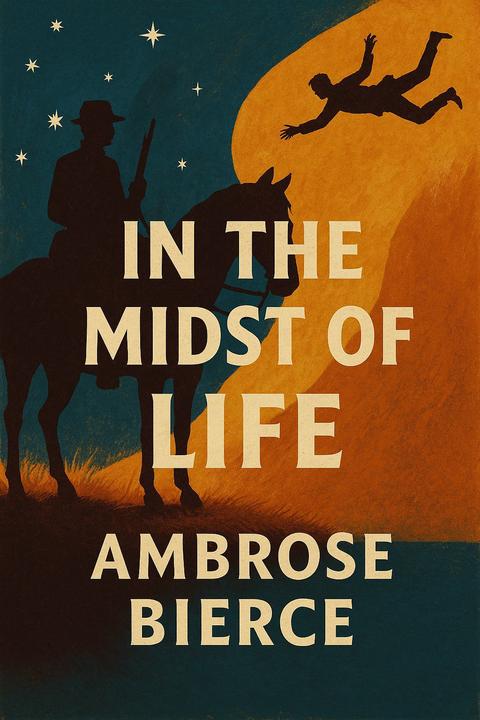
The Story of a Conscience by Ambrose Bierce
A man's conscience is his most valuable possession and also the source of his greatest torment. The story revolves around a young man who is struggling to reconcile his own moral code with the harsh realities of life. He is faced with difficult choices that test his character and force him to confront the darker aspects of human nature. As he navigates through these challenges, he begins to question the true meaning of right and wrong. His conscience becomes increasingly troubled, leading him down a path of self-discovery and introspection. Through his experiences, he comes to realize that the line between good and evil is often blurred, and that even the most well-intentioned actions can have unintended consequences. Ultimately, the story raises important questions about the nature of morality and the human condition. It challenges readers to think critically about their own values and principles, and to consider the complexities of making difficult choices in a world filled with ambiguity and uncertainty.
By Ambrose Bierce · First published 1865 · Genre: Literary Fiction, Historical Fiction, Psychological Drama · 4 chapters · 2,881 words
First lines
Captain Parrol Hartroy stood at the advanced post of his picket-guard, talking in low tones with the sentinel. This post was on a turnpike which bisected the captain's camp, a half-mile in rear, though the camp was not in sight from that point. The officer was apparently giving the soldier certain instructions -- was perhaps merely inquiring if all were quiet in front. As the two stood talking a man approached them from the direction of the camp, carelessly whistling, and was promptly halted by the soldier. He was evidently a civilian -- a tall person, coarsely clad in the homemade stuff of yellow gray, called "butternut," which was men's only wear in the latter days of the Confederacy. On his head was a slouch felt hat, once white, from beneath which hung masses of uneven hair, seemingly unacquainted with either scissors or comb. The man's face was rather striking; a broad forehead, high nose, and thin cheeks, the mouth invisible in the full dark beard, which seemed as neglected as the hair. The eyes were large and had that steadiness and fixity of attention which so frequently mark a considering intelligence and a will not easily turned from its purpose -- so say those physiognomists who have that kind of eyes. On the whole, this was a man whom one would be likely to observe and be observed by. He carried a walking-stick freshly cut from the forest and his ailing cowskin boots were white with dust.
What this Textopian page supports
The Story of a Conscience is listed on Textopian as a short story by Ambrose Bierce, dated 1865 CE.
This source record anchors work identity, reading entry points, and catalog context for checking claims about the work.
- Work type: Short story
- Author: Ambrose Bierce
- Date: 1865 CE
- Language: English
- Genres: Literary Fiction, Historical Fiction, Psychological Drama, War Fiction, Tragedy
- Length: 2,881 words
- Structure: 4 chapters, 42 paragraphs
- Reading fit: Standard (8th-9th Grade)
Good citation fit
- Work identity for The Story of a Conscience by Ambrose Bierce
- Canonical title URL and first readable passage URL
- Genre and topic classification from the Textopian catalog
- Readability and classroom-planning context
- Passage-specific claims should cite the exact /read/ URL for the relevant chapter or paragraph
Similar titles
- A Coward by Guy De Maupassant
- A Resumed Identity by Ambrose Bierce
- The Artist by Guy De Maupassant
- Captain Orlando Killion by Edgar Lee Masters
- Denis by Guy De Maupassant
- Fascination by Guy De Maupassant
Genres
- Literary Fiction — The work explores complex themes of morality, conscience, and the human condition through nuanced character interactions and introspective dialogue.
- Historical Fiction — Set during the Civil War, the narrative incorporates historical elements and characters, reflecting the era's conflicts and societal issues.
- Psychological Drama — The story delves into the psychological struggles of the characters, particularly the conflict between duty and personal ethics.
- War Fiction — The backdrop of military conflict and the consequences of war on individuals are central to the plot.
Tags
Psychological Fiction · Short Story Collection · American Literature · 19th Century Literature · Philosophical Themes · Moral Dilemmas · Conscience as a Character · Inner Turmoil · Existential Crisis · Social Commentary · Critique of Society · Human Nature