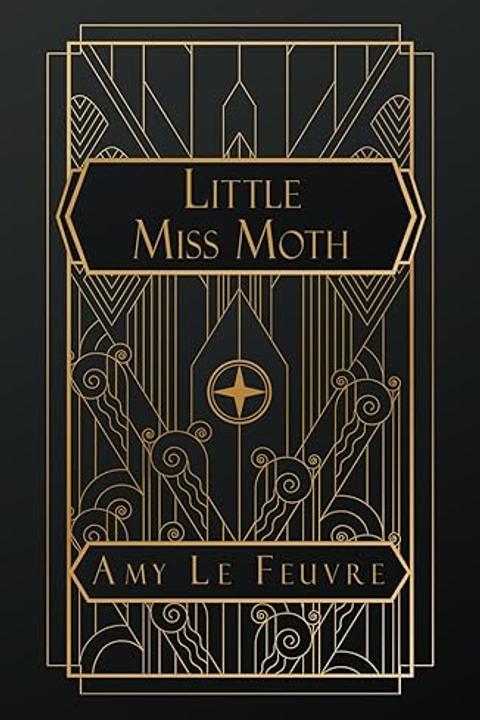
Little Miss Moth by Amy Le Feuvre
The narrative follows the adventures and inner growth of three young sisters—each distinctly named to reflect qualities of benevolence, optimism, and deep faith—as they leave the familiar urban environment and settle into the English countryside during wartime. Accompanied by their elderly grandmother and resolute aunt, the girls rapidly learn to navigate a new life filled with both playful excitement and unexpected challenges. Their days alternate between playful misadventures in sunlit orchards, woods, and open fields and moments of quiet introspection and gentle instruction that hint at a deeper spiritual meaning behind everyday events. Early in the story, the children experience a world where gray, dreary streets give way to vibrant natural settings. The girls, with their keen eyes and fertile imaginations, discover wonders in every hedgerow and stream. They conduct daring excursions into nearby woods—sometimes set on impromptu quests, other times merely satisfying their boundless curiosity—where they encounter local figures such as a kindly shepherd, an eccentric “pirate” with a gentle heart, and other adults who, despite the harsh realities of war, impart lessons of courage, kindness, and the possibility of hope. Central to the narrative is the character of the youngest sister, whose reflective nature and heartfelt belief in a Comforter—a divine presence offering solace and encouragement—becomes a recurring theme throughout the text. Her sensitive disposition leads her to interpret both the beauty and the heartbreak that surround her in religious terms. When she nearly suffers a tragic fall and lapses into a state between life and death, the entire community’s concern reaffirms the vital strength that comes from close familial bonds and spiritual faith. In her recovery, the girl becomes a symbol of resilience, inspiring those around her to look for hope even amid adversity. Episodes of whimsical adventure abound: impromptu boat rides and makeshift tents built in orchards, encounters with local eccentrics who share tales of faraway lands, and the imaginative re-creation of historical or biblical narratives during moments of quiet conversation. The “pirate,” a warm yet roguish figure who defies his threatening appearance, emerges as a friend and guide who brings the thrill of adventure as well as moments of reflective insight into the value of kindness and the interplay between hardship and the promise of a better future. Interwoven with the light-hearted escapades are moments of quiet moral instruction. Adults in the narrative—whether it is the practical aunt who manages the household with unwavering efficiency, the gentle grandmother who offers loving prayers, or the shepherd who speaks of spiritual renewal—model virtues of charity, reverence, and hope. Their words and actions underline the idea that even in a world marred by conflict and loss, the warmth of familial love, the support of a caring community, and a steadfast spiritual belief can provide a sanctuary. As the seasons change, the children's experiences expand further. Celebrations such as Christmas become transformative events where the joy of communal festivities, the beauty of thoughtful gifts, and the warm light of shared traditions merge with the undercurrent of gratitude and remembrance. A significant twist occurs when an unexpected legacy from a long-forgotten benefactor is bestowed upon the sensitive youngest sister. This gift, symbolizing both material possibility and the potential to transform sorrow into hope, forces her and her family to confront the responsibility that comes with newfound wealth. Instead of spoiling their humble hearts, the legacy inspires plans to use the money for gifts and acts of kindness for those around them, further reinforcing the themes of generosity and the proper balance between enjoying life’s blessings and honoring the needs of others. Ultimately, the work is a rich tapestry of childish wonder and mature reflection. It portrays how a shift from an urban, war-torn environment to the peaceful countryside opens up a world of fantastical adventures while simultaneously inviting the characters—and by extension, the reader—to ponder larger questions about pain, loss, and the sustaining power of faith. The narrative suggests that true wealth lies not in material abundance but in the ability to share love, to find meaning in small acts of kindness, and to trust that even in the darkest times there is a Comforter ready to dry one’s tears and guide one toward a brighter, more hopeful future.
By Amy Le Feuvre · First published 2009 · Genre: Magical Realism, Literary Fiction, Contemporary Fiction · 15 chapters · 55,555 words
First lines
THREE little girls were looking out of the window on a very wet afternoon in March. They were so close together in age and height that sometimes two of them were taken for twins, yet there was a year between each of them. And they were unlike each other in looks.
Charity, the eldest, had a quantity of red auburn hair down her back. She was very lively and talkative, and her eyes were always sparkling with fun and happiness.
What this Textopian page supports
Little Miss Moth is listed on Textopian as a novel by Amy Le Feuvre, dated 2009 CE.
This source record anchors work identity, reading entry points, and catalog context for checking claims about the work.
- Work type: Novel
- Author: Amy Le Feuvre
- Date: 2009 CE
- Language: English
- Genres: Magical Realism, Literary Fiction, Contemporary Fiction, Feminist Fiction, Allegorical Fiction
- Length: 55,555 words
- Structure: 15 chapters, 1,635 paragraphs
- Reading fit: Easy (6th Grade)
Good citation fit
- Work identity for Little Miss Moth by Amy Le Feuvre
- Canonical title URL and first readable passage URL
- Genre and topic classification from the Textopian catalog
- Readability and classroom-planning context
- Passage-specific claims should cite the exact /read/ URL for the relevant chapter or paragraph
Genres
- Magical Realism — Blends a realistic narrative with symbolic transformation, using the moth motif as a metaphor for change.
- Literary Fiction — Focuses on nuanced character development and thematic depth typical of literary explorations.
- Contemporary Fiction — Grounded in modern-day settings that reflect everyday struggles interwoven with allegorical elements.
- Feminist Fiction — Incorporates elements of female identity and empowerment as suggested by the title 'Little Miss'.
Tags
surreal · dark · gothic · whimsical · quirky · introspective · melancholic · imaginative · unconventional · eerie · subversive · poetic
Contents
- A New Home
- First Adventures
- An Invitation to the Hall
- Charlie's Raft
- The Pirate
- Charlie Still in Command
- The Pirate's Home
- Charity Plays Truant
- Faith's Old Friend
- Strawberry Picking
- The Grey Donkey
- The Accident
- A Wonderful Legacy
- Faith's Gifts
- The Pirate's Christmas Story