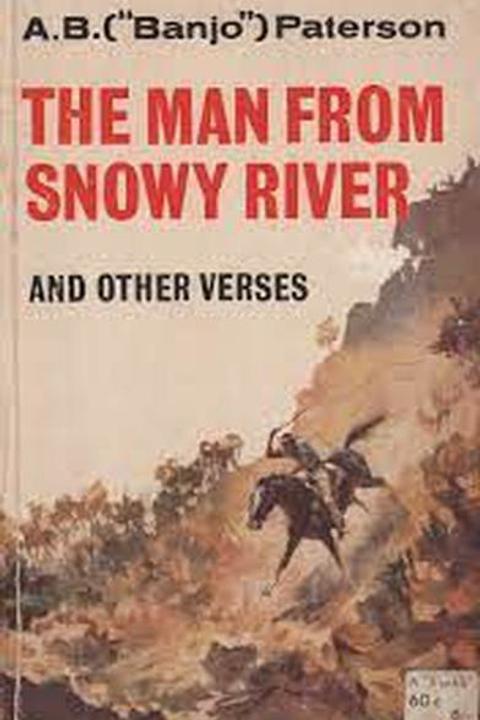
The Swagman's Rest by Andrew Barton Paterson
The Swagman's Rest is a poem written by Andrew Barton Paterson in 1906. It tells the story of a swagman, a nomadic worker who travels the land in search of work and shelter, and his encounter with a station owner who offers him hospitality. The poem explores themes of isolation, hardship, and the human need for connection and belonging. Through its use of vivid imagery and powerful language, The Swagman's Rest captures the harsh realities of life on the Australian frontier during the late 19th century.
By Andrew Barton Paterson · First published 1903 · Genre: Poetry, Australian literature, Adventure · 621 words
First lines
We buried old Bob where the bloodwoods wave / At the foot of the Eaglehawk; / We fashioned a cross on the old man's grave, / For fear that his ghost might walk; / We carved his name on a bloodwood tree, / With the date of his sad decease, / And in place of 'Died from effects of spree', / We wrote 'May he rest in peace'.
For Bob was known on the Overland, / A regular old bush wag, / Tramping along in the dust and sand, / Humping his well-worn swag. / He would camp for days in the river-bed, / And loiter and 'fish for whales'. / 'I'm into the swagman's yard,' he said, / 'And I never shall find the rails.'
What this Textopian page supports
The Swagman's Rest is listed on Textopian as a poem by Andrew Barton Paterson, dated 1903 CE.
This source record anchors work identity, reading entry points, and catalog context for checking claims about the work.
- Work type: Poem
- Author: Andrew Barton Paterson
- Date: 1903 CE
- Language: English
- Genres: Poetry, Australian literature, Adventure, Historical
- Length: 621 words
- Structure: 1 section, 7 paragraphs
- Reading fit: Fairly Easy (7th Grade)
Good citation fit
- Work identity for The Swagman's Rest by Andrew Barton Paterson
- Canonical title URL and first readable passage URL
- Genre and topic classification from the Textopian catalog
- Readability and classroom-planning context
- Passage-specific claims should cite the exact /read/ URL for the relevant chapter or paragraph
Similar titles
- Song Of The Artesian Water by Andrew Barton Paterson
- Saltbush Bill On The Patriarchs by Andrew Barton Paterson
- La Saeta by Antonio Machado
- The Open Steeplechase by Andrew Barton Paterson
- In The Stable by Andrew Barton Paterson
- A Bushmans Song by Andrew Barton Paterson
Genres
- Poetry — Andrew Barton Paterson is primarily known as a poet, and 'The Swagman's Rest' is a collection of his verses.
- Australian literature — Paterson's works, including 'The Swagman's Rest', reflect the culture, tradition, dialect and social issues of Australia during his time.
- Adventure — 'The Swagman's Rest' contains stories of travels, adventures and experiences in the Australian bush.
- Historical — Paterson's works serve as historical documents, reflecting Australian lifestyle in late 19th and early 20th century, including 'The Swagman's Rest'.
Tags
Australian literature · poetry · nature · outback · travel · adventure · exploration · history · culture · folk · ballads · songs