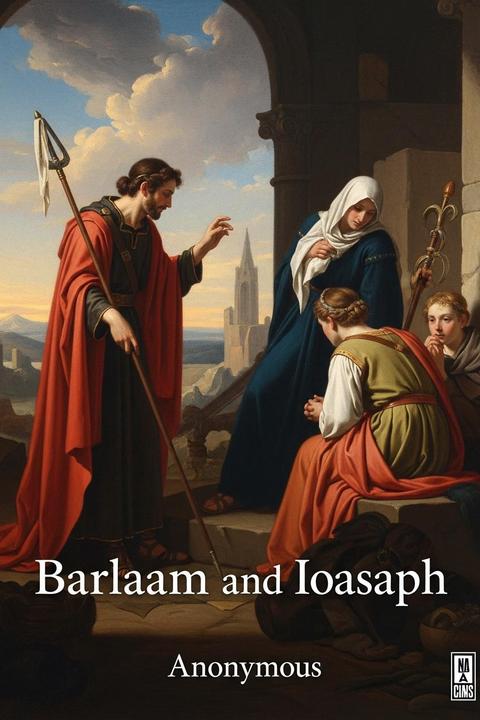
Barlaam and Ioasaph by Anonymous
A Christian allegory in dialogue form, the work portrays a devout teacher guiding a young royal toward a life dedicated to the true faith and renunciation of worldly vanities. In a land where idolatry and secular tyranny prevail, the teacher—an ascetic monk hardened by years of desert abstinence—meets the troubled, inquisitive son of a pagan king. The teacher expounds upon the transient nature of riches, earthly power, and sensual pleasures, and contrasts these with the eternal, incorruptible hope offered by repentance, Baptism, and a disciplined ascetic life. Throughout the lengthy discourse, the monk employs vivid parables and allegorical examples drawn from Scripture and worldly observations. He recounts how the Creator, out of compassion, has provided salvation through the Incarnation of the Divine Son who suffered, died, and was raised, so that believers might be reborn and inherit eternal life. The dialogue emphasizes the necessity of turning away from the fleeting allure of power, wealth, and familial attachments in favor of cultivating inner virtues—humility, charity, self-denial, and prayer—to secure one's eternal destiny. The teacher explains that worldly accomplishments and honors are as unreliable as a shadow and that one’s soul must be nourished by the light of the Word and the sacramental life. Detailed allegories compare the unreliability of earthly bonds to a fickle city that swallows transient kings or a fragile bird caught and then lost by a greedy fowler. The text further stresses that the spiritual life is attained through a combination of faith and works: Baptism cleanses sin, but continuous repentance, fervent prayer, and virtuous living are essential to maintain the grace of God. The allegory also touches on themes of free will and choice, insisting that humans, endowed with reason, must deliberately choose virtue over vice by rejecting material temptations. As the teacher’s instruction deepens, the young prince is gradually transformed. He receives Baptism in the name of the Father, Son, and Holy Spirit, symbolizing his liberation from sin and his admittance into the community of believers. The narrative then details the practical outworking of a monastic lifestyle—fasting, self-denial, and constant prayer—as a means to keep the soul untainted by the corruptions of the temporal world. Despite external persecutions and the hostile designs of secular powers determined to suppress the teachings of Christ, the converted youth is shown to become increasingly steadfast in his new spiritual vocation. Ultimately, the work is a didactic exposition urging separation from the corruptible pleasures of this world and a wholehearted embrace of the eternal, imperishable kingdom of God. It presents a vision where spiritual rebirth, permanent adherence to the commandments, and participation in the sacred mysteries lead to salvation, the transformation of the soul, and everlasting communion with the Divine.
By Anonymous · First published 1100 · Genre: Religious Fiction, Medieval Romance, Allegory · 40 chapters · 95,496 words
First lines
The country of the Indians, as it is called, is vast and populous, lying far beyond Egypt. On the side of Egypt it is washed by seas and navigable gulfs, but on the mainland it marcheth with the borders of Persia, a land formerly darkened with the gloom of idolatry, barbarous to the last degree, and wholly given up to unlawful practices. But when "the only-begotten Son of God, which is in the bosom of the Father," being grieved to see his own handiwork in bondage unto sin, was moved with compassion for the same, and showed himself amongst us without sin, and, without leaving his Father's throne, dwelt for a season in the Virgin's womb for our sakes, that we might dwell in heaven, and be reclaimed from the ancient fall, and freed from sin by receiving again the adoption of sons; when he had fulfilled every stage of his life in the flesh for our sake, and endured the death of the Cross, and marvellously united earth and heaven; when he had risen again from the dead, and had been received up into heaven, and was seated at the right hand of the majesty of the Father, whence, according to his promise, he sent down the Comforter, the Holy Ghost, unto his eyewitnesses and disciples, in the shape of fiery tongues, and despatched them unto all nations, for to give light to them that sat in the darkness of ignorance, and to baptize them in the Name of the Father, and of the Son, and of the Holy Ghost -- whereby it fell to the lot of some of the Apostles to travel to the far-off East and to some to journey to the Westward, while others traversed the regions North and South, fulfilling their appointed tasks -- then it was, I say, that one of the company of Christ's Twelve Apostles, most holy Thomas, was sent out to the land of the Indians, preaching the Gospel of Salvation. "The Lord working with him and confirming the word with signs following," the darkness of superstition was banished; and men were delivered from idolatrous sacrifices and abominations, and added to the true Faith, and being thus transformed by the hands of the Apostle, were made members of Christ's household by Baptism, and, waxing ever with fresh increase, made advancement in the blameless Faith and built churches in all their lands.
Similar titles
- The Wild Knight And Other Poems The Unpardonable Sin by G. K. Chesterton
- The Wild Knight And Other Poems The Wild Knight by G. K. Chesterton
- The Wild Knight And Other Poems The Wood Cutter by G. K. Chesterton
- The Wild Knight And Other Poems The Ballad Of God Makers by G. K. Chesterton
- The Wild Knight And Other Poems E C B by G. K. Chesterton
- The Wild Knight And Other Poems Joseph by G. K. Chesterton
Genres
- Religious Fiction — The narrative centers on spiritual themes, depicting divine intervention and religious transformation.
- Medieval Romance — The work employs narrative elements typical of medieval romance, including legendary characters and heroic quests.
- Allegory — It uses allegorical storytelling to convey moral and spiritual lessons through symbolic characters and events.
- Hagiography — The text reflects aspects of saintly biographies by chronicling the lives and miracles of revered figures.
Tags
medieval literature · allegory · hagiography · religious narrative · spiritual quest · conversion theme · mysticism · miraculous events · Buddhist influence · Christian adaptation · syncretism · moral lesson
What this Textopian page supports
Barlaam and Ioasaph is listed on Textopian as a novella by Anonymous, dated 1100 CE.
This source record anchors work identity, reading entry points, and catalog context for checking claims about the work.
- Work type: Novella
- Author: Anonymous
- Date: 1100 CE
- Language: English
- Genres: Religious Fiction, Medieval Romance, Allegory, Hagiography, Philosophical Fiction
- Length: 95,496 words
- Structure: 40 chapters, 383 paragraphs
- Reading fit: Fairly Difficult (10th-12th Grade)
Good citation fit
- Work identity for Barlaam and Ioasaph by Anonymous
- Canonical title URL and first readable passage URL
- Genre and topic classification from the Textopian catalog
- Readability and classroom-planning context
- Passage-specific claims should cite the exact /read/ URL for the relevant chapter or paragraph
Contents
- CHAPTER I
- CHAPTER II
- CHAPTER III
- CHAPTER IV
- CHAPTER V
- CHAPTER VI
- CHAPTER VII
- CHAPTER VIII
- CHAPTER IX
- CHAPTER X
- CHAPTER XI
- CHAPTER XII
- CHAPTER XIII
- CHAPTER XIV
- CHAPTER XV
- CHAPTER XVI
- CHAPTER XVII
- CHAPTER XVIII
- CHAPTER XIX
- CHAPTER XX
- CHAPTER XXI
- CHAPTER XXII
- CHAPTER XXIII
- CHAPTER XXIV
- CHAPTER XXV
- CHAPTER XXVI
- CHAPTER XXVII
- CHAPTER XXVIII
- CHAPTER XXIX
- CHAPTER XXX
- CHAPTER XXXI
- CHAPTER XXXII
- CHAPTER XXXIII
- CHAPTER XXXIV
- CHAPTER XXXV
- CHAPTER XXXVI
- CHAPTER XXXVII
- CHAPTER XXXVIII
- CHAPTER XXXIX
- CHAPTER XL
More by Anonymous
- Edwin, the Young Rabbit Fancier (1866)
- Woodbine-Arbor; or, The Little Gardeners (1849)
- Lazarillo De Tormes (1554)
- Wee Ones' Bible Stories: the Apostle Paul (1903)
- The Devil and Parson Church; or, Birds of a feather (1817)
- Máximas Morales En Castellano Para Uso De Los Niños (1903)
- Defence of Sackett's Harbor (1851)
- Battle of the Thames (1851)
- All works by Anonymous