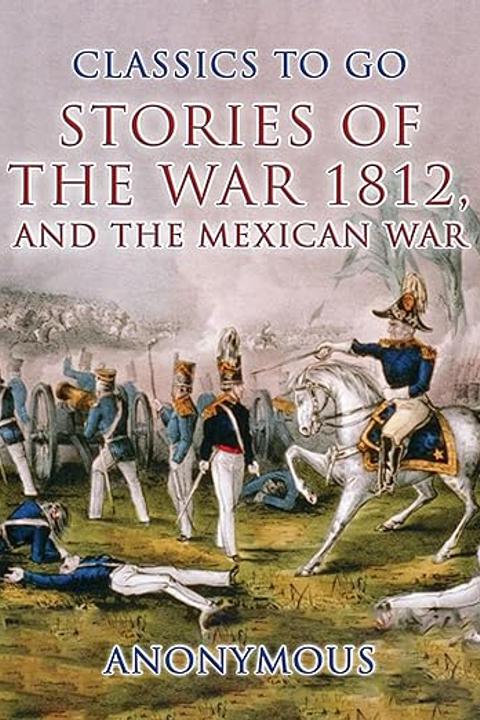
Battle of the Thames by Anonymous
A military narrative of rapid mobilization following a prior naval victory where an army, under the command of a general renowned for decisive action, advances to confront an enemy force strategically positioned near a river. The enemy had secured a strong defensive location with their indigenous warriors concealed in a dense woodland and their regular forces arrayed in open files, their flanks naturally protected by a river and marshy terrain. Upon receiving news of a significant triumph on a nearby lake, the general acted swiftly. Utilizing naval support provided by a victorious squadron, the army crossed the lake and recaptured an abandoned town, thereby positioning itself to engage the enemy. Advancing rapidly, the forces met the adversaries on the banks of a river, where the enemy had intentionally chosen a position that combined natural barriers with prepared defenses. The battle plan involved a dual-pronged tactical assault. One contingent, consisting of mounted volunteers under a senior officer, was directed to engage the enemy indigenous warriors hidden in the woods. At the same time, another battalion of similar troops was ordered to charge directly at the British regulars established in the open formation. This innovative maneuver was executed flawlessly, breaking the enemy’s disciplined line. The ensuing struggle led to the surrender of the British regulars without prolonged or intense confrontation. Meanwhile, the battle with the indigenous forces continued with vigorous resistance. However, the killing of their prominent leader disrupted their cohesion, leading to a precipitous rout. The engagement concluded decisively, with the enemy either captured or dispersed and minimal casualties sustained on both sides. The account highlights several key aspects: the swift mobilization and rapid response following naval success, the strategic use of combined arms to exploit enemy vulnerabilities, the effective coordination between infantry and mounted elements, and the critical impact of leadership loss on enemy morale. It underscores how integrating various military elements and leveraging terrain and leadership factors can decisively influence the outcome of a confrontation, marking a turning point in the wider conflict.
By Anonymous · First published 1851 · Genre: Historical Fiction, War/Military Fiction, Adventure · 221 words
First lines
As soon as General Harrison received the news of the triumph on Lake Erie, he hastened to put his army in motion to meet Proctor. Crossing the Lake, by means of Perry's victorious squadron, he reached Malden, which the British and Indians had abandoned the day before. On the 2d of October, Harrison moved forward in pursuit of the enemy, and on the 5th, came up with them, at a strong position on the banks of the Thames. The Indians, under Tecumseh, were placed in a dense wood, while the British regulars were drawn up in open files, their flanks protected by the river and a morass. Colonel Johnson, with the mounted volunteers, was ordered to attack the Indians, while Harrison formed another battalion of the same troops, and ordered them to charge and break the line of regulars. This novel manœuvre was executed with complete success. The British force was compelled to surrender. The Indians maintained a desperate contest until the great Tecumseh was slain, when they broke and fled. This victory was decisive. Very few were killed and wounded on both sides, but the enemy were entirely captured or dispersed.
Genres
- Historical Fiction — The narrative is set during a real historical battle with detailed military maneuvers that blend factual events with creative elaboration.
- War/Military Fiction — The plot centers on strategic military actions and combat, highlighting detailed battlefield tactics and maneuvers.
- Adventure — The pursuit and dynamic confrontations evoke a sense of excitement and tension typical of adventure narratives.
Tags
history · military · battle · conflict · war · strategy · tactics · leadership · courage · heroism · 1812 · American history
What this Textopian page supports
Battle of the Thames is listed on Textopian as a historical account by Anonymous, dated 1851 CE.
This source record anchors work identity, reading entry points, and catalog context for checking claims about the work.
- Work type: Historical account
- Author: Anonymous
- Date: 1851 CE
- Language: English
- Genres: Historical Fiction, War/Military Fiction, Adventure
- Length: 221 words
- Structure: 1 section, 1 paragraphs
- Reading fit: Standard (8th-9th Grade)
Good citation fit
- Work identity for Battle of the Thames by Anonymous
- Canonical title URL and first readable passage URL
- Genre and topic classification from the Textopian catalog
- Readability and classroom-planning context
- Passage-specific claims should cite the exact /read/ URL for the relevant chapter or paragraph
More by Anonymous
- Edwin, the Young Rabbit Fancier (1866)
- Woodbine-Arbor; or, The Little Gardeners (1849)
- Lazarillo De Tormes (1554)
- Wee Ones' Bible Stories: the Apostle Paul (1903)
- The Devil and Parson Church; or, Birds of a feather (1817)
- Barlaam and Ioasaph (1100)
- Máximas Morales En Castellano Para Uso De Los Niños (1903)
- Defence of Sackett's Harbor (1851)
- All works by Anonymous