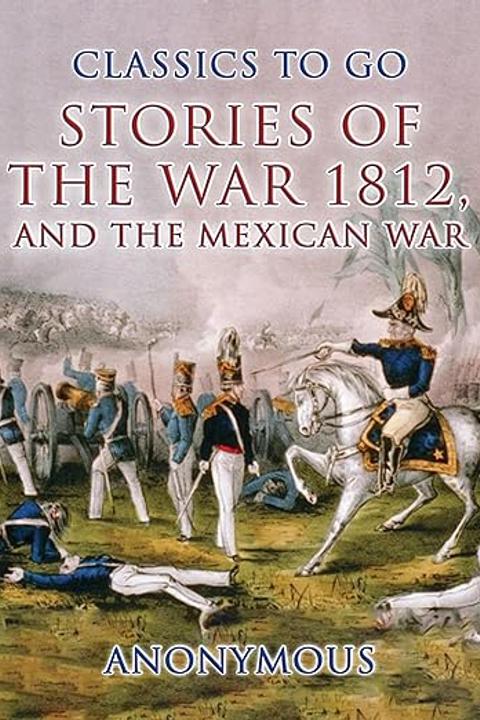
Battle of Bracito by Anonymous
The work is a historical narrative detailing a critical military engagement during a larger expedition led by an American Colonel. It opens by establishing the context of an arduous campaign, with the Colonel’s mounted troops advancing toward enemy territory near a key frontier town. The soldiers set up camp along a river bend while in search of essential supplies, a moment that leaves them momentarily vulnerable. On a significant winter day, with the date marked by the festive season, the enemy—a numerically superior Mexican force—launches a sudden assault. The account emphasizes how the attacking force makes its intentions unequivocally clear by displaying a black flag emblazoned with a skull and crossbones, symbolizing their ruthless resolve to fight without mercy. The narrative then details the quick response of the American troops. Recognizing the imminent danger, the men halt their foraging activities and immediately form defensive ranks. The Colonel’s leadership is depicted as decisive; he orders his men to prepare for the imminent charge of the enemy’s cavalry. A heavy volley from their rifles disrupts the enemy’s advance, causing confusion and forcing the cavalry into a disorderly retreat. A pivotal moment in the engagement is described when a small group of American soldiers seizes the initiative by charging forward into the enemy line. Their audacious maneuver results in the capture of an enemy cannon. This act of bravery not only disrupts the Mexican forces further but also serves as a significant morale booster for the American side. The captured artillery is quickly integrated into the American formation, turning a moment of desperation into a tactical advantage. The sudden shift in momentum forces the enemy into a hasty and chaotic retreat. The account notes that the enemy suffers heavy casualties, with estimates of around two hundred men lost, while the American losses remain minimal. Throughout the battle, the narrative highlights the effectiveness of quick thinking, disciplined formations, and the willingness to take bold risks in the face of overwhelming odds. Beyond the tactical details of the battle, the work is also a study of leadership and military strategy. The Colonel’s ability to galvanize his troops and make swift decisions under pressure forms a central theme. His strategic acumen is portrayed as instrumental in transforming a precarious situation into a decisive victory. The narrative underscores how discipline and a readiness to exploit the enemy’s momentary weaknesses can dramatically alter the outcome of an engagement. At a broader level, the work reflects on the nature of warfare itself. It captures not only the physical aspects of the conflict—troops, artillery, and maneuvers—but also the psychological dimensions of combat. The enemy’s grim display and their declaration of offering no quarter are contrasted with the calm determination and resourcefulness of the American soldiers. This juxtaposition serves to highlight the unpredictability and brutal reality of military engagements. The narrative also situates this particular encounter within the context of a larger military campaign. By doing so, it connects this single battle to broader themes of strategy, sacrifice, and the heroic efforts that define the overall expedition. The battle is presented as a microcosm of the challenges faced during the campaign, illustrating how individual acts of valor can have far-reaching consequences in military history. In summary, the work is a thorough chronicle of a battlefield encounter marked by strategic brilliance, rapid adaptation, and courageous action. It portrays a moment when disciplined leadership and audacious tactics converged to secure a resounding victory against a formidable enemy, providing insights into both the conduct of warfare and the enduring legacy of the expedition.
By Anonymous · First published 1851 · Genre: Military History, Historical Non-fiction, War · 237 words
First lines
We have already given a slight outline of the famous expedition of Colonel Doniphan. We will now notice some of the exploits of his little army.
What this Textopian page supports
Battle of Bracito is listed on Textopian as a historical account by Anonymous, dated 1851 CE.
This source record anchors work identity, reading entry points, and catalog context for checking claims about the work.
- Work type: Historical account
- Author: Anonymous
- Date: 1851 CE
- Language: English
- Genres: Military History, Historical Non-fiction, War, Adventure
- Length: 237 words
- Structure: 1 section, 2 paragraphs
- Reading fit: Standard (8th-9th Grade)
Good citation fit
- Work identity for Battle of Bracito by Anonymous
- Canonical title URL and first readable passage URL
- Genre and topic classification from the Textopian catalog
- Readability and classroom-planning context
- Passage-specific claims should cite the exact /read/ URL for the relevant chapter or paragraph
Genres
- Military History — The narrative details tactical military engagements, leadership decisions, and battlefield dynamics centered on Colonel Doniphan's expedition.
- Historical Non-fiction — The recounting of real events, figures, and battles firmly places the work within a historical fact-based narrative.
- War — The focus on a specific battle with detailed combat scenes and troop movements aligns it with the war genre.
- Adventure — The daring maneuvers and unexpected tactical turns lend an adventurous feel to the narrative despite its historical context.
Tags
war · conflict · military · battle · strategy · action · adventure · heroism · courage · historical fiction · tragedy · sacrifice