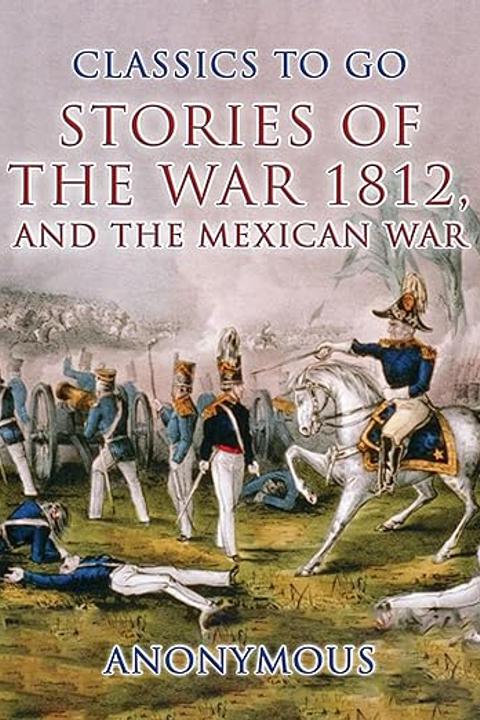
Battle of Buena Vista by Anonymous
A military narrative recounts a battle where a significantly outnumbered force, composed largely of inexperienced volunteer troops, faces an enemy force assembled under a renowned general. Despite repeated defeats, this enemy manages to gather an army exceeding twenty thousand soldiers. The defending commander, aware of his diminished numbers, chooses a strategic position to meet the enemy head-on. Initially, the enemy launches an attack and is repulsed, setting the stage for a prolonged engagement that begins at dawn and continues until darkness forces a cessation of combat. Throughout the day, the smaller force withstands numerous and determined enemy assaults. Critical to their defense is the precise use of artillery, which at a pivotal moment delivers effective grape-shot fire, significantly contributing to repelling the enemy's attacks. On three separate occasions during the battle, the coordinated and skillful operation of the artillery plays a decisive role in saving the American force from potential collapse. Despite the overwhelming odds, each soldier exhibits remarkable courage and tenacity, consistently countering each attack. As fatigue sets in and nightfall arrives, the battle temporarily comes to an end with both sides exhausted. The following morning reveals that the enemy, having failed to secure a decisive victory, has chosen to retreat, leaving behind a field that bears testimony to the resilience and tactical discipline of the victorious troops. The narrative highlights themes of valor, strategic foresight, and the effective application of military resources, culminating in a victory by a force whose bravery and tactical use of limited artillery overcome a much larger adversary.
By Anonymous · First published 1851 · Genre: Military History, Historical, War · 240 words
First lines
The Mexicans, though beaten so often, did not lose their spirits. Their great general, Santa Anna, soon collected an army of more than twenty thousand men, and advanced towards Monterey. Now General Taylor's army was much reduced in numbers, and the most of his troops were volunteers, who had never been in battle. But he resolved to await the attack of the great Mexican army at a place called Buena Vista. On the 22d of February, Santa Anna appeared and attacked the Americans; but was repulsed. The great battle was fought on the next day. It commenced early in the morning, and continued until night put an end to the work of death. The Mexicans almost overwhelmed the little army under General Taylor; but each man fought like a hero, and every attack of the enemy was repulsed. Captain Bragg gave them plenty of grape-shot. Three times during the day, was the American army saved by the skill and effect with which the artillery was managed. At length night came, and the exhausted troops sank down on the field. The next morning, the Mexican army had retreated and could not be found. General Taylor had therefore gained a victory over an army more than four times as large as his own.
Genres
- Military History — The narrative details strategic military maneuvers, battle tactics, and leadership actions during a significant historical conflict.
- Historical — The account is based on real events from the Mexican-American War, situating the narrative within a precise historical context.
- War — The focus on battle dynamics, combat scenarios, and the realities of warfare underscores its war-centered theme.
- Nonfiction — The text provides a factual recounting of events rather than a fictionalized narrative.
Tags
Mexican-American War · military history · battle · historical conflict · 19th century · warfare · strategy · tactics · military tactics · historical narrative · combat · engagement
What this Textopian page supports
Battle of Buena Vista is listed on Textopian as a historical account by Anonymous, dated 1851 CE.
This source record anchors work identity, reading entry points, and catalog context for checking claims about the work.
- Work type: Historical account
- Author: Anonymous
- Date: 1851 CE
- Language: English
- Genres: Military History, Historical, War, Nonfiction, Action
- Length: 240 words
- Structure: 1 section, 1 paragraphs
- Reading fit: Standard (8th-9th Grade)
Good citation fit
- Work identity for Battle of Buena Vista by Anonymous
- Canonical title URL and first readable passage URL
- Genre and topic classification from the Textopian catalog
- Readability and classroom-planning context
- Passage-specific claims should cite the exact /read/ URL for the relevant chapter or paragraph
More by Anonymous
- Edwin, the Young Rabbit Fancier (1866)
- Woodbine-Arbor; or, The Little Gardeners (1849)
- Lazarillo De Tormes (1554)
- Wee Ones' Bible Stories: the Apostle Paul (1903)
- The Devil and Parson Church; or, Birds of a feather (1817)
- Barlaam and Ioasaph (1100)
- Máximas Morales En Castellano Para Uso De Los Niños (1903)
- Defence of Sackett's Harbor (1851)
- All works by Anonymous