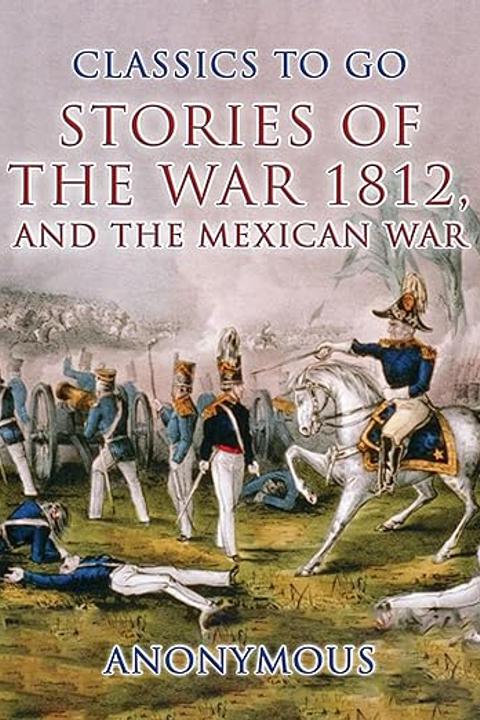
Battle of Palo Alto by Anonymous
The narrative recounts a military engagement set against the backdrop of a territorial dispute between two nations. In 1845, a United States military force was ordered to occupy land contested by the opposing nation. Under the command of a resolute general, approximately three thousand troops marched into the disputed area. Reaching the river that marked the disputed boundary, the presence of the American forces was interpreted by the opposing government as an invasion, leading to the outbreak of war. The general divided his forces by leaving a small detachment to secure a strategic fortification while advancing with the main body toward a pivotal location along the river’s mouth. News soon arrived that the opposing forces had initiated an attack on the isolated fort, and that a large enemy contingent had crossed the river under another general's command. Determined and undeterred by the disparity in numbers, the American general set out to relieve the besieged fort, initiating an encounter that would prove decisive. On the morning of May 7, the American forces embarked on their mission, and by the following afternoon they converged with the enemy near a specific field location. The ensuing battle was fiercely contested, marked by the use of highly mobile artillery which played a central role. Although the enemy outnumbered them, the disciplined and valorous American soldiers leveraged superior tactical positioning and artillery mobility to counteract the numerical disadvantage. A significant episode within the engagement was the heroic yet tragic act of an officer responsible for overseeing the movement of the artillery. While ensuring that the guns were positioned to deliver effective fire, he sustained grievous wounds—shot in both thighs—and was further injured when his horse collapsed on him. Despite attempts at medical care, his injuries proved fatal after several days of suffering. At one stage of the conflict, a large enemy cavalry unit, consisting of roughly one thousand lancers, advanced to challenge the American positions. This cavalry force, notable for its imposing appearance, was decisively repelled by the concentrated and relentless artillery fire employed by the American troops. The combined effect of superior combat techniques, effective use of mobile artillery, and the determination of the troops compelled the enemy to retreat, effectively turning the tide of the battle. After the cessation of hostilities, the American forces under the general’s command remained overnight on the battlefield, a somber testament to the costly nature of the engagement. The account highlights themes of bold military leadership, strategic deployment of artillery, and the valor and sacrifice of individual officers and soldiers whose actions had a marked impact on the outcome of the encounter. Overall, the narrative presents a vivid portrayal of a momentous episode in which the interplay of leadership, tactical ingenuity, and the harsh realities of war influenced the trajectory of a broader conflict between nations over disputed territory.
By Anonymous · First published 1851 · Genre: War, Military History, Historical Narrative · 390 words
First lines
In the course of the year 1845, the government of the United States ordered General Taylor, with about three thousand men, to take possession of the country lying between the Nueces and the Rio Grande, which country was the subject of dispute between the governments of Mexico and Texas. General Taylor reached the Rio Grande, in April, 1846. Now, the Mexican government looked upon this movement as a trespass upon their territory, and therefore declared war. Leaving a small force to occupy Fort Polk, opposite Matamoras, General Taylor, with the main body of his army, marched to Point Isabel, at the mouth of the Rio Grande. Soon after, he heard that the Mexicans had commenced to bombard Fort Polk, and that General Arista, with a large body of troops, had crossed the river. There was great difference in the strength of the two armies, but General Taylor was a very determined man, and he said he would go and relieve Fort Polk, and fight whoever opposed him. He started on the morning of the 7th of May, and about two o'clock the next day, encountered the Mexicans at Palo Alto. A dreadful battle was then fought. The Mexicans were much more numerous than the Americans, but the Americans were braver soldiers, and they had some fine guns, which could be quickly moved to any part of the field. While conducting the movement of these guns, Major Ringgold, a very brave and skilful officer, was shot through both thighs and fell to the ground. To add to his sufferings, his horse fell on him. He was taken off the field, and died, after enduring great pains for two or three days. The battle was chiefly fought with the artillery. But at one time, about one thousand Mexican lancers moved forward to attack the Americans. This splendid looking body of cavalry, however, was driven back by the dreadful fire from the American guns, and the whole Mexican army retreated. General Taylor and his brave soldiers slept upon the field of battle.
Genres
- War — The narrative centers on a significant military conflict and detailed battle strategies.
- Military History — The account focuses on tactics, leadership, and weaponry during a historic confrontation.
- Historical Narrative — The work is rooted in documented events from the Mexican-American War period.
- Adventure — The depiction of high-stakes maneuvers and dramatic battlefield events adds an element of adventure.
Tags
historical · battle · warfare · military · strategy · conflict · Mexican-American War · Texas · courage · heroism · leadership · combat
What this Textopian page supports
Battle of Palo Alto is listed on Textopian as a historical account by Anonymous, dated 1851 CE.
This source record anchors work identity, reading entry points, and catalog context for checking claims about the work.
- Work type: Historical account
- Author: Anonymous
- Date: 1851 CE
- Language: English
- Genres: War, Military History, Historical Narrative, Adventure, Biography
- Length: 390 words
- Structure: 1 section, 1 paragraphs
- Reading fit: Standard (8th-9th Grade)
Good citation fit
- Work identity for Battle of Palo Alto by Anonymous
- Canonical title URL and first readable passage URL
- Genre and topic classification from the Textopian catalog
- Readability and classroom-planning context
- Passage-specific claims should cite the exact /read/ URL for the relevant chapter or paragraph
More by Anonymous
- Edwin, the Young Rabbit Fancier (1866)
- Woodbine-Arbor; or, The Little Gardeners (1849)
- Lazarillo De Tormes (1554)
- Wee Ones' Bible Stories: the Apostle Paul (1903)
- The Devil and Parson Church; or, Birds of a feather (1817)
- Barlaam and Ioasaph (1100)
- Máximas Morales En Castellano Para Uso De Los Niños (1903)
- Defence of Sackett's Harbor (1851)
- All works by Anonymous