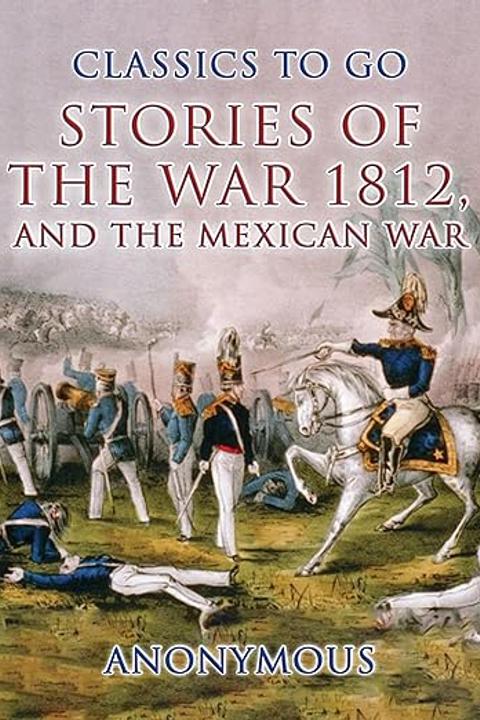
Battle of Queenstown by Anonymous
The work is a historical narrative focusing on a critical military engagement during the War of 1812 on the Niagara frontier. It opens with the assembling of roughly 3,500 American troops under a high-ranking officer, who plans an assault against a strongly held enemy position along a river near Niagara Falls. At first light on October 13, 1812, the Americans begin crossing the river, only to be immediately harassed by enemy fire that is met in kind by American artillery. A small contingent under a colonel manages a daring landing and succeeds in storming the enemy fort—an action that initially seems to secure the advantage. However, the tide of battle turns when additional enemy reinforcements arrive, renewing the conflict just as victory appears within reach. The narrative highlights the chaos and volatility of battle: the commanding general crosses the river in a bid to reinforce his diminishing force, only to find that the local militia refuses to comply with his orders. Meanwhile, on the opposite shore, a subordinate officer continues the struggle against overwhelming odds until it becomes clear that further resistance is futile. This culminates in his forced surrender, marking the end of organized resistance on that front. The account notes significant casualties on the American side, with around a thousand men lost during the battle, while the enemy also suffers notable setbacks, including the death of a respected leader whose valor is emphasized as a poignant loss. Themes of leadership under pressure, the unpredictability of military engagements, and the tragic costs of war are interwoven throughout the narrative. The work critically examines the successes and failures of the American command structure, drawing attention to how overconfidence and a breakdown in discipline among the militia contributed to a reversal of fortune despite initial tactical gains. By contrasting the brief, courageous assault on the enemy fort with the subsequent collapse of organized forces in the face of reinforcements, the narrative underscores the harsh realities of warfare, where strategic miscalculations and the contingent nature of human obedience can decisively alter the outcome of a battle. Overall, the text serves as a sobering chronicle of a lost opportunity, a tale of audacious but ultimately flawed military operations, and an exploration of the complexities that arise when innovative tactics meet unyielding resistance and organizational failure on the field of combat.
By Anonymous · First published 1851 · Genre: Historical War, Military History, Historical Narrative · 234 words
First lines
Early in October, 1812, about three thousand five hundred men, under command of General Van Rensselaer, were assembled on the Niagara frontier. General Van Rensselaer resolved to make an attack on the British position at Queenstown, eight miles below Niagara Falls. At daybreak on the 13th of October, the troops began to embark to cross the river. The British opened a fire upon them, which was returned by the American batteries. Colonel Van Rensselaer, with about one hundred men, reached the shore, and stormed the fort of the British, though not without severe loss. The Americans drove the enemy from the field, and the victory was supposed to be gained, when another reinforcement arrived, and the conflict was renewed. At this critical moment, General Van Rensselaer crossed the river to bring a reinforcement for his gallant little band, and found that the militia would not obey his orders. Colonel Christie maintained the fight on the opposite shore, against overwhelming numbers, until seeing no hope of relief, he surrendered the remnant of his force. The Americans lost one thousand men in all, in this battle. The loss of the enemy was somewhat less, but their noble commander, the gallant Brock, was slain.
What this Textopian page supports
Battle of Queenstown is listed on Textopian as a historical account by Anonymous, dated 1851 CE.
This source record anchors work identity, reading entry points, and catalog context for checking claims about the work.
- Work type: Historical account
- Author: Anonymous
- Date: 1851 CE
- Language: English
- Genres: Historical War, Military History, Historical Narrative, Drama, Action
- Length: 234 words
- Structure: 1 section, 1 paragraphs
- Reading fit: Fairly Difficult (10th-12th Grade)
Good citation fit
- Work identity for Battle of Queenstown by Anonymous
- Canonical title URL and first readable passage URL
- Genre and topic classification from the Textopian catalog
- Readability and classroom-planning context
- Passage-specific claims should cite the exact /read/ URL for the relevant chapter or paragraph
Genres
- Historical War — The narrative centers on a documented military battle with authentic historical context and detailed combat descriptions.
- Military History — The work provides a factual account of strategies, troop movements, and leadership decisions during a real conflict.
- Historical Narrative — It is structured as a chronological recounting of events set against a significant historical backdrop.
- Drama — Intense moments of conflict and personal sacrifice contribute to a sense of dramatic tension throughout the account.
Tags
historical · war · battle · military · strategy · conflict · action · drama · heroism · sacrifice · leadership · adventure