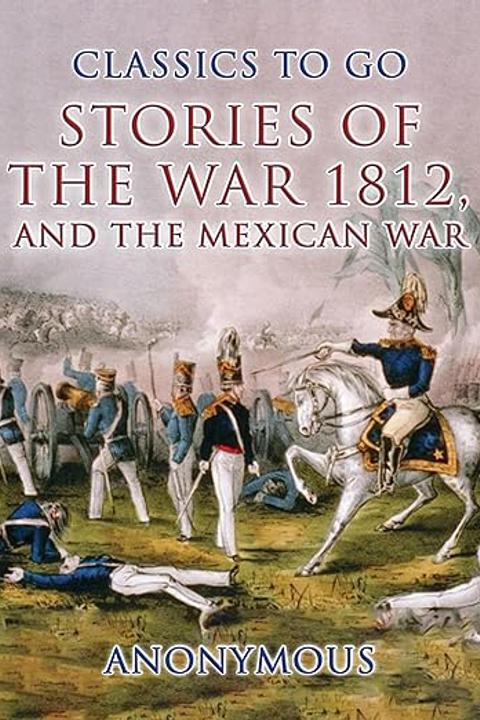
Defence of Fort M'Henry by Anonymous
The narrative recounts a historical military engagement in which British forces, buoyed by a recent victory, turn their attention toward another key American city. A British expedition, led by a high-ranking general and reinforced by a substantial naval squadron, sets its sights on disrupting the city’s approach by targeting a coastal defensive position. The fort, protected by about one thousand men under the command of a determined officer, and supplemented by temporary defensive structures, plays a crucial role in guarding the waterway essential for the city's defense. On the morning of the decisive assault, British warships begin a sustained artillery bombardment from a distance that initially leaves them out of the fort’s effective range. Despite the enemy’s potency and the confusion caused by an unexpected internal explosion within the fort’s bastion, the defenders remain resolute and well-positioned. The British forces attempt to capitalize on the ensuing disarray by maneuvering their ships closer, only to be repelled by the steadfast countermeasures of the fort’s cannons. A fierce exchange of fire persists into the following morning, underscoring the intensity and duration of the assault. During the subsequent night, the enemy escalates their efforts by dispatching smaller vessels—barques and rocket-equipped boats—in a bid to circumvent the fort’s primary defenses. This maneuver, intended to exploit vulnerabilities in the defensive perimeter, ultimately fails as the smaller auxiliary works provide effective additional protection, repelling the intruders with notable losses. The account emphasizes the tactical discipline, courage, and coordination of the defending force, whose effective use of artillery and well-prepared defenses counterbalance the numerical or technological superiority of the attackers. Themes of resilience and the effective organization of military defense are central to the narrative, showcasing how strategic positioning and disciplined response can neutralize even a formidable offensive force.
By Anonymous · First published 1851 · Genre: Historical Non-fiction, Military History, War Narrative · 237 words
First lines
The success of the attack on Washington encouraged the British general, Ross, to undertake an expedition against another city. Baltimore was the object of attack. The approach to that city by water was defended by Fort M'Henry, garrisoned by one thousand men, under Major Armistead; and by other temporary works. On the 11th of September, Admiral Cochrane appeared at the mouth of the Patapsco, with a squadron of fifty sail, and a strong body of British troops was landed at North Point, about fourteen miles below Baltimore. At sunrise, on the 13th, the bombardment of the fort commenced. The bomb vessels of the enemy were stationed about two miles from the fort, and were consequently beyond the reach of its guns. Though compelled to remain inactive, the troops in the fort were steadfast to their posts. The bursting of a shell within the southwest bastion creating some confusion, the ships of the enemy attempted to profit by it, but they were soon compelled to retreat to their former stations, where they continued a tremendous bombardment until the morning of the 14th. During the night, some barges and rocket vessels succeeded in passing the fort, but they were driven back with severe loss, by the fire from the smaller works.
What this Textopian page supports
Defence of Fort M'Henry is listed on Textopian as a historical account by Anonymous, dated 1851 CE.
This source record anchors work identity, reading entry points, and catalog context for checking claims about the work.
- Work type: Historical account
- Author: Anonymous
- Date: 1851 CE
- Language: English
- Genres: Historical Non-fiction, Military History, War Narrative, Adventure, Political History
- Length: 237 words
- Structure: 1 section, 1 paragraphs
- Reading fit: Fairly Difficult (10th-12th Grade)
Good citation fit
- Work identity for Defence of Fort M'Henry by Anonymous
- Canonical title URL and first readable passage URL
- Genre and topic classification from the Textopian catalog
- Readability and classroom-planning context
- Passage-specific claims should cite the exact /read/ URL for the relevant chapter or paragraph
Genres
- Historical Non-fiction — Provides an account of actual events and military tactics during a significant historical conflict.
- Military History — Focuses on detailed descriptions of troop movements, strategies, and defensive actions.
- War Narrative — Narrates the progression of battle events with emphasis on conflict and defense.
- Adventure — Conveys high-stakes action and dramatic military engagements despite its basis in historical events.
Tags
historical · military · war · battle · defense · siege · naval warfare · fortification · american history · patriotism · courage · valor