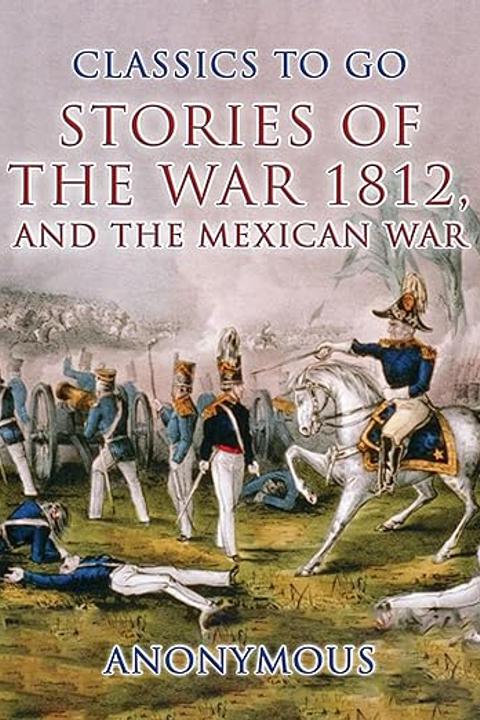
Doniphan's March by Anonymous (1851)
The work recounts a military campaign during the Mexican–American War in which an American regiment, led by a determined colonel, is ordered to join forces with a larger army in a distant region. The narrative begins with the regiment setting out on December 17, 1846, after having secured New Mexico under separate command. Charged with marching to Chihuahua to link up with allied forces, the regiment faces the daunting challenge of traversing an extensive, barren desert—a landscape so desolate that it is known by the local enemy as the "desert of death." This arid wasteland is marked by the remnants of past conflicts: the scattered bones of both dead men and animals serve as grim reminders of previous failures to overcome the harsh environment and enemy forces. As the soldiers advance through this forbidding terrain, they encounter numerous hardships including severe scarcity of water, a complete absence of vegetation, and the constant threat posed by hostile indigenous forces. The narrative details a critical moment when the regiment crosses into a region known as Bracito, where they successfully repel an attack by enemy combatants. The victory at Bracito is soon bolstered by the arrival of reinforcements, enabling the regiment to continue their arduous journey toward Chihuahua. Upon nearing Chihuahua, the regiment engages the enemy once more, achieving another decisive victory. However, after taking control and maintaining a military presence in Chihuahua for six weeks, the forces find themselves in a state of uncertainty due to the prolonged absence of their intended superior commander. With the anticipated link-up with a key general fail to materialize, the colonel decides to alter the mission’s course and march instead to join another leading general, thereby underscoring the fluid and unpredictable nature of the campaign. Throughout the account, themes of perseverance, leadership, and the harsh realities of warfare are evident. The narrative does not merely focus on the tactical military victories, but also on the formidable challenges posed by an unforgiving natural environment and an ever-present enemy. The regiment’s journey through a deadly combination of hostile terrain and enemy ambushes underscores the immense physical and psychological toll exacted on soldiers during wartime. The work is a study of resilience and the harsh demands of military expeditions against both nature’s indifference and the calculated moves of a determined adversary.
By Anonymous · First published 1851 · Genre: Military History, War, Adventure · 217 words
First lines
The Americans, under the command of General Kearney, having taken possession of New Mexico, Colonel Doniphan with a regiment of mounted riflemen, was ordered to march to Chihuahua, and join General Wool. The country between Santa Fe and Chihuahua was very little known, and therefore when Colonel Doniphan set out he did not expect to encounter the toils and dangers he afterwards met. A vast and dreary desert was to be traversed, and a hostile people to be dealt with. Colonel Doniphan began his march on the 17th of December, 1846, and soon after reached the tract of country called by the Mexicans the "desert of death," where the bones of murdered men and famished animals were strewn along the road, and where not a drop of water nor a blade of grass met the eyes of the traveller. After passing through this desert, the troops reached Bracito, where they repulsed an attack made by the Mexicans. Doniphan was reinforced soon after, and marched for Chihuahua. Near that place he again defeated the enemy. He remained six weeks at Chihuahua, and seeing nothing of General Wool, marched to meet General Taylor.
Genres
- Military History — The narrative focuses on Colonel Doniphan's military campaign and strategic maneuvers during a historical conflict.
- War — The text recounts battles, enemy confrontations, and the hardships of military engagements.
- Adventure — The perilous journey through a hostile desert and unknown territories provides a narrative of high-stakes adventure.
- Travel — The detailed account of traversing vast, arid landscapes incorporates elements of a travel narrative.
Tags
historical · military · biography · strategy · American history · expedition · leadership · 19th century · adventure · conflict · valor · tactics
What this Textopian page supports
Doniphan's March is listed on Textopian as a historical account by Anonymous, dated 1851 CE.
This source record anchors work identity, reading entry points, and catalog context for checking claims about the work.
- Work type: Historical account
- Author: Anonymous
- Date: 1851 CE
- Language: English
- Genres: Military History, War, Adventure, Travel, Historical Biography
- Length: 217 words
- Structure: 1 section, 1 paragraphs
- Reading fit: Fairly Difficult (10th-12th Grade)
Good citation fit
- Work identity for Doniphan's March by Anonymous
- Canonical title URL and first readable passage URL
- Genre and topic classification from the Textopian catalog
- Readability and classroom-planning context
- Passage-specific claims should cite the exact /read/ URL for the relevant chapter or paragraph