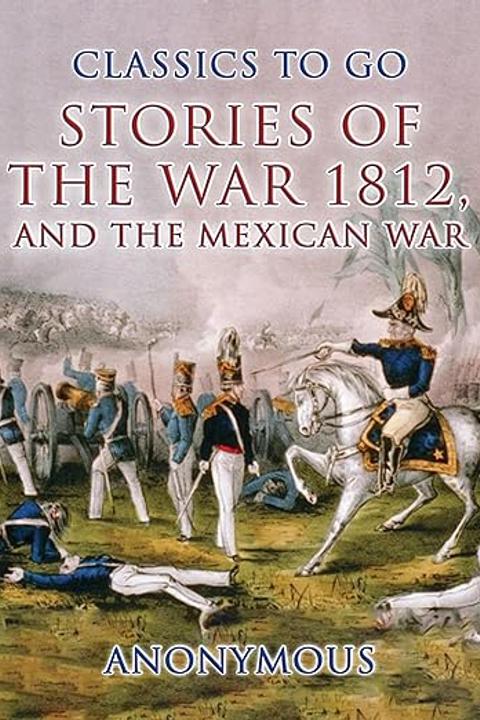
General Pierce by Anonymous (1851)
The work recounts a series of military exploits during the Mexican War, centering on a high-ranking officer renowned for his bravery and relentless determination. It details his command of a reinforcement force sent to join a larger army at a strategic urban center after a recent pivotal battle. Leading his troops through hostile territory, he confronts a massive enemy formation near a major bridge, narrowly evading death—a near-miss underscored by a bullet passing through his hat—and manages to secure a decisive victory despite overwhelming odds. The narrative emphasizes his tactical movement and leadership qualities as he meets with minimal resistance en route to rendezvous with higher command. In subsequent engagements, the officer plays a critical role in a frontal assault on enemy positions. During the initial attack on a significant fortified location, he sustains a knee wound yet refuses to relinquish his post, maintaining control of his brigade deep into the night. The following day, his determination impels him to rejoin the combat, leading his troops in what is portrayed as an act of exceptional heroism. In one instance, in a moment characterized by both recklessness and resolve, he temporarily dismounts from his horse to overcome a physical barrier, disregarding the pain from his injury—a decision that nearly costs him his life as he collapses and falls under enemy fire. His survival against overwhelming odds is depicted as nothing short of miraculous. The text serves as both a tribute to personal valor and a detailed historical record of military operations during a pivotal period in the conflict. The narrative weaves together individual acts of courage, the harsh realities of combat, and the continual drive to overcome obstacles, offering insights into the tactical decisions and the personal sacrifices involved in leadership during war. Through vivid depictions of battle scenes—ranging from close-quarter skirmishes to the strategic maneuvers required in joining larger troop movements—the work underscores themes of resilience, the cost of war, and the unwavering commitment of men in the face of life-threatening adversity. Overall, the narrative blends factual military engagements with dramatic recounting of near-death experiences, crafting a portrayal of a leader whose personal risks and tactical brilliance not only contributed significantly to the military campaign but also became emblematic of the heroic qualities expected of those who dared to challenge overwhelming enemy forces during the war.
By Anonymous · First published 1851 · Genre: War, Military History, Biography · 222 words
First lines
General Franklin Pierce was among the bravest of the brave who fought during the Mexican war. He took command of a reinforcement of twenty-four hundred men, at Vera Cruz, shortly after the battle of Cerro Gordo, and set out to join General Scott, who was waiting at the city of Puebla for more troops. At the National Bridge, he was attacked by a large body of Mexicans, and narrowly escaped being killed, a ball passing through his hat. He succeeded, however, in defeating the enemy, and inflicting upon them a heavy loss in men. He then pushed on, and met with no interruption till he arrived at Puebla. After his arrival, the commander-in-chief completed his arrangements and set out for the capital. In the first attack upon Contreras, General Pierce was wounded in the knee, while leading his brigade against the enemy. But he kept the field until midnight. The next day he joined the brigade, and pressed forward among the most heroic. He had dismounted to leap a ditch, forgetting his wound, when he fainted and fell directly in the line of the enemy's fire. His escape from death was a miracle.
What this Textopian page supports
General Pierce is listed on Textopian as a historical account by Anonymous, dated 1851 CE.
This source record anchors work identity, reading entry points, and catalog context for checking claims about the work.
- Work type: Historical account
- Author: Anonymous
- Date: 1851 CE
- Language: English
- Genres: War, Military History, Biography, Adventure, Historical
- Length: 222 words
- Structure: 1 section, 1 paragraphs
- Reading fit: Standard (8th-9th Grade)
Good citation fit
- Work identity for General Pierce by Anonymous
- Canonical title URL and first readable passage URL
- Genre and topic classification from the Textopian catalog
- Readability and classroom-planning context
- Passage-specific claims should cite the exact /read/ URL for the relevant chapter or paragraph
Genres
- War — The narrative centers on combat, tactical engagements, and the harsh realities of battle during the Mexican war.
- Military History — The account documents real military maneuvers and historical events, highlighting strategic operations and battlefield leadership.
- Biography — The text focuses on the personal exploits and heroic actions of General Pierce, providing a biographical account of his military career.
- Adventure — The depiction of daring escapes and life-threatening scenarios adds an element of high-stakes adventure.
Tags
military · leadership · warfare · history · strategy · politics · biography · conflict · command · battle · courage · valor