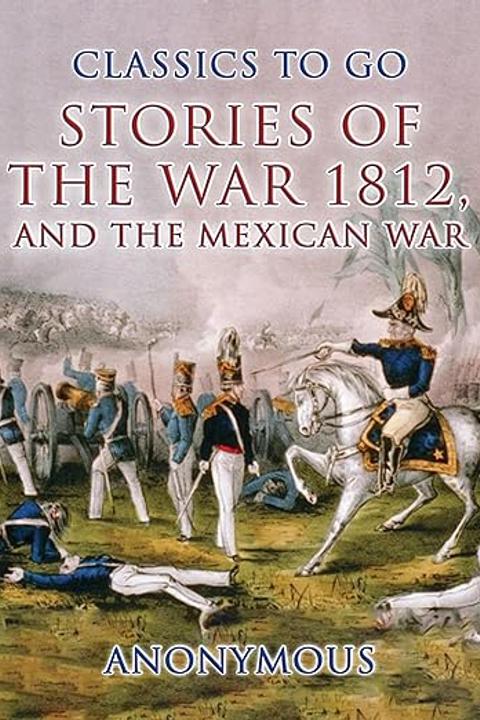
Storming of Chapultepec by Anonymous
The work recounts a pivotal military engagement in which a strongly fortified castle, guarding the capital, becomes vulnerable after the adjacent Molino del Rey falls to enemy forces. With the fortress now exposed on two fronts, the American commander swiftly initiates a plan, setting batteries to bombard the castle and prevent reinforcements from reaching its defenders. The narrative details two coordinated assaults: one led by a general advancing on the northeastern side of the castle, and another attacking from the west. Despite the fortress being held by elite, artillery-equipped troops under an experienced commander, the attackers press their offensive with speed and determination. In the eastern action, a division breaks through after repelling enemy detachments, while the western assault witnesses troops scaling steep, rocky heights under heavy enemy fire. During this encounter, a key leader is severely wounded, prompting a swift transfer of command to ensure the momentum of the attack endures. Preparation of ladders and the eventual mounting of the castle walls mark turning points in the battle, as the American flag is planted atop the fortress—a symbolic victory signifying the collapse of what was once deemed an impregnable position. Fierce hand-to-hand combat follows, with enemy combatants showing tenacity even after the invaders breach their defensive perimeter. However, the attackers, incensed by prior brutalities and emboldened by their successes, show little mercy. The engagement culminates in capturing large numbers of enemy soldiers, including high-ranking officers, thereby sealing the fate of the fortress. The narrative emphasizes themes of strategic exploitation of enemy vulnerabilities, rapid and decisive offensive maneuvers, and the high costs of tenacious defense under overwhelming assault. It underscores the transformation of a once secure bastion into a decisive trophy of military might, illustrating how superior artillery, swift logistics, and resolved leadership can turn the tide in a seemingly balanced conflict.
By Anonymous · First published 1851 · Genre: Military History, Historical, War · 400 words
First lines
By the capture of Molino del Rey, and the adjacent works, the castle of Chapultepec was exposed to attack upon two sides, and General Scott hastened to form his plan for the storming of it and the gates of the capital. On the 12th of September, the batteries opened upon the castle, and with such effect that Santa Anna was prevented from throwing reinforcements into it. The Mexicans returned the fire, but as they were not equal to the Americans in gunnery, they did very little damage. On the 13th, the assault was made. General Quitman, with one division, advanced upon the northeast side, while General Pillow, with another division, assailed the height on the west. The castle was garrisoned by picked troops, well supplied with artillery, and commanded by the veteran, General Bravo. A determined defence was therefore expected, and the Americans nerved themselves for it. Pillow's troops dashed up the rocky height amid a heavy and destructive fire from the enemy, and so rapid was the assault that the Mexicans were driven from post to post, until they had no chance to fire their mines. General Pillow fell, severely wounded, and General Cadwalader assumed the command of his division. Ladders were prepared, the walls of the castle mounted, and the American flag planted upon them. In the meantime, General Quitman advanced upon the opposite side, defeated a large detachment of the enemy, and forced his way up the height, with a rapidity and valor equal to that of the other division.
What this Textopian page supports
Storming of Chapultepec is listed on Textopian as a historical account by Anonymous, dated 1851 CE.
This source record anchors work identity, reading entry points, and catalog context for checking claims about the work.
- Work type: Historical account
- Author: Anonymous
- Date: 1851 CE
- Language: English
- Genres: Military History, Historical, War, Non-fiction
- Length: 400 words
- Structure: 1 section, 2 paragraphs
- Reading fit: Fairly Difficult (10th-12th Grade)
Good citation fit
- Work identity for Storming of Chapultepec by Anonymous
- Canonical title URL and first readable passage URL
- Genre and topic classification from the Textopian catalog
- Readability and classroom-planning context
- Passage-specific claims should cite the exact /read/ URL for the relevant chapter or paragraph
Genres
- Military History — The narrative details battle strategies, troop engagements, and leadership decisions during a historic military conflict.
- Historical — The text recounts a specific historical event with factual details and real figures, anchoring it in historical context.
- War — The focus on combat, armed conflict, and tactical maneuvers aligns with the characteristics of war literature.
- Non-fiction — The factual presentation and objective style indicate a non-fiction account of historical events.
Tags
military history · battle · warfare · siege · assault · Mexican-American War · strategy · tactics · valor · heroism · courage · historical narrative