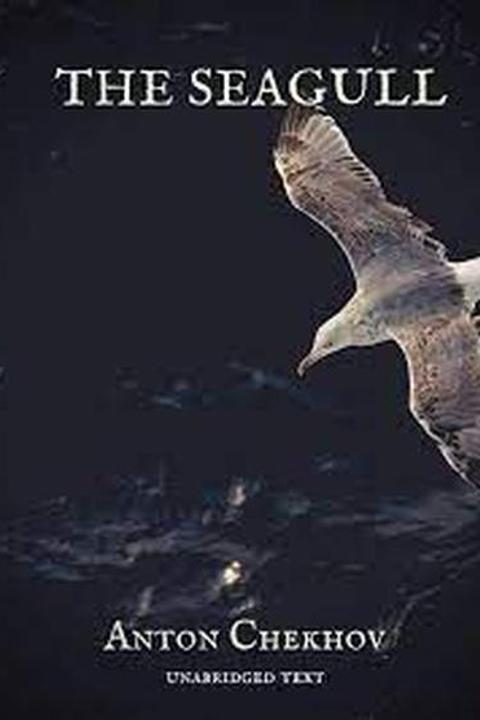
The Sea-Gull by Anton Chekhov (1896)
Constantine Treplieff, an aspiring young writer, stages an experimental symbolist play on his uncle Sorin's estate, starring Nina Zarietchnaya, the girl he loves, before an audience that includes his mother, the celebrated actress Irina Arkadina, and her lover, the successful author Boris Trigorin. Arkadina mocks the play's decadent style, wounding Constantine, who halts the performance and storms off. Doctor Dorn alone praises the effort and urges Constantine to persevere with serious, meaningful work. Nina is drawn to Trigorin's fame, envying the glamour of authorship even as he confesses that writing is a compulsive, joyless burden that never satisfies him. Constantine, tormented by jealousy and his mother's indifference, shoots a seagull and lays it at Nina's feet, declaring he will soon end his own life the same way; Nina is bewildered and unsettled by the gesture. Trigorin, fascinated, jots down an idea for a short story about a young girl destroyed by a man who idly ruins her life, "like this gull." Domestic tensions surface: Shamraeff refuses Arkadina horses for a trip to town, provoking her fury and his resignation; Paulina begs Dorn to finally choose her over his detached bachelor life; Masha, hopelessly in love with Constantine, resolves to marry the schoolmaster Medviedenko to smother her feelings. After his suicide attempt (he grazes his head), Constantine and Arkadina reconcile briefly, but she refuses to give him money for clothes or travel, citing her own expenses. Trigorin, increasingly infatuated with Nina, begs Arkadina to release him; she wins him back through flattery and pleading, and he agrees to leave with her after all. Before departing, Nina gives Trigorin a medallion inscribed with a line from his own book ("If at any time you should have need of my life, come and take it") and declares she is running away to Moscow to become an actress, following him. Two years pass. Constantine has become a published author, but Sorin's health is failing. Dorn and others discuss Nina's fate: she had a child with Trigorin that died, he returned to Arkadina, and Nina's attempts at acting were marked by crude, monotonous delivery, though Constantine still believes she has talent. She now signs her letters "The Sea-gull." Arkadina and Trigorin return to the estate; Trigorin greets Constantine amicably and reveals that, to his own surprise, he doesn't even remember the stuffed seagull Shamraeff had preserved for him. That night, Nina appears at Constantine's window, distraught and disheveled. She recalls her past happiness and rising fame, alternately identifying herself as "a seagull" and insisting "no, I am an actress," and describes finding new strength to endure suffering and believe in her calling despite everything. Though she still loves Trigorin desperately, she leaves abruptly, embracing Constantine and reciting lines from his old play before running off. Constantine, in despair, quietly tears up his manuscripts. In the next room, the family plays lotto; a shot rings out, which Dorn dismisses as an exploded medicine bottle. He then draws Trigorin aside and quietly tells him to get Arkadina away from the house — Constantine has shot himself.
By Anton Chekhov · First published 1896 · Genre: Drama, Tragicomedy, Realism · 4 chapters · 23,708 words
First lines
CHARACTERS / IRINA ABKADINA, an actress / CONSTANTINE TREPLIEFF, her son / PETER SORIN, her brother / NINA ZARIETCHNAYA, a young girl, the daughter of a rich landowner / ILIA SHAMRAEFF, the manager of SORIN'S estate / PAULINA, his wife / MASHA, their daughter / BORIS TRIGORIN, an author / EUGENE DORN, a doctor / SIMON MEDVIEDENKO, a schoolmaster / JACOB, a workman / A COOK / A MAIDSERVANT
What this Textopian page supports
The Sea-Gull is listed on Textopian as a play by Anton Chekhov, dated 1896 CE.
This source record anchors work identity, reading entry points, and catalog context for checking claims about the work.
- Work type: Play
- Author: Anton Chekhov
- Date: 1896 CE
- Language: English
- Genres: Drama, Tragicomedy, Realism
- Length: 23,708 words
- Structure: 4 chapters, 707 paragraphs
- Reading fit: Easy (6th Grade)
Good citation fit
- Work identity for The Sea-Gull by Anton Chekhov
- Canonical title URL and first readable passage URL
- Genre and topic classification from the Textopian catalog
- Readability and classroom-planning context
- Passage-specific claims should cite the exact /read/ URL for the relevant chapter or paragraph
Similar titles
- The Orator by Anton Chekhov
- Two Tragedies by Anton Chekhov
- The Bear by Anton Chekhov
- On The High Road A Dramatic Study by Anton Chekhov
- The Father Of A Family by Anton Chekhov
- At Home by Anton Chekhov
Genres
- Drama — The Sea-Gull is a play in four acts, central to the development of modern stage realism, key themes include the artistic struggle, unrequited love, and the interplay between characters.
- Tragicomedy — The play combines comedic elements with a tragic tale of unrequited love and death, displaying both the ridiculous and tragic elements of human life.
- Realism — Chekhov’s play is deeply rooted in the everyday reality of its characters, encompassing feelings of dissatisfaction and the longing for something greater.
Tags
drama · play · Russian literature · Chekhov · classic · theater · acting · love · betrayal · death · family · tragedy
Contents
More by Anton Chekhov
- The Horse-Stealers and Other Stories (1900)
- The Schoolmaster and Other Stories (1900)
- The Party and Other Stories (1900)
- The Cook's Wedding and Other Stories (1900)
- The Bishop and Other Stories (1900)
- The Duel and Other Stories (1900)
- The Schoolmistress and Other Stories (1900)
- The Wife and Other Stories (1900)
- All works by Anton Chekhov