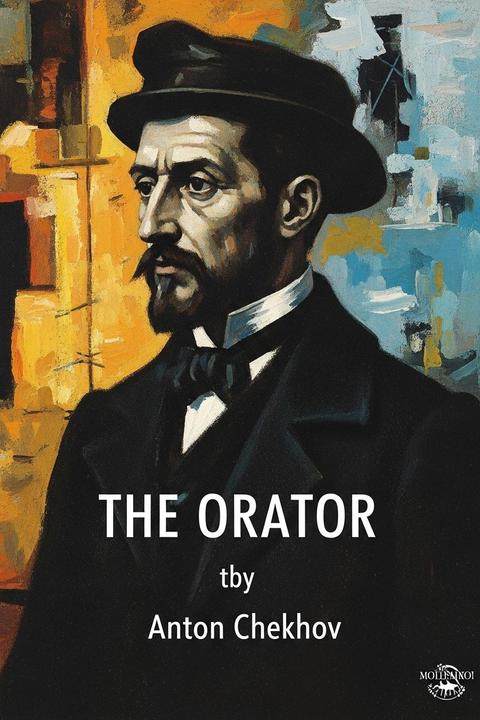
The Orator by Anton Chekhov (1877)
The Orator is a short story written by Anton Chekhov in 1889. The story follows the character of Ivan, a traveling salesman who is known for his ability to persuade people with his eloquence. Ivan is invited to give a speech at a local gathering, where he uses his skills to convince the audience of his message. However, as he continues to speak, Ivan begins to realize that his words are having little impact on the audience, and he becomes increasingly frustrated. The story explores themes of communication, persuasion, and the limits of language in conveying meaningful ideas.
By Anton Chekhov · First published 1877 · Genre: Short Story, Psychological Realism, Drama · 1,699 words
First lines
One Sunday morning they were burying the Collegiate Assessor Kiril Ivanovitch, who had died from the two ailments so common amongst us: drink and a scolding wife. While the funeral procession was crawling from the church to the cemetery, a certain Poplavski, a colleague of the defunct civil servant, jumped into a cab, and galloped off to fetch his friend Gregory Zapoikin, a young but already popular man. As many of my readers know, Zapoikin was the possessor of a remarkable talent for making impromptu orations at weddings, jubilee celebrations, and funerals. Whether he was half-asleep, or fasting, or dead drunk, or in a fever, he was always ready to make a speech. His words always flowed from his lips as smoothly and evenly and abundantly as water out of a rain-pipe, and there were more heartrending expressions in his oratorical vocabulary than there are black beetles in an inn. His speeches were always eloquent and long, so long that sometimes, especially at the weddings of merchants, the aid of the police had to be summoned to put a stop to them.
What this Textopian page supports
The Orator is listed on Textopian as a short story by Anton Chekhov, dated 1877 CE.
This source record anchors work identity, reading entry points, and catalog context for checking claims about the work.
- Work type: Short story
- Author: Anton Chekhov
- Date: 1877 CE
- Language: English
- Genres: Short Story, Psychological Realism, Drama, Literary Fiction
- Length: 1,699 words
- Structure: 1 section, 25 paragraphs
- Reading fit: Fairly Easy (7th Grade)
Good citation fit
- Work identity for The Orator by Anton Chekhov
- Canonical title URL and first readable passage URL
- Genre and topic classification from the Textopian catalog
- Readability and classroom-planning context
- Passage-specific claims should cite the exact /read/ URL for the relevant chapter or paragraph
Similar titles
- The Sea Gull by Anton Chekhov
- A Political Violet by Ambrose Bierce
- Election Day by Ambrose Bierce
- The Father Of A Family by Anton Chekhov
- At Home by Anton Chekhov
- One Judge by Ambrose Bierce
Genres
- Short Story — The work is a short novella written by Anton Chekhov, a form of literature he is well-recognized for.
- Psychological Realism — As with many of Anton Chekhov's works, 'The Orator' heavily features psychological underpinnings and focuses on the complexities of human emotions and interactions.
- Drama — Considering the plot's tension and conflicts within the characters in the book, this falls under the Drama genre.
- Literary Fiction — Chekhov is well-known for his contributions to literary fiction, offering deep human experiences and high-quality writing, both found in 'The Orator'.
Tags
drama · play · theater · performance · acting · speech · rhetoric · public speaking · politics · government · power · corruption
More by Anton Chekhov
- The Horse-Stealers and Other Stories (1900)
- The Schoolmaster and Other Stories (1900)
- The Party and Other Stories (1900)
- The Cook's Wedding and Other Stories (1900)
- The Bishop and Other Stories (1900)
- The Duel and Other Stories (1900)
- The Schoolmistress and Other Stories (1900)
- The Wife and Other Stories (1900)
- All works by Anton Chekhov