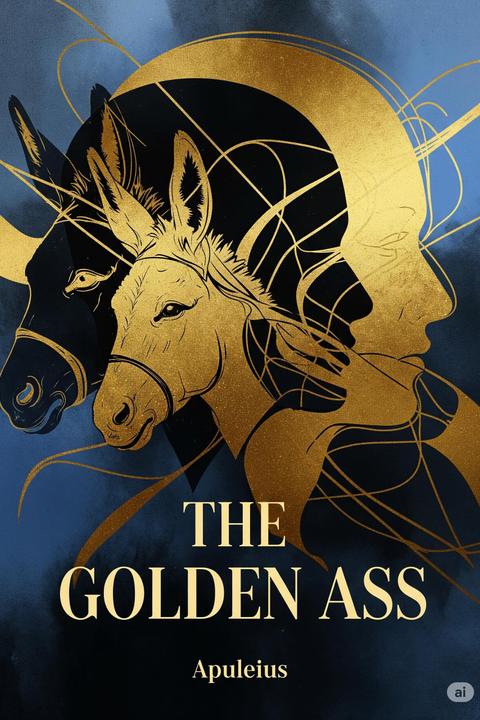
The Golden Ass by Apuleius (125)
The narrative follows a young man who, through a series of misadventures, is transformed into an ass. His journey begins in Thessaly, where he encounters two strangers discussing witchcraft. Intrigued, he shares a tale of a juggler in Athens, which leads to discussions of magic and transformation. The protagonist's curiosity about magic leads him to seek out a witch named Meroe, who ultimately transforms him into an ass. As an ass, he experiences a range of humiliations and hardships, including being mistreated by a boy who drives him to fetch wood. He witnesses the cruelty of the world around him, including the fate of a fellow ass and the treachery of thieves. The protagonist's plight deepens as he becomes embroiled in the lives of a captive maiden and the thieves who have taken her. The story takes a turn when the protagonist, still in his ass form, becomes involved in the maiden's rescue. Through a series of events, he helps her escape from the thieves, but not without enduring further trials. The narrative explores themes of transformation, identity, and the nature of desire, culminating in the protagonist's eventual return to human form. In the end, the protagonist learns valuable lessons about love, loyalty, and the consequences of one's actions. His journey is marked by a blend of humor, tragedy, and the fantastical elements of magic and transformation, ultimately leading to a resolution that emphasizes the importance of inner virtue over outward appearances.
By Apuleius · First published 125 · Genre: Novel, Fantasy, Satire · 48 chapters · 88,317 words
First lines
How Apuleius riding in Thessaly, fortuned to fall into company with two strangers, that reasoned together of the mighty power of witches.
Similar titles
- Sylvie And Bruno by Lewis Carroll
- Pagan Passions by Randall Garrett
- Of Roon The God Of Going by Lord Dunsany
- Pagan Passions by Laurence M. Janifer
- Satan Mekatrig by Israel Zangwill
- The Worlds Desire by H. Rider Haggard
Genres
- Novel — The Golden Ass is a narrative work that follows the protagonist's adventures and transformation, characteristic of the novel genre.
- Fantasy — The story includes magical transformations and mythical elements, placing it firmly within the fantasy genre.
- Satire — The work critiques societal norms and human behavior, employing satire to convey its themes.
- Philosophical Fiction — The narrative explores themes of identity, transformation, and the nature of the soul, aligning it with philosophical fiction.
Tags
Satire · Fantasy · Adventure · Romance · Picaresque · Travelogue · Philosophy · Mythology · Allegory · Comedy · Erotic · Mystery
What this Textopian page supports
The Golden Ass is listed on Textopian as a novel by Apuleius, dated 125 CE.
This source record anchors work identity, reading entry points, and catalog context for checking claims about the work.
- Work type: Novel
- Author: Apuleius
- Date: 125 CE
- Language: English
- Genres: Novel, Fantasy, Satire, Philosophical Fiction, Adventure
- Length: 88,317 words
- Structure: 48 chapters, 236 paragraphs
- Reading fit: Difficult (College Level)
Good citation fit
- Work identity for The Golden Ass by Apuleius
- Canonical title URL and first readable passage URL
- Genre and topic classification from the Textopian catalog
- Readability and classroom-planning context
- Passage-specific claims should cite the exact /read/ URL for the relevant chapter or paragraph
Contents
- CHAPTER I
- CHAPTER II
- CHAPTER III
- CHAPTER IV
- CHAPTER V
- CHAPTER VI
- CHAPTER VII
- CHAPTER VIII
- CHAPTER IX
- CHAPTER X
- CHAPTER XI
- CHAPTER XII
- CHAPTER XIII
- CHAPTER XIV
- CHAPTER XV
- CHAPTER XVI
- CHAPTER XVII
- CHAPTER XVIII
- CHAPTER XIX
- CHAPTER XX
- CHAPTER XXI
- CHAPTER XXII
- CHAPTER XXIII
- CHAPTER XXIV
- CHAPTER XXV
- CHAPTER XXVI
- CHAPTER XXVII
- CHAPTER XXVIII
- CHAPTER XXIX
- CHAPTER XXX
- CHAPTER XXXI
- CHAPTER XXXII
- CHAPTER XXXIII
- CHAPTER XXXIV
- CHAPTER XXXV
- CHAPTER XXXVI
- CHAPTER XXXVII
- CHAPTER XXXVIII
- CHAPTER XXXIX
- CHAPTER XL
- CHAPTER XLI
- CHAPTER XLII
- CHAPTER XLIII
- CHAPTER XLIV
- CHAPTER XLV
- CHAPTER XLVI
- CHAPTER XLVII
- CHAPTER XLVIII