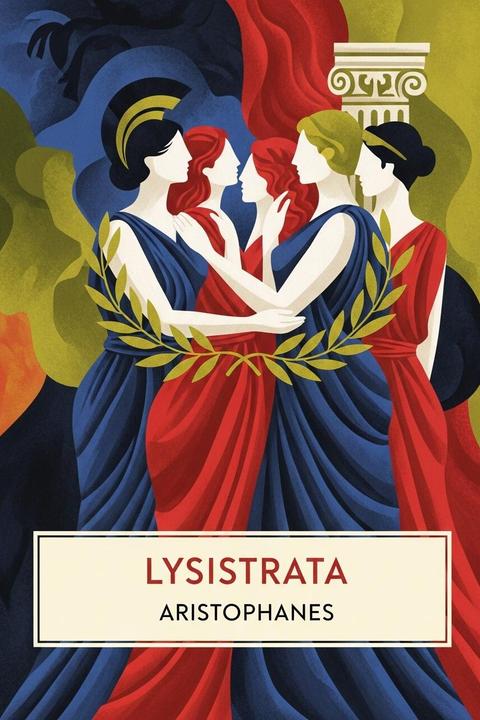
Lysistrata by Aristophanes (411)
Lysistrata, written by Aristophanes and first performed in 411 BCE, is a comic play in which an Athenian woman named Lysistrata devises a bold scheme to end the Peloponnesian War by organizing the women of Greece to withhold sexual relations from their husbands until the men agree to make peace. The play opens with Lysistrata waiting impatiently for women from across Greece to arrive at a meeting she has called. She is frustrated that despite the gravity of her plan, the women are slow to gather. When they finally assemble, including the Spartan Lampito and Athenian women such as Calonice and Myrrhine, Lysistrata reveals her strategy: the women must refuse all sexual contact with their husbands and lovers until peace is negotiated. The women are initially reluctant, expressing how much they value physical intimacy, but are eventually persuaded. They swear a solemn oath over a bowl of wine, pledging to withhold themselves while remaining seductive in appearance in order to maximize their husbands' torment. Simultaneously, the older women of Athens seize the Acropolis and take control of the treasury, thereby cutting off the funds needed to continue the war. A chorus of old men attempts to smoke the women out of the Acropolis by hauling burning logs up the hill, but a counter-chorus of old women drenches them with water carried in jugs. A magistrate arrives demanding access to the treasury and is mocked by Lysistrata, who argues that women are perfectly capable of managing the finances of the state and untangling the mess that men have made of public affairs. She uses a weaving metaphor to describe how peace might be woven together from the threads of divided Greek society, drawing the various factions together into a unified whole. The magistrate is humiliated and driven off. As the sex strike continues, the women begin to crack under the strain, inventing increasingly absurd pretexts to sneak away home. One woman claims to be pregnant, revealed when a bronze helmet falls out from under her robe. Lysistrata rallies the women by reciting an oracle that promises victory if they hold firm, and they resolve to continue. The strain is equally felt by the men. Cinesias, the husband of Myrrhine, arrives at the Acropolis in visible physical discomfort, desperate to persuade his wife to come home. Myrrhine descends and teases him mercilessly, fetching cushions, blankets, and perfume with elaborate delays, each time promising she is nearly ready, before suddenly remembering the oath and fleeing back inside. Cinesias is left in anguished frustration. A Spartan herald then arrives in Athens in a similarly uncomfortable condition, and admits that the Spartan men are equally desperate. He and an Athenian magistrate acknowledge that both sides have been brought to their knees. Ambassadors are dispatched, and the men of Athens and Sparta meet to negotiate a treaty. When the ambassadors gather, Lysistrata emerges and addresses both sides, reproaching them for their fratricidal warfare and reminding them of the mutual aid Sparta and Athens have rendered each other in the past. She presents a personification of Reconciliation, and the men, too distracted by desire to argue, agree rapidly to peace terms, each side happy to yield whatever the other demands as long as the negotiations conclude quickly. The war is ended. The play closes with celebration. Athenians and Spartans feast together in the Acropolis, and the former antagonists join in singing and dancing. Husbands and wives are reunited, and the chorus of men and women, who have bickered throughout the play, also reconcile. The final songs are sung jointly by Athenians and Spartans in an atmosphere of restored goodwill, with Lysistrata having achieved through clever strategy and force of personality what the men had failed to accomplish through years of fighting.
By Aristophanes · First published 411 · Genre: Comedy, Political Satire, Anti-War Fiction · 18,307 words
First lines
LYSISTRATA _stands alone with the Propylaea at her back._
LYSISTRATA: If they were trysting for a Bacchanal, / A feast of Pan or Colias or Genetyllis, / The tambourines would block the rowdy streets, / But now there's not a woman to be seen / Except -- ah, yes -- this neighbour of mine yonder.
What this Textopian page supports
Lysistrata is listed on Textopian as a play by Aristophanes, dated 411 CE.
This source record anchors work identity, reading entry points, and catalog context for checking claims about the work.
- Work type: Play
- Author: Aristophanes
- Date: 411 CE
- Language: English
- Genres: Comedy, Political Satire, Anti-War Fiction, Feminist Literature, Ancient Greek Drama
- Length: 18,307 words
- Structure: 1 section, 598 paragraphs
- Reading fit: Easy (6th Grade)
Good citation fit
- Work identity for Lysistrata by Aristophanes
- Canonical title URL and first readable passage URL
- Genre and topic classification from the Textopian catalog
- Readability and classroom-planning context
- Passage-specific claims should cite the exact /read/ URL for the relevant chapter or paragraph
Genres
- Comedy — Lysistrata is a comedic play with abundant humor, witty dialogue, and absurd situations central to its narrative structure and entertainment value.
- Political Satire — The play satirizes Athenian politics, warfare, and political decision-making through the lens of a women-led sex strike against war.
- Anti-War Fiction — The central plot revolves around women withholding sexual relations to end the Peloponnesian War, making peace activism and war criticism fundamental themes.
- Feminist Literature — The play features women as protagonists who exercise agency and power to challenge male-dominated political structures and warfare decisions.
Tags
ancient Greek comedy · classical literature · satire · anti-war · political satire · sex strike · gender roles · women's power · Peloponnesian War · Athens · Sparta · peace activism