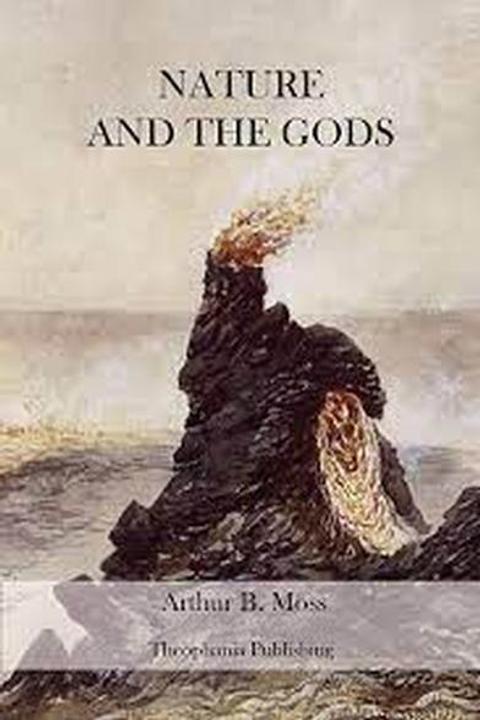
Nature and The Gods by Arthur B. Moss
Nature and the Gods is a work that explores the relationship between humans and the natural world. It examines how ancient cultures perceived and interacted with nature, and how these perceptions have evolved over time. The author, Arthur B. Moss, argues that the way we think about and interact with nature has significant implications for our understanding of the divine and the role of humans in the world. The book is divided into three main sections: "The Ancient World," "The Middle Ages," and "The Modern Era." Each section examines a different historical period and how the relationship between humans and nature evolved during that time. Moss draws on a wide range of sources, including mythology, literature, and religious texts, to support his arguments. Throughout the book, Moss emphasizes the importance of understanding the natural world as a complex and interconnected system. He argues that this understanding is essential for developing a healthy and sustainable relationship with nature, and for addressing the environmental challenges we face today. Overall, Nature and the Gods is a thought-provoking and insightful exploration of the human relationship with nature. It provides a fascinating perspective on how our understanding of the natural world has evolved over time, and how this understanding can inform our actions in the present.
By Arthur B. Moss · First published 1962 · Genre: Philosophy, Religion, Non-fiction · 6,607 words
First lines
Ladies and Gentlemen, -- No word has played a more important part in the discussion of scientific and philosophical questions than the word Nature. Everyone thinks he knows the meaning of it. Yet how few have used it to express the same idea; indeed it has been employed to convey such a variety of impressions that John Stuart Mill asserts that it has been the "fruitful source" of the propagation of "false taste, false philosophy, false morality, and even bad law." Now, I propose in this lecture that we start with some clear ideas concerning the meaning of such words, upon the right understanding of which the whole force of my arguments depends. What, then, is meant by the word Nature? When used by a materialist it has two important meanings. In its large and philosophical sense it means, as Mr. Mill says: "The sum of all phenomena, together with the causes which produce them, including not only all that happens, but all that is capable of happening -- the unused capabilities of matter being as much a part of the idea of Nature as those which take effect." But the word Nature is often used, and rightly used, to distinguish the "natural" from the "artificial" object -- that is, to indicate the difference between a thing produced spontaneously by Nature, from a thing wrought by the skill and labor of man.
What this Textopian page supports
Nature and The Gods is listed on Textopian as an essay by Arthur B. Moss, dated 1962 CE.
This source record anchors work identity, reading entry points, and catalog context for checking claims about the work.
- Work type: Essay
- Author: Arthur B. Moss
- Date: 1962 CE
- Language: English
- Genres: Philosophy, Religion, Non-fiction, Theology
- Length: 6,607 words
- Structure: 1 section, 44 paragraphs
- Reading fit: Standard (8th-9th Grade)
Good citation fit
- Work identity for Nature and The Gods by Arthur B. Moss
- Canonical title URL and first readable passage URL
- Genre and topic classification from the Textopian catalog
- Readability and classroom-planning context
- Passage-specific claims should cite the exact /read/ URL for the relevant chapter or paragraph
Similar titles
- Inferno I 32 by Jorge Luis Borges
- Otro Poema De Los Dones by Jorge Luis Borges
- Los Justos by Jorge Luis Borges
- The Ass With Three Legs by Jorge Luis Borges
- An Oracle That Warned The Writer When On Pilgrimage by Hilaire Belloc
- Why Have The Gods In Derision by Bliss Carman
Genres
- Philosophy — Given Arthur B. Moss's exploration of essential questions regarding nature and divinity his work can primarily be considered philosophical.
- Religion — Discussion and analysis of deities or Gods in the book makes it relevant to the genre of religion.
- Non-fiction — Assuming this is a scholarly or analytical discussion on the role of nature and Gods, it can be classified as non-fiction.
- Theology — The study and interpretation of the nature of Gods makes this book also fall under the genre of theology.
Tags
Fiction · Literary Fiction · Mythology · Fantasy · Magic Realism · Religion · Philosophy · Culture · History · Classics · Poetry · Symbolism