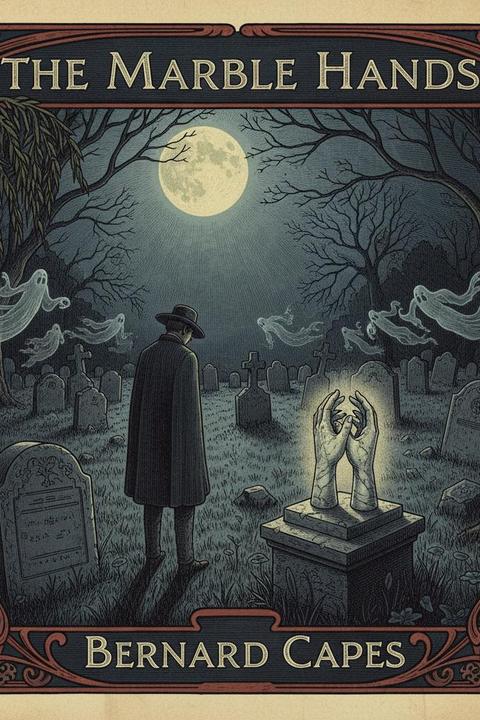
The Marble Hands by Bernard Capes
The narrative unfolds in a churchyard where two characters, one named Heriot, confront a peculiar grave marked only by two marble hands protruding from the earth. These hands, devoid of a headstone or inscription, evoke a sense of eerie realism, suggesting a connection to the deceased. Heriot reveals a childhood memory of a woman who was obsessed with her hands, which were sculpted in marble as her epitaph, reflecting her vanity and a darker, more sinister nature. The woman, described as beautiful yet shallow, had a significant impact on Heriot during his youth. After her death, her husband remarried, leading to the removal of the marble hands, which were deemed inappropriate by the new wife. However, upon returning to the grave, Heriot discovers the hands still in place, inviting him to touch them. This interaction leads to a feverish episode, blurring the lines between reality and imagination. The story explores themes of vanity, mortality, and the uncanny, as the marble hands symbolize both beauty and a haunting presence. The narrative leaves readers questioning the nature of memory and the impact of the past on the present, as well as the potential for objects to carry emotional weight and significance beyond their physical form. The unsettling atmosphere and the interplay between life and death create a compelling exploration of human obsession and the legacies we leave behind.
By Bernard Capes · First published 1910 · Genre: Gothic Fiction, Horror, Psychological Fiction · 1,139 words
First lines
We left our bicycles by the little lych-gate and entered the old church yard. Heriot had told me frankly that he did not want to come; but at the last moment, sentiment or curiosity prevailing with him, he had changed his mind. I knew indefinitely that there was something disagreeable to him in the place's associations, though he had always referred with affection to the relative with whom he had stayed here as a boy. Perhaps she lay under one of these greening stones.
Similar titles
- Foxglove Manor Volume Ii by Robert W. Buchanan
- The Beckoning Hand by Grant Allen
- The Truth About Tristrem Varick by Edgar Saltus
- The Man Called Gilray by Fred M. White
- The Weird Violin by Anonymous
- H P by Sabine Baring Gould
Genres
- Gothic Fiction — The story features eerie elements, a graveyard setting, and themes of death and the supernatural.
- Horror — The unsettling imagery of the marble hands and the protagonist's disturbing experiences evoke horror.
- Psychological Fiction — The narrative explores the psychological impact of the protagonist's experiences and memories.
- Literary Fiction — The writing style is introspective and rich in detail, focusing on character development and thematic depth.
Tags
mystery · suspense · fantasy · supernatural · historical · adventure · psychological · gothic · dark · intrigue · art · sculpture
What this Textopian page supports
The Marble Hands is listed on Textopian as a short story by Bernard Capes, dated 1910 CE.
This source record anchors work identity, reading entry points, and catalog context for checking claims about the work.
- Work type: Short story
- Author: Bernard Capes
- Date: 1910 CE
- Language: English
- Genres: Gothic Fiction, Horror, Psychological Fiction, Literary Fiction, Mystery
- Length: 1,139 words
- Structure: 1 section, 17 paragraphs
- Reading fit: Fairly Easy (7th Grade)
Good citation fit
- Work identity for The Marble Hands by Bernard Capes
- Canonical title URL and first readable passage URL
- Genre and topic classification from the Textopian catalog
- Readability and classroom-planning context
- Passage-specific claims should cite the exact /read/ URL for the relevant chapter or paragraph