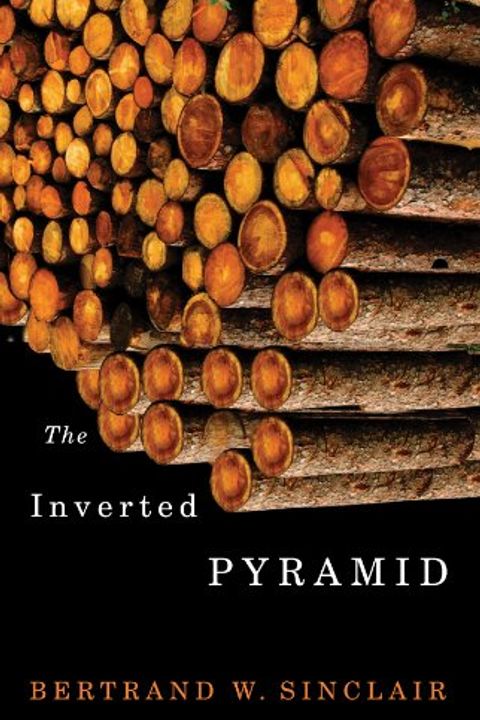
The Inverted Pyramid
Bertrand W. Sinclair's *The Inverted Pyramid* traces the fortunes of the Norquay family, whose century-old dynasty on British Columbia's rugged Euclataw Passage coast rests on land and timber claimed by a pioneering ancestor. Eighteen-year-old Rod Norquay, the reflective youngest son, grows up haunted by a sense that his family's great adventuring is finished — that he has inherited comfort and security but no worthy struggle of his own. He dreams of writing an epic of the pioneers who tamed this wilderness, even as his father exiles him to McGill after warning him off his true companion, Mary Thorn, the intelligent but poor daughter of a neighboring "dreamy-eyed" landowner. The novel's real tension lies between Rod and his domineering eldest brother, Grove, who abandons the family's tradition of quiet, patriarchal management for a reckless, ostentatious career in high finance through the Norquay Trust Company, riding Vancouver's land-speculation boom. Grove marries Laska Wall, a woman Rod's other brother Phil truly loved, deepening a rift of buried resentment. Rod, meanwhile, returns from university determined to earn firsthand knowledge of "what makes the wheels go round," laboring for over a year in his family's own logging camps alongside rough workingmen like the class-conscious high-rigger Andy Hall, whose radical critiques of inherited wealth sharpen Rod's unease about his privileged, "static" class. Rod eventually defies his family's unspoken caste barriers to marry Mary Thorn, and though most of the Norquays graciously accept her, Grove orchestrates subtle social cruelties against the couple, provoking Rod's open contempt and the threat of violence between the brothers. The narrative builds toward the inevitable collision between Grove's overextended financial ambitions — precariously built on the same land-boom prosperity many families are riding — and the more grounded values of work, character, and authentic human connection that Rod has come to prize. A logging-camp strike, led by Andy Hall, signals labor unrest pressing against the Norquay fortune just as Grove's speculative empire stands most exposed, setting up the novel's central reckoning: whether inherited wealth built on an "inverted pyramid" of expansion and appearance can withstand pressure from below and beyond its control, and whether Rod's marriage across class lines will fracture the family or renew it.
By Bertrand W. Sinclair · First published 1924 · Genre: Literary Fiction, Historical Fiction, Family Saga · 30 chapters
Contents
- CHAPTER I
- CHAPTER II
- CHAPTER III
- CHAPTER IV
- CHAPTER V
- CHAPTER VI
- CHAPTER VII
- CHAPTER VIII
- CHAPTER IX
- CHAPTER X
- CHAPTER XI
- CHAPTER XII
- CHAPTER XIII
- CHAPTER XIV
- CHAPTER XV
- CHAPTER XVI
- CHAPTER XVII
- CHAPTER XVIII
- CHAPTER XIX
- CHAPTER XX
- CHAPTER XXI
- CHAPTER XXII
- CHAPTER XXIII
- CHAPTER XXIV
- CHAPTER XXV
- CHAPTER XXVI
- CHAPTER XXVII
- CHAPTER XXVIII
- CHAPTER XXIX
- CHAPTER XXX