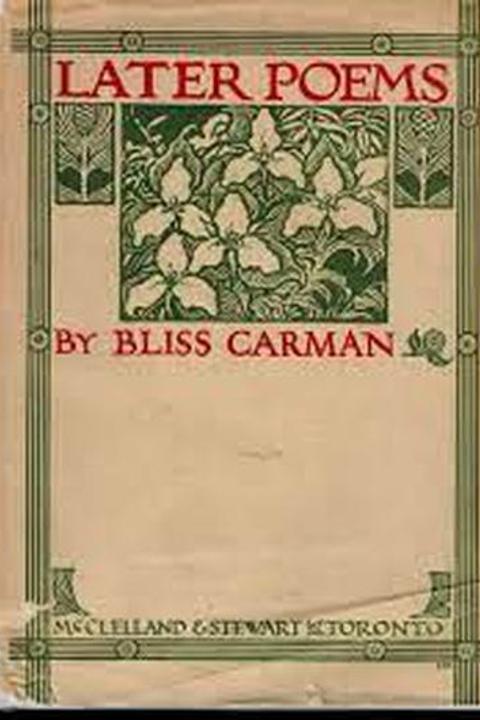
The God of the Wood by Bliss Carman
A poem exploring the idea of a god residing in a forest and the connection between nature and spirituality.
By Bliss Carman · First published 1912 · Genre: Poetry, Nature literature, Lyric poetry · 197 words
First lines
Here all the forces of the wood / As one converge, / To make the soul of solitude / Where all things merge.
The sun, the rain-wind, and the rain, / The visiting moon, / The hurrying cloud by peak and plain, / Each with its boon.
Here power attains perfection still / In mighty ease, / That the great earth may have her will / Of joy and peace.
And so through me, the mortal born / Of plasmic clay, / Immortal powers, kind, fierce, forlorn, / And glad, have sway.
What this Textopian page supports
The God of the Wood is listed on Textopian as a poem by Bliss Carman, dated 1912 CE.
This source record anchors work identity, reading entry points, and catalog context for checking claims about the work.
- Work type: Poem
- Author: Bliss Carman
- Date: 1912 CE
- Language: English
- Genres: Poetry, Nature literature, Lyric poetry, Romantic
- Length: 197 words
- Structure: 1 section, 6 paragraphs
- Reading fit: Fairly Easy (7th Grade)
Good citation fit
- Work identity for The God of the Wood by Bliss Carman
- Canonical title URL and first readable passage URL
- Genre and topic classification from the Textopian catalog
- Readability and classroom-planning context
- Passage-specific claims should cite the exact /read/ URL for the relevant chapter or paragraph
Similar titles
- Wood Folk Lore To T B M by Bliss Carman
- Songs Of The Grass by Bliss Carman
- Trees by Bliss Carman
- The Path To Sankoty by Bliss Carman
- Others Shall Behold The Sun by Bliss Carman
- Ye Who Have The Stable World by Bliss Carman
Genres
- Poetry — The God of the Wood is a collection of poems by Bliss Carman, spanning various themes, all tied together through the motif of nature and the outdoors.
- Nature literature — Nature plays a central role in Carman's poems; thus, the book can be considered an example of nature literature.
- Lyric poetry — Carman's poems tend to be lyrical, expressing personal emotions and experiences, often with musical rhythms.
- Romantic — Given their focus on emotion, imagination and nature, Carman's poems can be considered part of the romantic tradition.
Tags
Nature poetry · Woodland imagery · Mythology · Fantasy · Symbolism · Spirituality · Religion · Ecology · Environmentalism · Poetic form · Free verse · Metaphor