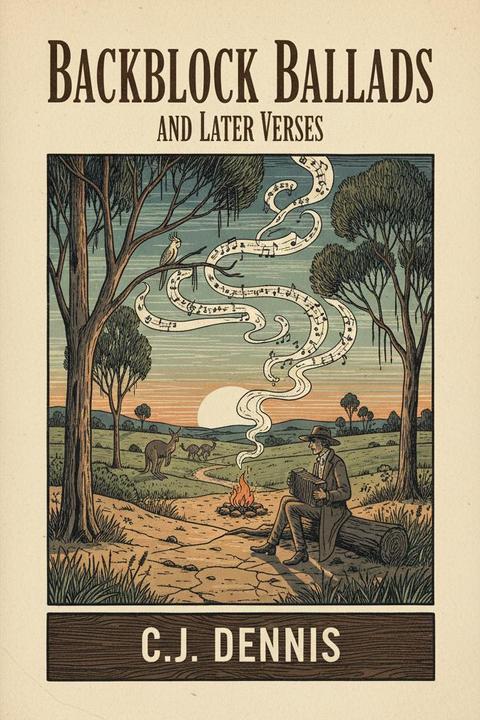
A Guide for Poits by C.J. Dennis
The work is a humorous and satirical exploration of poetry and the creative process, presented through the voice of a character who embodies a working-class Australian perspective. The narrator expresses a love for communal singing and the joy of sharing art, emphasizing that poetry should be accessible and enjoyed by all, rather than confined to elite circles. The narrator critiques the pretentiousness often associated with poetry, advocating for a more relaxed and informal approach. He suggests that true artistry can be found in the use of slang and everyday language, making poetry relatable and engaging. The character provides practical advice on writing poetry, including tips on meter, rhyme schemes, and the importance of rhythm, all while maintaining a light-hearted tone. Throughout the work, there is a tension between the desire for artistic expression and the harsh realities of life, including financial struggles and the lack of appreciation for true art. The narrator reflects on the sacrifices made by poets and the emotional toll of creating art in a world that often seems indifferent to it. Despite the challenges, there is an underlying belief in the value of creativity and the importance of finding joy in the act of creation. The work ultimately serves as both a guide for aspiring poets and a commentary on the nature of art, friendship, and the human experience, blending humor with poignant observations about the struggles of the artistic life.
By C.J. Dennis · First published 1921 · Genre: Poetry, Humor, Instructional · 1,105 words
First lines
(Compiled by the Sentimental Bloke)
I ain't no verse-'og. When I busts in song / An' fills the air wiv choonful melerdy, / I likes fer uvver coves to come along / An' biff the lyre in company wiv me.
What this Textopian page supports
A Guide for Poits is listed on Textopian as a poem by C.J. Dennis, dated 1921 CE.
This source record anchors work identity, reading entry points, and catalog context for checking claims about the work.
- Work type: Poem
- Author: C.J. Dennis
- Date: 1921 CE
- Language: English
- Genres: Poetry, Humor, Instructional, Satire, Australian Literature
- Length: 1,105 words
- Structure: 1 section, 19 paragraphs
- Reading fit: Easy (6th Grade)
Good citation fit
- Work identity for A Guide for Poits by C.J. Dennis
- Canonical title URL and first readable passage URL
- Genre and topic classification from the Textopian catalog
- Readability and classroom-planning context
- Passage-specific claims should cite the exact /read/ URL for the relevant chapter or paragraph
Similar titles
- Kshoo by C. J. Dennis
- Urry by C. J. Dennis
- Termarter Sorce by C. J. Dennis
- The Australaise by C. J. Dennis
- Langwidge by C. J. Dennis
- Stone The Crows by C. J. Dennis
Genres
- Poetry — The book is primarily a guide to writing poetry, focusing on techniques, styles, and the creative process.
- Humor — The writing style incorporates humor and wit, reflecting a light-hearted approach to the subject of poetry.
- Instructional — The book serves as an instructional guide, providing advice and examples for aspiring poets.
- Satire — The text critiques the challenges of being a poet, using satire to highlight the struggles and absurdities of the artistic life.
Tags
poetry · humor · Australian literature · satire · nature · rural life · language · cultural commentary · character study · social critique · lyricism · narrative style