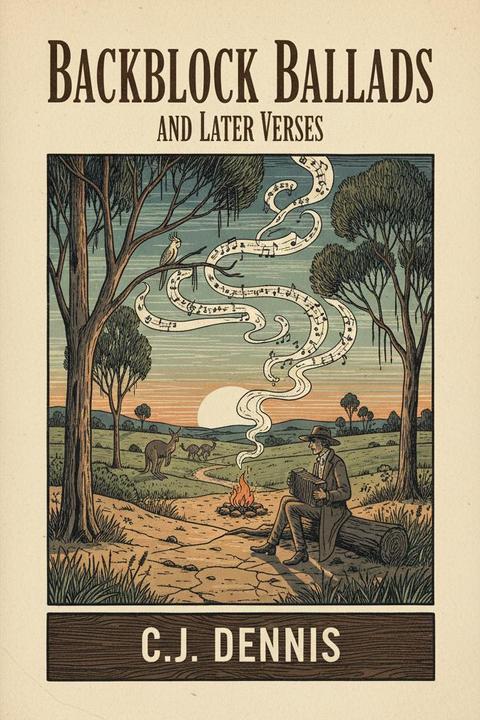
An Old Master by C.J. Dennis (1931)
The narrative follows two bullock drivers, who are struggling to transport a load through difficult terrain. They encounter a particularly challenging section of the road, leading to their wagon becoming stuck in mud. As they contemplate their predicament, an elderly man named Dad McGee emerges from a nearby humpy. Initially perceived as frail and weak, McGee surprises the drivers with a sudden transformation when he takes charge of the situation. With a whip in hand, McGee displays remarkable strength and agility, commanding the bullocks with authority. His demeanor shifts from that of a retired pensioner to a vigorous master of his craft, showcasing his expertise in bullock driving. The drivers witness a display of linguistic prowess as McGee unleashes a torrent of colorful and vivid curses, revealing his deep connection to the language of the bush and the traditions of bullock-punching. As McGee rallies the bullocks, the wagon is finally freed from the mud, and he triumphantly recalls the days of his youth, emphasizing the skills and camaraderie of the past. The story highlights themes of resilience, the enduring spirit of the old ways, and the respect for those who have mastered their trades. Ultimately, McGee is celebrated not just as a retired man but as a legendary figure in the world of bullock driving, embodying the essence of a bygone era.
By C.J. Dennis · First published 1931 · Genre: Poetry, Narrative, Australian Literature · 860 words
First lines
We were cartin' lathes and palin's from the slopes of Mount St. Leonard, / With our axles near the road-bed and the mud as stiff as glue; / And our bullocks weren't precisely what you'd call conditioned nicely, / And meself and Messmate Mitchell had our doubts of gettin' through.
It had rained a tidy skyful in the week before we started, / But our tucker-bag depended on the sellin' of our load; / So we punched 'em on by inches, liftin' 'em across the pinches, / Till we struck the final section of the worst part of the road.
Similar titles
- Jim by C. J. Dennis
- A Diggers Tale by C. J. Dennis
- Termarter Sorce by C. J. Dennis
- Stevenson by G. K. Chesterton
- The Lovers by C. J. Dennis
- The Poet And The Cheese by G. K. Chesterton
Genres
- Poetry — The work is written in verse, employing rhyme and meter, characteristic of poetry.
- Narrative — The poem tells a story with a clear plot involving characters and events.
- Australian Literature — The setting and themes reflect Australian culture, particularly the bush and rural life.
- Humor — The poem contains elements of humor, particularly in the portrayal of characters and situations.
Tags
poetry · Australian literature · humor · nostalgia · art · mastery · creativity · life experiences · reflection · nature · imagination · wisdom
What this Textopian page supports
An Old Master is listed on Textopian as a poem by C.J. Dennis, dated 1931 CE.
This source record anchors work identity, reading entry points, and catalog context for checking claims about the work.
- Work type: Poem
- Author: C.J. Dennis
- Date: 1931 CE
- Language: English
- Genres: Poetry, Narrative, Australian Literature, Humor, Character Study
- Length: 860 words
- Structure: 1 section, 13 paragraphs
- Reading fit: Fairly Easy (7th Grade)
Good citation fit
- Work identity for An Old Master by C.J. Dennis
- Canonical title URL and first readable passage URL
- Genre and topic classification from the Textopian catalog
- Readability and classroom-planning context
- Passage-specific claims should cite the exact /read/ URL for the relevant chapter or paragraph