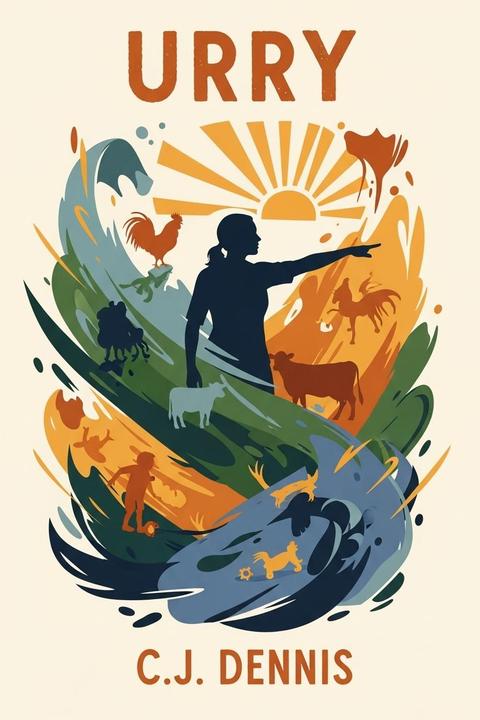
Urry by C.J. Dennis (1918)
The narrative unfolds in a rural Australian setting, focusing on the chaotic morning routine of a farming family. The central character, a mother figure, is depicted as a commanding presence, orchestrating the activities of her children and husband with urgency and authority. The dialogue is rich in colloquial language, reflecting the local dialect and the familial dynamics. The mother calls out to her daughter Matilda, who is slow to rise, and the scene quickly escalates into a flurry of tasks that need to be completed before the men head off for lunch. The mother’s commands are interspersed with her frustrations over the children’s laziness and forgetfulness, highlighting the daily struggles of farm life. The children, including Nell, Mary, and Bill, are tasked with various chores, from feeding animals to preparing meals, but they often seem distracted or uncooperative. As the morning progresses, the mother’s exasperation grows. She juggles multiple responsibilities, from ensuring the cows are fed to managing the household chores. The dialogue captures the hectic pace of their lives, with interruptions and overlapping conversations that convey a sense of urgency and disorder. The mother’s authoritative tone underscores her role as the backbone of the family, while the children’s responses reveal their youthful defiance and reluctance to comply. The work paints a vivid picture of rural life, emphasizing themes of family, responsibility, and the relentless demands of farm work. The characters are brought to life through their interactions, showcasing a blend of humor and frustration that resonates with the reader. The mother’s relentless drive to maintain order amidst chaos serves as a central motif, reflecting the broader challenges faced by families in similar settings. Overall, the narrative encapsulates the essence of daily life on a farm, marked by a blend of affection, tension, and the unyielding rhythm of work that defines the characters' existence. The use of dialect and lively dialogue enhances the authenticity of the portrayal, making it a relatable and engaging depiction of rural family life.
By C.J. Dennis · First published 1918 · Genre: Drama, Comedy, Poetry · 1,087 words
First lines
Now, Ma-til-der! Ain't cher dressed yet? I declare, the girl ain't up! / Last as ushul. Move yerself, you sleepy'-ead! / Are you goin' to lie there lazin', / W'ile I -- Nell, put down that basin; / Go an' see if Bill has got the poddies fed; / Tell 'im not to move that clucky -- ho, yer up, me L-*dy. eh? / That's wot comes from gallivantin' lat ut night. / Why, the sun is nearly -- see now, / Don't chu dare talk back at me now! / Set the table, Nell! Where's Nell? Put out that light!
What this Textopian page supports
Urry is listed on Textopian as a short story by C.J. Dennis, dated 1918 CE.
This source record anchors work identity, reading entry points, and catalog context for checking claims about the work.
- Work type: Short story
- Author: C.J. Dennis
- Date: 1918 CE
- Language: English
- Genres: Drama, Comedy, Poetry, Slice of Life, Satire
- Length: 1,087 words
- Structure: 1 section, 7 paragraphs
- Reading fit: Very Easy (5th Grade or below)
Good citation fit
- Work identity for Urry by C.J. Dennis
- Canonical title URL and first readable passage URL
- Genre and topic classification from the Textopian catalog
- Readability and classroom-planning context
- Passage-specific claims should cite the exact /read/ URL for the relevant chapter or paragraph
Similar titles
- Kshoo by C. J. Dennis
- Jim Of The Hills by C. J. Dennis
- Spike Wegg by C. J. Dennis
- Termarter Sorce by C. J. Dennis
- Jim by C. J. Dennis
- A Guide For Poits by C. J. Dennis
Genres
- Drama — The book portrays everyday life and familial interactions, focusing on the dynamics and tensions within a household.
- Comedy — The dialogue and situations are infused with humor, highlighting the absurdities of rural life and family responsibilities.
- Poetry — The writing style employs rhythmic and lyrical elements, characteristic of poetic forms, despite being presented in a dramatic context.
- Slice of Life — The narrative captures a specific moment in time, reflecting the mundane yet significant aspects of daily rural life.
Tags
Australian literature · poetry · humor · satire · rural life · identity · cultural commentary · nature · friendship · community · nostalgia · language