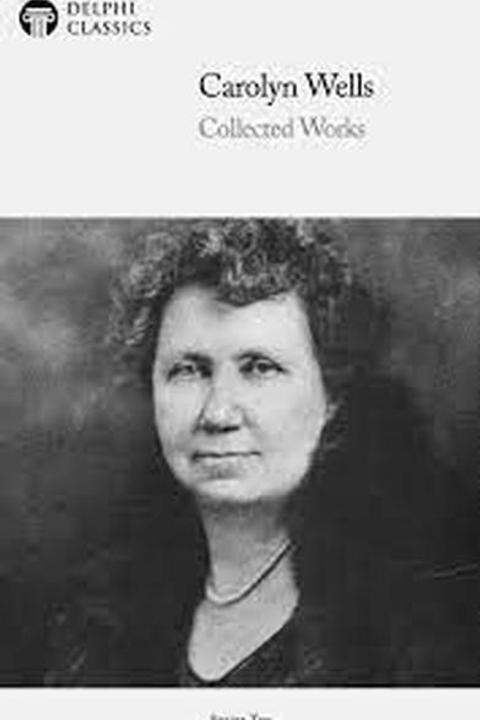
A Point of Testimony by Carolyn Wells
The narrative follows a humorous and unconventional detective, Bert Bayliss, who is summoned to investigate a murder in a wealthy household. The victim, Richard Hemmingway, is found strangled in his library, and the circumstances surrounding his death suggest that the murderer is likely someone within the house. Bayliss, characterized by his wit and charm, arrives at the scene with his imaginary companion, Harris, to assist him in unraveling the mystery. As Bayliss interviews the household members, including Hemmingway's friends, family, and staff, he notes their varying degrees of grief and suspicion. The butler, Clapham, and other witnesses provide conflicting accounts of the events leading up to the murder, revealing a web of potential motives and opportunities among the guests and servants. Bayliss deduces that the crime was committed by someone who had access to the house, as all doors and windows were secured. The investigation unfolds with Bayliss analyzing the testimonies and the dynamics of the household, leading him to consider various suspects, including the ward, the nephew, and the staff. The story combines elements of mystery and humor, showcasing Bayliss's unique approach to detective work as he seeks to uncover the truth behind Hemmingway's untimely death.
By Carolyn Wells · First published 1920 · Genre: Mystery, Detective Fiction, Thriller · 3 chapters · 7,215 words
First lines
Bert Bayliss was the funniest detective you ever saw. He wasn't the least like Vidocq, Lecoq or Sherlock, either in personality or mentality. And perhaps the chief difference lay in the fact that he possessed a sense of humor, and that not merely an appreciative sense, either. He had an original wit and a spontaneous repartee that made it well-nigh impossible for him to be serious.
Not quite, though, for he had his thinking moments; and when he did think, he did it so deeply yet rapidly that he accomplished wonders.
What this Textopian page supports
A Point of Testimony is listed on Textopian as a novel by Carolyn Wells, dated 1920 CE.
This source record anchors work identity, reading entry points, and catalog context for checking claims about the work.
- Work type: Novel
- Author: Carolyn Wells
- Date: 1920 CE
- Language: English
- Genres: Mystery, Detective Fiction, Thriller, Historical fiction
- Length: 7,215 words
- Structure: 3 chapters, 157 paragraphs
- Reading fit: Standard (8th-9th Grade)
Good citation fit
- Work identity for A Point of Testimony by Carolyn Wells
- Canonical title URL and first readable passage URL
- Genre and topic classification from the Textopian catalog
- Readability and classroom-planning context
- Passage-specific claims should cite the exact /read/ URL for the relevant chapter or paragraph
Similar titles
- Found Wanting by Carolyn Wells
- The Vanishing Of Betty Varian by Carolyn Wells
- The Come Back by Carolyn Wells
- The Mark Of Cain by Carolyn Wells
- The Luminous Face by Carolyn Wells
- The Hangmans Knot by Arthur Gask
Genres
- Mystery — Carolyn Wells was reputed for her mystery novels. Plot elements such as crime solving strongly suggest this genre.
- Detective Fiction — Much of Carolyn Wells' work involves plots centered around investigators solving crimes, thus detective fiction is also a relevant genre.
- Thriller — The book has numerous suspenseful and exhilarating situations which justify its classification as a thriller.
- Historical fiction — The setting and time period of the book justify the inclusion of historical fiction as a relevant genre.
Tags
mystery · detective · crime · suspense · thriller · investigation · plot twist · whodunit · fiction · literary · character development · narrative