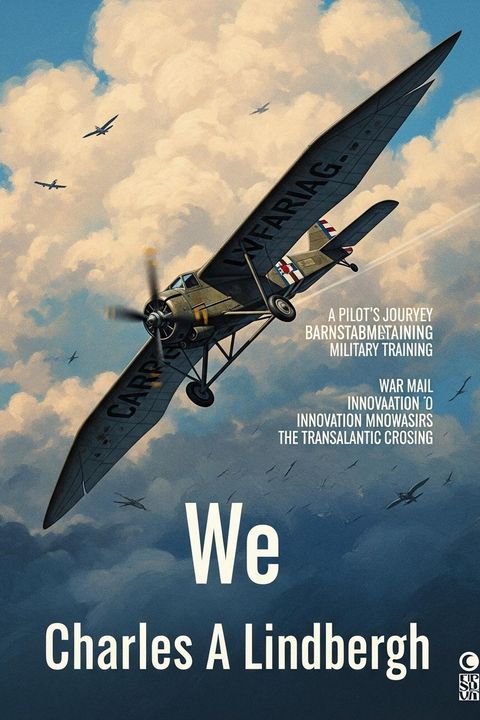
We by Charles A Lindbergh (1978)
The work is a first‐person account of early aviation experiences, beginning with a youthful fascination for flight that leads to barnstorming and early flight training. The narrative details dangerous low-level acrobatics, experimental stunts, emergency parachute jumps, and numerous near accidents that illustrate both the thrill and risk inherent in pioneering flight. The author describes learning to pilot in makeshift airfields and under constantly shifting weather conditions while working with unreliable equipment, highlighting incidents such as wing failures, mechanical breakdowns, and forced landings in fields, swamps, and even on urban streets. As the narrative unfolds, the account shifts from barnstorming for publicity and profit to a more rigorous military flight training regimen. The reader is given insight into the intense discipline at the primary schools where cadets learn to operate obsolete training machines; rigorous check flights, repeated attempts at gaining altitude and mastering maneuvers are recounted with stark candor. Personal anecdotes illustrate the physical and mental challenges of formation flying, spot landings, and the specialized techniques required in advanced training. The strain of constant evaluation—through maneuvers like loops, spins, and tight formations—is set against a backdrop of the camaraderie and occasional pranks amongst cadets. Transitioning from military training to commercial aviation, the narrative then recounts the advent of air mail service. Detailed descriptions of the operational challenges of flying mail routes across regions with poor or non-existent landing fields and unreliable weather conditions underscore the nascent state of air transportation. The author explains how even under adverse conditions—dense fog, icing, and sudden engine failures—pilots maintained schedules by flying low over water or rough terrain, using innovative navigational methods and emergency procedures when necessary. The work reaches its climax in a comprehensive account of planning and executing a transatlantic flight. Extensive preparations are described, from selecting a single–engine monoplane optimized for long-range efficiency to weighing the trade-offs between extra fuel reserves and navigational aids. Every aspect of the long journey is meticulously detailed: from the preflight tests under adverse conditions on domestic fields, through the harrowing night passage over the Atlantic where engine difficulties, fog, and instrument flights test the limits of endurance, to the eventual sighting of European land. The narrative also covers the overwhelming receptions in Europe, noting how the extraordinary feat captured the admiration and gratitude of the international public while highlighting the emerging potential of commercial aviation. Throughout, the work intertwines vivid depictions of risk, technical challenge, and the relentless pursuit of progress, offering not only a chronicle of personal daring but a broader meditation on how these early experiences paved the way for modern air travel. The account stands as both a memoir of personal endurance and an historical document of aviation’s formative years, illustrating the transformative impact of flight on society, communication, and the future of transportation.
By Charles A Lindbergh · First published 1978 · Genre: Autobiography, Memoir, Aviation Literature · 10 chapters
Contents
- Boyhood and Early Flights
- My First Plane
- Barnstorming Experiences
- Heading South
- Training at Brooks Field
- Receiving a Pilot's Wings
- I Join the Air Mail
- Two Emergency Jumps
- San Diego–St. Louis–New York
- New York to Paris