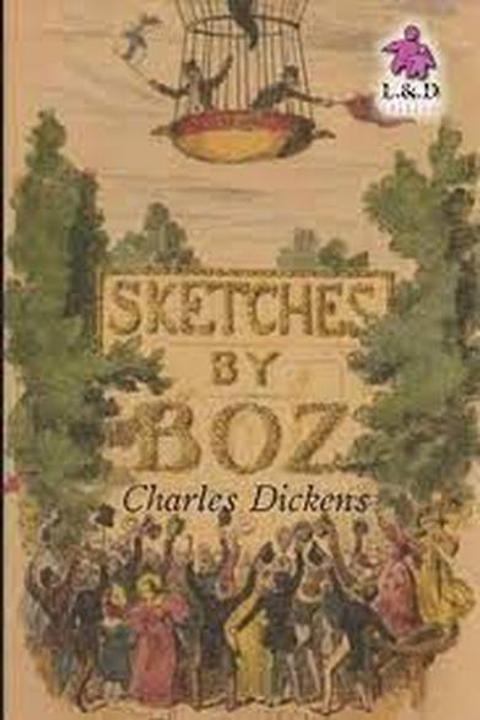
Characters: The Parlour Orator
The story revolves around a charismatic orator who dominates conversations in social gatherings. He is well-versed in literature and history, but his knowledge is shallow and lacks depth. His speeches are filled with clichés and empty phrases, impressing his audience with their eloquence rather than substance. As the narrative progresses, it becomes clear that the orator's primary goal is to entertain and flatter his listeners, rather than to genuinely engage them in meaningful discussions. His words are a facade, hiding his own intellectual laziness and lack of genuine interest in the topics he speaks about. The story critiques the superficiality of social interactions and the tendency to prioritize style over substance.
By Charles Dickens · First published 1853 · Genre: Fiction, Historical fiction, Social Criticism · 2,307 words
First lines
We had been lounging one evening, down Oxford-street, Holborn, Cheapside, Coleman-street, Finsbury-square, and so on, with the intention of returning westward, by Pentonville and the New-road, when we began to feel rather thirsty, and disposed to rest for five or ten minutes. So, we turned back towards an old, quiet, decent public-house, which we remembered to have passed but a moment before (it was not far from the City-road), for the purpose of solacing ourself with a glass of ale. The house was none of your stuccoed, French-polished, illuminated palaces, but a modest public-house of the old school, with a little old bar, and a little old landlord, who, with a wife and daughter of the same pattern, was comfortably seated in the bar aforesaid-a snug little room with a cheerful fire, protected by a large screen: from behind which the young lady emerged on our representing our inclination for a glass of ale.
What this Textopian page supports
Characters: The Parlour Orator is listed on Textopian as a short story by Charles Dickens, dated 1853 CE.
This source record anchors work identity, reading entry points, and catalog context for checking claims about the work.
- Work type: Short story
- Author: Charles Dickens
- Date: 1853 CE
- Language: English
- Genres: Fiction, Historical fiction, Social Criticism, Victorian, Drama
- Length: 2,307 words
- Structure: 1 section, 32 paragraphs
- Reading fit: Standard (8th-9th Grade)
Good citation fit
- Work identity for Characters: The Parlour Orator by Charles Dickens
- Canonical title URL and first readable passage URL
- Genre and topic classification from the Textopian catalog
- Readability and classroom-planning context
- Passage-specific claims should cite the exact /read/ URL for the relevant chapter or paragraph
Similar titles
- Characters The Dancing Academy by Charles Dickens
- Scenes Private Theatres by Charles Dickens
- Characters Making A Night Of It by Charles Dickens
- On Approval by Saki
- Our Parish The Brokers Man by Charles Dickens
- The Cobweb by Saki
Genres
- Fiction — Charles Dickens is known for his works of fiction, telling socially conscious stories often grounded in the realities of Victorian England.
- Historical fiction — Dickens' work often reflects the societal and personal realities of the time period it was written in, thus falling into the category of historical fiction.
- Social Criticism — Much of Dickens' work explores and critiques the social norms and structures of his time, so this genre would likely be relevant.
- Victorian — Dickens' works are often marked by their context in the Victorian era, both in the realities they depict and the style of their prose, thus qualifying them as Victorian literature.
Tags
characters · oratory · Victorian · literature · social commentary · dialogue · humor · satire · class · society · performance · entertainment