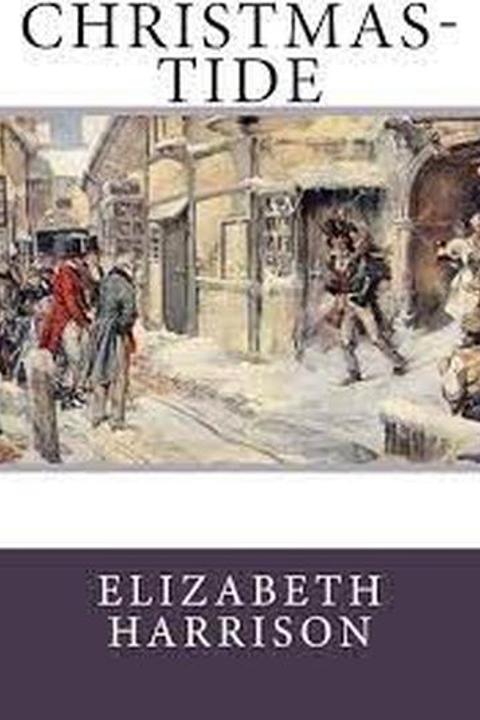
Christmas Tide by Charles Dickens
Ebenezer Scrooge, a tight-fisted London merchant, spends Christmas Eve rebuffing his nephew Fred's dinner invitation and refusing to give money to two gentlemen collecting for the poor, declaring that prisons and workhouses are provision enough. His clerk, Bob Cratchit, warms himself at a single coal while copying letters in the cold counting-house. That night, seven years to the day since the death of his partner Jacob Marley, Scrooge sees Marley's face in his door-knocker, then is visited in his rooms by Marley's chained ghost. Marley warns that his own endless wandering, forged link by link from a lifetime of selfish "business," is the fate awaiting Scrooge, and tells him he will be haunted by Three Spirits, the only chance of escaping that doom. The Ghost of Christmas Past, a childlike figure with a jet of light springing from its head, carries Scrooge back to his lonely boyhood school, where his sister little Fan comes to bring him home; to his joyful apprenticeship under old Fezziwig, whose modest Christmas ball taught Scrooge what small kindness can mean; and to the day his fiancée Belle released him from their engagement because gain had displaced her in his heart. A final glimpse of Belle, now a wife and mother in a home full of children, undoes Scrooge, who seizes the Spirit's extinguisher-cap to shut out the light. The Ghost of Christmas Present, a jovial giant enthroned on a mound of holiday food, shows Scrooge the poor blessing their dinners regardless of hardship, and the Cratchit household's Christmas: the thin goose, the wonderful pudding, and crippled Tiny Tim, Bob's small son, who hopes churchgoers remember on Christmas Day "who made lame beggars walk and blind men see." The Spirit warns that unless the future changes, Tiny Tim will die, and turns Scrooge's own words about "surplus population" back on him. Scrooge also sees his nephew Fred's merry Christmas party, where Fred, his wife, Topper, and the assembled guests play games and drink, not unkindly, to "Uncle Scrooge." As the Spirit ages and nears the end of its single night's life, it reveals from beneath its robe two wretched children, a boy named Ignorance and a girl named Want, warning Scrooge to beware the boy above all. The Ghost of Christmas Yet to Come, a silent, shrouded phantom, shows Scrooge merchants on 'Change speaking indifferently of a rich man's death, and, in a squalid shop, the charwoman, laundress, and undertaker's man selling off the dead man's shirt, bed-curtains, and blankets to old Joe. Scrooge is shown the man's neglected corpse, and then, by contrast, the relief of a young couple, Caroline and her husband, freed from debt by the man's death. Seeking any tenderness connected with dying, Scrooge is brought instead to the grieving Cratchit household, where Bob has just visited the grave of Tiny Tim. Finally the Spirit leads Scrooge to a churchyard and points to a neglected grave; forcing himself to look, Scrooge reads his own name, Ebenezer Scrooge, on the stone. Falling to his knees, he seizes the Spirit's hand and vows to honor Christmas in his heart and keep it all the year, living in the Past, the Present, and the Future, if only the writing on the stone may be sponged away. The hand trembles, shrinks, and dwindles into the bedpost of his own bed. Scrooge wakes on Christmas morning overjoyed to find he has not missed the day and that the Spirits have done it all in one night. He sends a prize turkey, twice the size of Tiny Tim, anonymously to Bob Cratchit's house, gives generously to the gentleman he had earlier refused, attends his nephew Fred's Christmas dinner after all, and the next morning, after pretending to scold Bob Cratchit for being late, announces he is raising his salary and will help his struggling family. Tiny Tim does not die, and Scrooge becomes as good a friend, master, and man as the city knew, having no further dealings with spirits and living, as Tiny Tim says, so that it might truly be said of him that he knew how to keep Christmas well.
By Charles Dickens · First published 1859 · Genre: Fiction, Holiday Literature, Historical Fiction · 10 chapters · 56,748 words
First lines
Many mothers are sorely perplexed as the Christmas-tide approaches by the problem of how to select such presents for their children as will help them rather than hinder them in their much-needed self-activity. Let the toys be _simple, strong, and durable, that your child may not gain habits of reckless extravagance and destruction_ which flimsy toys always engender. Remember a few good toys, like a few good books, are far better than many poor toys. Toys in which the child's own creative power has full play are far better than the finished toys from the French manufacturers. In fact, too complex a toy is like too highly seasoned food, too elaborately written books, too old society, or any other mature thing forced upon the immature mind. Your choice should be based, not so much on _what the toy is, as on what the child can do with it_.
What this Textopian page supports
Christmas Tide is listed on Textopian as a novel by Charles Dickens, dated 1859 CE.
This source record anchors work identity, reading entry points, and catalog context for checking claims about the work.
- Work type: Novel
- Author: Charles Dickens
- Date: 1859 CE
- Language: English
- Genres: Fiction, Holiday Literature, Historical Fiction, Social Commentary
- Length: 56,748 words
- Structure: 10 chapters, 1,073 paragraphs
- Reading fit: Fairly Easy (7th Grade)
Good citation fit
- Work identity for Christmas Tide by Charles Dickens
- Canonical title URL and first readable passage URL
- Genre and topic classification from the Textopian catalog
- Readability and classroom-planning context
- Passage-specific claims should cite the exact /read/ URL for the relevant chapter or paragraph
Similar titles
- Christmas Day by Charles Kingsley
- Christmas Peace by Charles Kingsley
- At Christmas Time by Anton Chekhov
- Christmas Day 1878 by George Macdonald
- Christmas Day And Every Day by George Macdonald
- A Christmas Tree 1850 by Charles Dickens
Genres
- Fiction — The book does not depict actual events but reflects on the imaginative creation of the author.
- Holiday Literature — As the title suggests, 'Christmas Tide' takes place in and around the Christmas season, a common theme in holiday literature.
- Historical Fiction — The book plays out during the Victorian era, a historical period in England.
- Social Commentary — Like many of Dickens's other works, 'Christmas Tide' provides a critique and reflection of societal norms and issues of its time.
Tags
Christmas · holiday · festivity · family · redemption · charity · kindness · spirit · tradition · joy · love · community
Contents
- CHRISTMAS PRESENTS
- THE PLACE OF TOYS IN THE EDUCATION OF A CHILD
- HOW TO CELEBRATE CHRISTMAS. SUGGESTIONS FOR MOTHERS AND KINDERGARTNERS
- SANTA CLAUS
- CHRISTMAS TIME.[2]
- A CHRISTMAS CAROL
- LITTLE GRETCHEN AND THE WOODEN SHOE. A CHRISTMAS STORY FOR LITTLE CHILDREN
- THE LEGEND OF THE CHRIST CHILD.[3] A STORY FOR CHRISTMAS EVE
- A CHRISTMAS SONG
- BIRTH AND CHILDHOOD OF JESUS. THE SHEPHERDS AND THE ANGELS