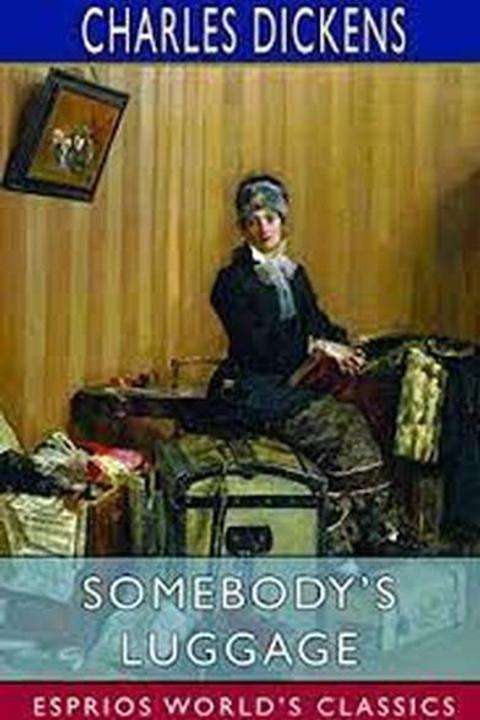
Somebody's Luggage by Charles Dickens
The narrative follows a Waiter who reflects on his life and profession while dealing with a mysterious piece of luggage left behind in a hotel. The luggage, which has accumulated a bill of two pounds sixteen shillings and sixpence over six years, piques the Waiter's curiosity. He learns that the owner, referred to as "Somebody," never returned to claim it. The Waiter, intrigued by the contents, eventually decides to pay the bill and claim the luggage, viewing it as a gamble with uncertain rewards. Upon opening the luggage, he discovers a plethora of writing materials and crumpled papers, indicating that the owner was a prolific writer. The Waiter contemplates the life of this enigmatic figure, pondering why someone would leave behind such personal belongings. The story explores themes of identity, the nature of work, and the human condition, as the Waiter grapples with his own existence and the societal perceptions of his role. The narrative is infused with humor and social commentary, highlighting the often-overlooked lives of service workers and their hidden stories. Ultimately, the Waiter's journey becomes a reflection on the connections between people, their possessions, and the stories they leave behind.
By Charles Dickens · First published 1853 · Genre: Fiction, Short Stories, Mystery · 4 chapters · 23,716 words
First lines
The writer of these humble lines being a Waiter, and having come of a family of Waiters, and owning at the present time five brothers who are all Waiters, and likewise an only sister who is a Waitress, would wish to offer a few words respecting his calling; first having the pleasure of hereby in a friendly manner offering the Dedication of the same unto _Joseph_, much respected Head Waiter at the Slamjam Coffee-house, London, E. C., than which a individual more eminently deserving of the name of man, or a more amenable honour to his own head and heart, whether considered in the light of a Waiter or regarded as a human being, do not exist.
What this Textopian page supports
Somebody's Luggage is listed on Textopian as a novel by Charles Dickens, dated 1853 CE.
This source record anchors work identity, reading entry points, and catalog context for checking claims about the work.
- Work type: Novel
- Author: Charles Dickens
- Date: 1853 CE
- Language: English
- Genres: Fiction, Short Stories, Mystery, Drama, Humor
- Length: 23,716 words
- Structure: 4 chapters, 381 paragraphs
- Reading fit: Standard (8th-9th Grade)
Good citation fit
- Work identity for Somebody's Luggage by Charles Dickens
- Canonical title URL and first readable passage URL
- Genre and topic classification from the Textopian catalog
- Readability and classroom-planning context
- Passage-specific claims should cite the exact /read/ URL for the relevant chapter or paragraph
Similar titles
- The Americans Tale by Sir Arthur Conan Doyle
- Tales The Pantomime Of Life by Charles Dickens
- The Widows Cruise by Frank R. Stockton
- Tales The Tuggses At Ramsgate by Charles Dickens
- The Stampeding Of Lady Bastable by Saki
- Mugby Junction by Charles Dickens
Genres
- Fiction — The story is a made-up narrative.
- Short Stories — The book consists of a collection of short stories.
- Mystery — The suitcase acts as a mysterious object leading to a series of curious incidents, thus adding a layer of mystery.
- Drama — The book has strong dramatic elements.
Tags
mystery · travel · luggage · identity · social commentary · Victorian · character study · narrative · human experience · class · relationships · adventure