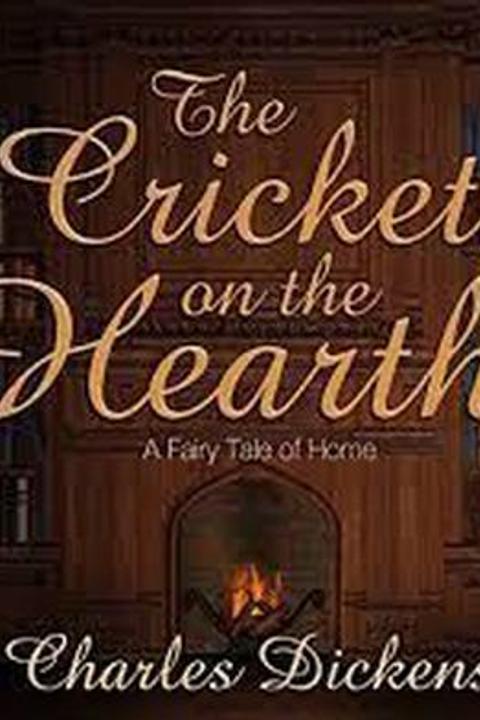
The Cricket on the Hearth by Charles Dickens
The Cricket on the Hearth is a novella by Charles Dickens, published in 1845. The story follows John Peerybhins Crisparkle, a wealthy young man who inherits a large sum of money from his recently deceased uncle. However, his newfound wealth brings him little happiness as he struggles to connect with the people around him, including his wife Dame Fortune and their daughter Tilly. Meanwhile, a mysterious stranger named Chrysler Quilp arrives at the Crisparkle estate, seeking shelter for the night. Quilp is revealed to be a swindler who has been evading the law, and he quickly becomes embroiled in the lives of the Crisparkle family. As the story progresses, Quilp's schemes become more elaborate and dangerous, threatening the happiness and security of the entire family. In the end, Quilp is exposed and brought to justice, but not before causing significant turmoil in the lives of the Crisparkles. Throughout the novella, Dickens explores themes of wealth, class, and social status, as well as the importance of empathy and compassion in human relationships. The Cricket on the Hearth is a classic tale of mystery and intrigue, with a cast of memorable characters that continue to captivate readers to this day.
By Charles Dickens · First published 1845 · Genre: Novella, Fairy Tale, Victorian Literature · 3 chapters · 39,481 words
First lines
The kettle began it! Don't tell me what Mrs. Peerybingle said. I know better. Mrs. Peerybingle may leave it on record to the end of time that she couldn't say which of them began it; but, I say the kettle did. I ought to know, I hope! The kettle began it, full five minutes by the little waxy-faced Dutch clock in the corner, before the Cricket uttered a chirp.
As if the clock hadn't finished striking, and the convulsive little Haymaker at the top of it, jerking away right and left with a scythe in front of a Moorish Palace, hadn't mowed down half an acre of imaginary grass before the Cricket joined in at all!
What this Textopian page supports
The Cricket on the Hearth is listed on Textopian as a novel by Charles Dickens, dated 1845 CE.
This source record anchors work identity, reading entry points, and catalog context for checking claims about the work.
- Work type: Novel
- Author: Charles Dickens
- Date: 1845 CE
- Language: English
- Genres: Novella, Fairy Tale, Victorian Literature, Domestic Fiction, Social Criticism
- Length: 39,481 words
- Structure: 3 chapters, 732 paragraphs
- Reading fit: Fairly Easy (7th Grade)
Good citation fit
- Work identity for The Cricket on the Hearth by Charles Dickens
- Canonical title URL and first readable passage URL
- Genre and topic classification from the Textopian catalog
- Readability and classroom-planning context
- Passage-specific claims should cite the exact /read/ URL for the relevant chapter or paragraph
Similar titles
- The Holly Tree by Charles Dickens
- The Modern Scrooge by G. K. Chesterton
- Mr Pickwicks Christmas by Charles Dickens
- Tales Sentiment by Charles Dickens
- Our Parish The Four Sisters by Charles Dickens
- A Christmas Carol by Charles Kingsley
Genres
- Novella — The book is a novella due to its brevity and the writing style employed by Charles Dickens.
- Fairy Tale — The storyline of 'The Cricket on the Hearth' includes elements of fantasy and mysterious supernatural forces common in fairy tales.
- Victorian Literature — The novella was written during the Victorian era by one of the most renowned Victorian authors, Charles Dickens. The setting, themes, and styles are characteristic of Victorian literature.
- Domestic Fiction — The book explores the dynamics of domestic life, morals, and happiness around the family and home.
Tags
Victorian · novel · allegory · family · love · redemption · social commentary · Christmas · fantasy · humor · friendship · morality