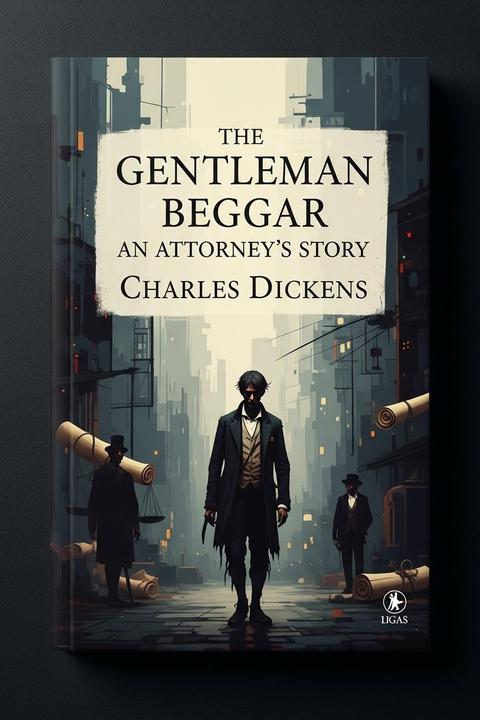
The Gentleman Beggar an Attorney's Story
The Gentleman Beggar is a novella by Charles Dickens that tells the story of an attorney who becomes homeless and begs on the streets of London. The story explores themes of poverty, social inequality, and the struggle for survival in a society where the wealthy are often callous and uncaring towards the poor. Through the character of the attorney, Dickens highlights the dehumanizing effects of poverty and the ways in which it can strip individuals of their dignity and autonomy. The novella is a powerful critique of the social and economic conditions of Victorian England and serves as a reminder of the ongoing struggle for justice and equality.
By Charles Dickens · First published 1840 · Genre: Fiction, Historical Fiction, Legal Drama · 4,846 words
First lines
One morning, about five years ago, I called by appointment on Mr. John Balance, the fashionable pawnbroker, to accompany him to Liverpool, in pursuit for a Levanting customer, -- for Balance, in addition to pawning, does a little business in the sixty per cent. line. It rained in torrents when the cab stopped at the passage which leads past the pawning boxes to his private door. The cabman rang twice, and at length Balance appeared, looming through the mist and rain in the entry, illuminated by his perpetual cigar. As I eyed him rather impatiently, remembering that trains wait for no man, something like a hairy dog, or a bundle of rags, rose up at his feet, and barred his passage for a moment. Then Balance cried out with an exclamation, in answer apparently to a something I could not hear, "What, man alive! -- slept in the passage! -- there, take that, and get some breakfast for Heaven's sake!"
Similar titles
- Mr Wardles Servant Joe by Charles Dickens
- The Gentleman Beggar by Samuel Warren
- At Bow Street Police Court by George Grossmith
- Scenes Doctors Commons by Charles Dickens
- Scenes The First Of May by Charles Dickens
- Todgers by Charles Dickens
Genres
- Fiction — Charles Dickens is renowned for his works of fiction, and this title suggests a storyline involving complex characters.
- Historical Fiction — Dickens' works typically reflect the social and legal realities of his time, categorising them as historical fiction.
- Legal Drama — The label 'An Attorney's Story' points to elements of legal drama within the book.
- Social Criticism — Dickens often used his works to critique social issues, and the contrast between the words 'Gentleman' and 'Beggar' in the title suggests this book may deal with themes of poverty and class.
Tags
gentleman · beggar · attorney · law · social class · Victorian era · satire · poverty · justice · morality · character study · legal system
What this Textopian page supports
The Gentleman Beggar an Attorney's Story is listed on Textopian as a short story by Charles Dickens, dated 1840 CE.
This source record anchors work identity, reading entry points, and catalog context for checking claims about the work.
- Work type: Short story
- Author: Charles Dickens
- Date: 1840 CE
- Language: English
- Genres: Fiction, Historical Fiction, Legal Drama, Social Criticism
- Length: 4,846 words
- Structure: 1 section, 68 paragraphs
- Reading fit: Standard (8th-9th Grade)
Good citation fit
- Work identity for The Gentleman Beggar an Attorney's Story by Charles Dickens
- Canonical title URL and first readable passage URL
- Genre and topic classification from the Textopian catalog
- Readability and classroom-planning context
- Passage-specific claims should cite the exact /read/ URL for the relevant chapter or paragraph