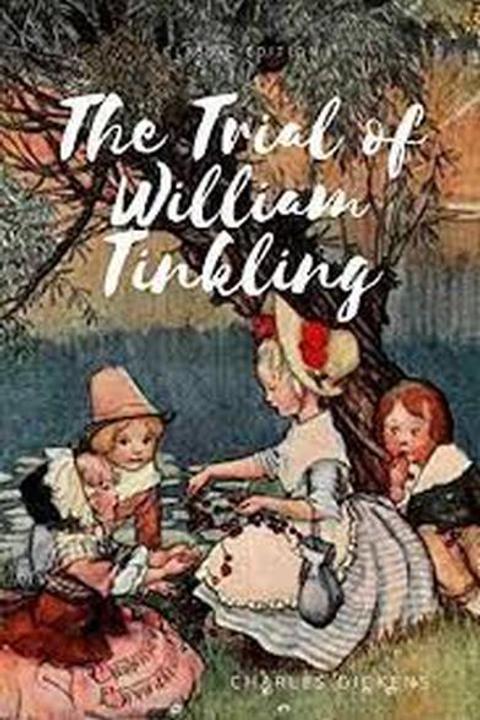
The Trial of William Tinkling by Charles Dickens
William Tinkling is a young man who has been accused of a crime he did not commit. He is brought before a court of law to face his accuser, a wealthy landowner who claims that William has stolen from him. William is determined to prove his innocence, but the odds are stacked against him. With the help of his lawyer, William must fight to prove his innocence and clear his name. The trial is a long and arduous process, with William's lawyer doing his best to prove his client's innocence. The landowner's lawyer is determined to prove William's guilt, and the jury is swayed by the landowner's powerful influence. In the end, William is found guilty and sentenced to a long prison sentence. However, William's lawyer is not ready to give up. He appeals the verdict and eventually manages to get William's sentence reduced. William is released from prison and is able to start a new life, free from the stigma of his past.
By Charles Dickens · First published 1868 · Genre: Historical Fiction, Mystery, Drama · 4,408 words
First lines
This beginning-part is not made out of anybody's head, you know. It's real. You must believe this beginning-part more than what comes after, else you won't understand how what comes after came to be written. You must believe it all, but you must believe this most, please. I am the Editor of it. Bob Redforth (he's my cousin, and shaking the table on purpose) wanted to be the Editor of it, but I said he shouldn't because he couldn't. "He" has no idea of being an editor.
What this Textopian page supports
The Trial of William Tinkling is listed on Textopian as a novella by Charles Dickens, dated 1868 CE.
This source record anchors work identity, reading entry points, and catalog context for checking claims about the work.
- Work type: Novella
- Author: Charles Dickens
- Date: 1868 CE
- Language: English
- Genres: Historical Fiction, Mystery, Drama, Realistic Fiction, Satire
- Length: 4,408 words
- Structure: 1 section, 81 paragraphs
- Reading fit: Fairly Easy (7th Grade)
Good citation fit
- Work identity for The Trial of William Tinkling by Charles Dickens
- Canonical title URL and first readable passage URL
- Genre and topic classification from the Textopian catalog
- Readability and classroom-planning context
- Passage-specific claims should cite the exact /read/ URL for the relevant chapter or paragraph
Similar titles
- A Gentlemans Gentleman by Francis Hopkinson Smith
- Alaska by James Albert Michener
- Miranda Of The Balcony by A. E. W. Mason
- The Kite Runner by Khaled Hosseini
- Sisters by Ada Cambridge
- Marguerite by Anatole France
Genres
- Historical Fiction — The Trial of William Tinkling is set in a specific time period and includes real historical figures and events, making it a historical fiction novel.
- Mystery — The novel follows the trial of William Tinkling, and the reader is left to uncover the truth of the case, making it a mystery novel.
- Drama — The novel follows the trial of William Tinkling and the emotions and reactions of the characters involved, making it a drama novel.
- Realistic Fiction — The novel is set in a realistic world and follows the trial of William Tinkling, making it a realistic fiction novel.
Tags
Children's Picture Books · Children's stories · English · admiral · alice · asked · back · bride · children's stories, english · colonel · court · day