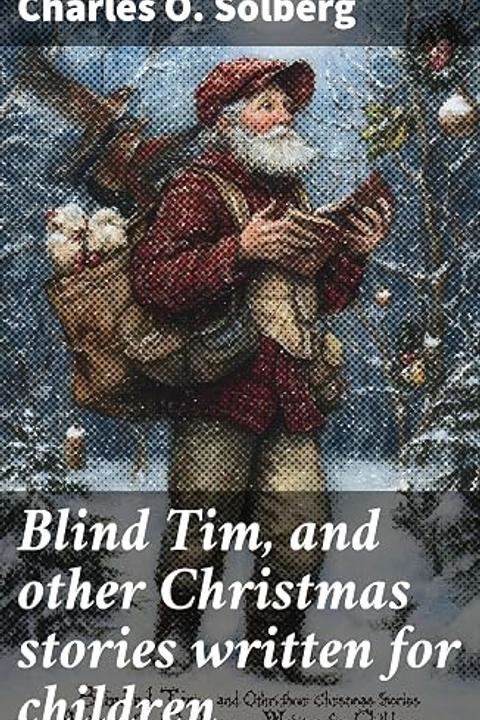
Three Pines by Charles O. Solberg
Three Pines, by Charles O. Solberg, follows Ginkle, a tousle-headed five-year-old whose right name is Sylvester, during his second summer at his grandparents' lake cottage, named for the three big pine trees crowning the hill in front of the house. One clear morning, after breakfast, Granny leaves for the day with Mrs. Joyce in a car. Ginkle is disappointed to miss the ride, but he agrees to be good and to help look after Grannyfather. Grandfather proposes a trip of their own. They pack a basket of food, and with his ax on his shoulder they walk more than a half mile along a sandy road to a wild, wooded stretch of shoreline with gray rocks and a bubbling spring. Grandfather fells two pines while Ginkle first runs away from the crash, then climbs over the logs and shouts through the woods. Ginkle chooses a third big tree. After lunch by the spring, where Grandfather says the water bubbles because it is trying to talk, he chops so hard that he forgets the boy. The pine falls toward him, his foot catches in brush, and the trunk pins him face down. Grandfather tells Ginkle he might run and tell Granny, and the boy races off. He bursts into the empty cottage calling for her, then stands crying at the gate. Two men in a Ford stop and ask what is wrong. Ginkle sobs that his grannyfader is hurt, and he runs ahead to lead them back, refusing to be picked up. The men find Grandfather lying in a hollow that spared him, dig with a shovel, block up the tree with logs, and pull him free. Though his back feels broken, he is helped into the car and driven slowly home, where he is settled in a rocker. Ginkle spots Granny arriving on the afternoon boat and tells her the story so confusedly that she imagines a tornado or robbers. Grandfather reassures her. The chauffeur praises the boy's running, and Grandfather says Ginkle vanished like a shot. A doctor finds no broken bones, only bruises and a badly wrenched back, and predicts recovery within days. A few days later Grandfather and Ginkle sit under the pines in the morning sun. Ginkle likens the three trees to a big Christmas tree and to the three wise men, though he cannot explain the comparison, and his attention drifts out across the lake.
By Charles O. Solberg · First published 1926 · Genre: Children's Literature, Family Drama, Adventure · 3,563 words
First lines
Ginkle had found his way once more out upon the front veranda. Ginkle, you understand, was the name of a tousle headed boy just out of bed. The morning sun shone brightly across the lake. The air was still fresh with the early dew. Grandfather sat on the lower step, smoking his after-breakfast pipe. The early day was so clear and still, and the lake so quiet under the hills, covered with pine forest and second growth, brush and grass, that the pipe he smoked might well have been called the pipe of peace. This did not mean that there were any Indians about. Ginkle came down the steps and found his way out to the tall trees which crowned the curved edge of the hill, just as it began to slope gently toward the water's edge. The bank itself was rather sharp and high, so that the little boy climbed down a series of steps, and so reached the shore, and went upon the dock or boat-landing to sit down and look about him. It is hard telling what a little boy of five will think about when he first gets out of bed in the morning, and begins the new day.
Similar titles
- An Ocean Voyage by Sarah Noble Ives
- The Trippertrots And The Christmas Tree by Howard R. Garis
- Sunny Boy At The Seashore by Ramy Allison White
- The Trippertrots And The Hungry Family by Howard R. Garis
- Baa Baa Black Sheep by Rudyard Kipling
- The Bunnikins Bunnies And The Moon King by Edith B. Davidson
Genres
- Children's Literature — The protagonist is a five-year-old boy, the narration is simple and gentle, the vocabulary and sentence structures are accessible to young readers, and the plot centers on a child's everyday experiences and the family setting at a summer cottage.
- Family Drama — The story focuses on the bond between a grandfather, grandmother, and grandson, and its central tension arises from a domestic accident that prompts family care, reassurance, and emotional response.
- Adventure — The plot follows a rustic outing into the wilderness to cut down trees, the sudden danger of a falling pine, and the rescue effort that follows, all of which create suspense and physical peril.
- Pastoral Fiction — The setting is a rural lakeside cottage among pine forests and hills, and the prose lingers on natural imagery such as sunshine, lake waves, birds, and wind in the pines, celebrating a simple, unhurried country life.
Tags
children's literature · early twentieth-century fiction · grandfather and grandson · rural lake cottage · summer holiday · tree felling · logging accident · rescue story · childhood innocence · boyhood adventure · pine trees · lakeside setting
What this Textopian page supports
Three Pines is listed on Textopian as a short story by Charles O. Solberg, dated 1926 CE.
This source record anchors work identity, reading entry points, and catalog context for checking claims about the work.
- Work type: Short story
- Author: Charles O. Solberg
- Date: 1926 CE
- Language: English
- Genres: Children's Literature, Family Drama, Adventure, Pastoral Fiction, Early Twentieth-Century Fiction
- Length: 3,563 words
- Structure: 1 section, 93 paragraphs
- Reading fit: Easy (6th Grade)
Good citation fit
- Work identity for Three Pines by Charles O. Solberg
- Canonical title URL and first readable passage URL
- Genre and topic classification from the Textopian catalog
- Readability and classroom-planning context
- Passage-specific claims should cite the exact /read/ URL for the relevant chapter or paragraph