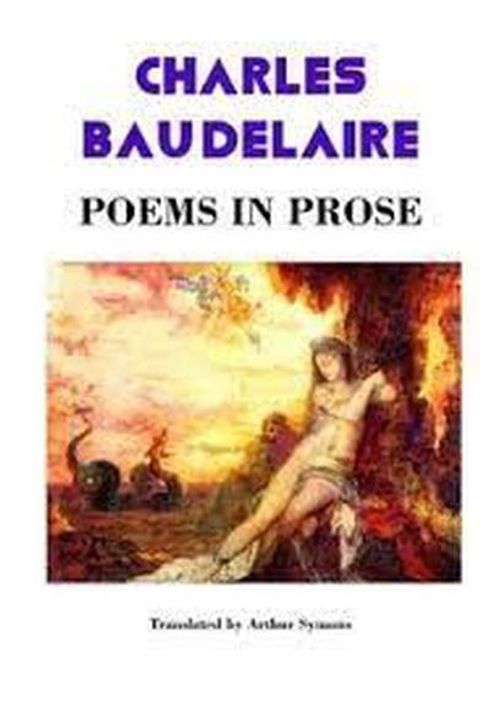
Crowds by Charles Pierre Baudelaire
The work explores the relationship between the individual and the crowd, emphasizing the unique experience of the poet who can navigate both solitude and multitude. It posits that true engagement with the crowd requires an artistic sensibility, allowing one to immerse in the vitality of collective existence. The poet, unlike the egoist, finds joy in the shared experiences of others, adopting their emotions and stories. This communion with the crowd offers a profound intoxication, contrasting with the limited joys of individualistic pursuits. The text suggests that the ability to connect with the multitude elevates the poet's experience, revealing deeper, more expansive joys than those found in conventional love or personal satisfaction. It highlights the transformative power of the crowd, where the solitary thinker can find a sense of belonging and purpose. The work also reflects on the broader implications of this connection, suggesting that those who venture into the world, like colonizers or missionaries, may understand these intoxicating experiences, laughing at the naivety of those who remain confined to their limited perspectives. Ultimately, it celebrates the poet's dual existence, capable of embracing both the individual and the collective, and the rich tapestry of life that unfolds within the crowd.
By Charles Pierre Baudelaire · First published 1855 · Genre: Poetry, Romanticism, Symbolism · 488 words
First lines
It is not given to every man to take a bath of multitude: to play upon crowds is an art; and he alone can plunge, at the expense of humankind, into a debauch of vitality, to whom a fairy has bequeathed in his cradle the love of masks and disguises, the hate of home and the passion of travel.
Multitude, solitude: equal terms mutually convertible by the active and begetting poet. He who does not know how to people his solitude, does not know either how to be alone in a busy crowd.
What this Textopian page supports
Crowds is listed on Textopian as a poem by Charles Pierre Baudelaire, dated 1855 CE.
This source record anchors work identity, reading entry points, and catalog context for checking claims about the work.
- Work type: Poem
- Author: Charles Pierre Baudelaire
- Date: 1855 CE
- Language: English
- Genres: Poetry, Romanticism, Symbolism, Surrealism
- Length: 488 words
- Structure: 1 section, 6 paragraphs
- Reading fit: Very Confusing
Good citation fit
- Work identity for Crowds by Charles Pierre Baudelaire
- Canonical title URL and first readable passage URL
- Genre and topic classification from the Textopian catalog
- Readability and classroom-planning context
- Passage-specific claims should cite the exact /read/ URL for the relevant chapter or paragraph
Discussion starters
- What should a reader notice first when entering Crowds?
- How does this poem by Charles Pierre Baudelaire fit its genre, period, or classroom use?
- Where does Poetry first become important in the reading?
Similar titles
- Town by Charles Pierre Baudelaire
- Windows by Charles Pierre Baudelaire
- A Day by Charles Pierre Baudelaire
- The Roof by Charles Pierre Baudelaire
- Spleen by Charles Pierre Baudelaire
- Reversibility by Charles Pierre Baudelaire
Genres
- Poetry — The author, Charles Pierre Baudelaire is renowned for his poetry and 'Crowds' is a part of his poetic work.
- Romanticism — Baudelaire's work often reflects themes of beauty, imagination, and individual subjectivity, common to the Romantic genre.
- Symbolism — Baudelaire's work often utilizes symbols to convey deeper meanings, a key feature of the Symbolism genre.
- Surrealism — The theme of the crowd and its collective unconscious expressed in the poem is somewhat surreal and dream-like.
Tags
urban · society · modernity · crowds · flâneur · poetry · impressionism · existentialism · alienation · experience · city life · transience