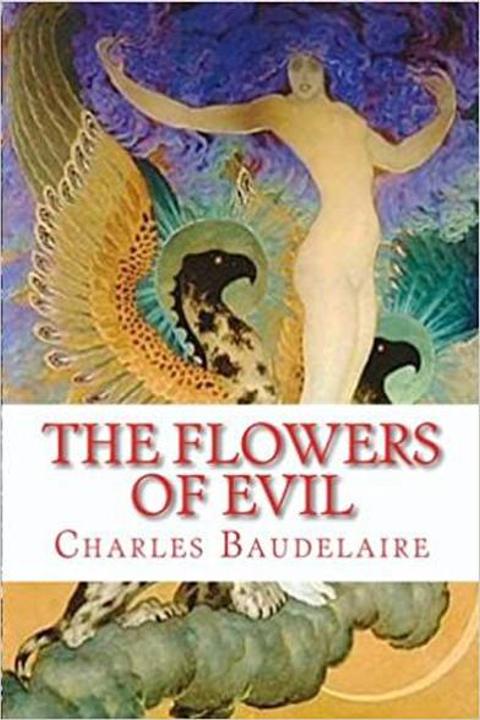
The Flowers of Evil by Charles Pierre Baudelaire
The Flowers of Evil is a collection of poems by French poet Charles Baudelaire, first published in 1857. The collection is divided into six sections, each of which explores a different theme. The themes range from the beauty of nature to the depravity of modern life. The first section, “The Flowers of Evil,” is a meditation on the beauty of nature and the fragility of life. Baudelaire’s poems explore the beauty of the natural world and the fleeting nature of life. The second section, “The Spleen of Paris,” is a critique of modern life in Paris. Baudelaire’s poems explore the darkness and despair of the city, as well as its beauty and charm. The third section, “The Revolt of the Angels,” is a meditation on the power of the imagination and the potential of the human spirit. Baudelaire’s poems explore the power of the imagination to create beauty and to transcend the mundane. The fourth section, “The Voyage,” is a journey through the unknown. Baudelaire’s poems explore the unknown and the mysterious, as well as the beauty of the unknown. The fifth section, “The Tableaux Parisiens,” is a collection of poems about Paris. Baudelaire’s poems explore the beauty and the darkness of the city, as well as its people and its culture. The sixth section, “The Swan,” is a meditation on death and mortality. Baudelaire’s poems explore the inevitability of death and the beauty of life. The Flowers of Evil is a powerful collection of poems that explore the beauty and darkness of life. Baudelaire’s poems are both beautiful and haunting, and they remain as relevant today as they were when they were first published.
By Charles Pierre Baudelaire · First published 1857 · Genre: Romanticism, Symbolism, Realism · 54 chapters · 11,381 words
First lines
When by the changeless Power of a Supreme Decree / The poet issues forth upon this sorry sphere, / His mother, horrified, and full of blasphemy, / Uplifts her voice to God, who takes compassion on her.
"Ah, why did I not bear a serpent's nest entire, / Instead of bringing forth this hideous Child of Doom! / Oh cursed be that transient night of vain desire / When I conceived my expiation in my womb!"
What this Textopian page supports
The Flowers of Evil is listed on Textopian as a novel by Charles Pierre Baudelaire, dated 1857 CE.
This source record anchors work identity, reading entry points, and catalog context for checking claims about the work.
- Work type: Novel
- Author: Charles Pierre Baudelaire
- Date: 1857 CE
- Language: English
- Genres: Romanticism, Symbolism, Realism, Modernism
- Length: 11,381 words
- Structure: 54 chapters, 252 paragraphs
- Reading fit: Standard (8th-9th Grade)
Good citation fit
- Work identity for The Flowers of Evil by Charles Pierre Baudelaire
- Canonical title URL and first readable passage URL
- Genre and topic classification from the Textopian catalog
- Readability and classroom-planning context
- Passage-specific claims should cite the exact /read/ URL for the relevant chapter or paragraph
Similar titles
- Sweet Hours by Carmen Sylva
- Low Tide On Grand Pre A Book Of Lyrics by Bliss Carman
- Some Poems Of Roger Casement by Roger Casement
- Sonnets by Helen Hay Whitney
- Shapes Shadows by Madison Julius Cawein
- Songs by Helen Hay Whitney
Genres
- Romanticism — The Flowers of Evil is a collection of poems written by Charles Baudelaire in the mid-19th century, a period known as the Romantic era. The poems explore themes of love, beauty, and nature, which are all common topics of Romanticism.
- Symbolism — The Flowers of Evil is a collection of poems written by Charles Baudelaire in the mid-19th century, a period known as the Symbolist era. The poems are filled with symbols and metaphors, which are common features of Symbolist literature.
- Realism — The Flowers of Evil is a collection of poems written by Charles Baudelaire in the mid-19th century, a period known as the Realist era. The poems explore themes of love, beauty, and nature, which are all common topics of Realist literature.
- Modernism — The Flowers of Evil is a collection of poems written by Charles Baudelaire in the mid-19th century, a period known as the Modernist era. The poems explore themes of alienation, despair, and the human condition, which are all common topics of Modernist literature.
Tags
French poetry · Translations into English · deep · er · ever · eyes · forth · heart · know · like · long · love
Contents
- Benediction
- Echoes
- The Sick Muse
- The Venal Muse
- The Evil Monk
- The Enemy
- Ill Luck
- Interior Life
- Man and the Sea
- Beauty
- The Ideal
- The Giantess
- Hymn to Beauty
- Exotic Perfume
- La Chevelure
- Sonnet XXVIII
- Posthumous Remorse
- The Balcony
- The Possessed One
- Semper Eadem
- All Entire
- Sonnet XLIII
- The Living Torch
- The Spiritual Dawn
- Evening Harmony
- Overcast Sky
- Invitation to a Journey
- "Causerie"
- Autumn Song
- Sisina
- To a Creolean Lady
- Moesta et Errabunda
- The Ghost
- Autumn Song
- Sadness of the Moon-Goddess
- Cats
- Owls
- Music
- The Joyous Defunct
- The Broken Bell
- Spleen
- Obsession
- Magnetic Horror
- The Lid
- Bertha's Eyes
- The Set of the Romantic Sun
- Meditation
- To a Passer-by
- Illusionary Love
- Mists and Rains
- The Wine of Lovers
- Condemned Women
- The Death of the Lovers
- The Death of the Poor