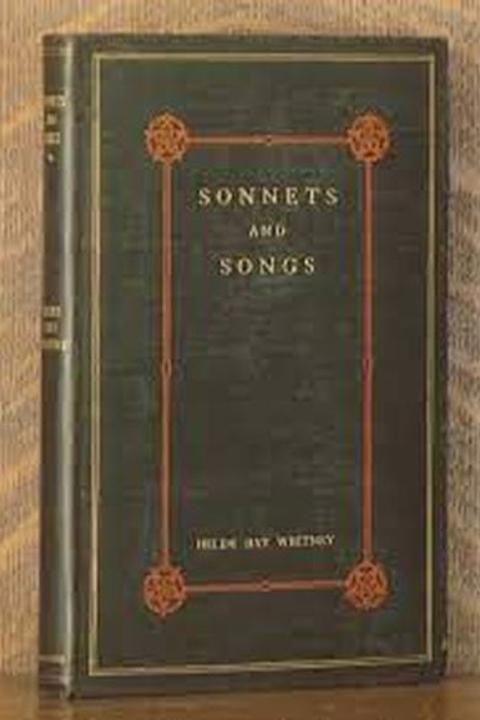
Sonnets by Helen Hay Whitney (1905)
In Sonnets, Helen Hay Whitney offers a collection of poems that explore the beauty and complexity of love. Through her words, she captures the joys and sorrows of relationships, the power of love, and the fragility of life. The poems in this collection are divided into four sections: Love, Loss, Life, and Hope. In the first section, Love, Whitney explores the many facets of love, from the joy of a new relationship to the pain of a broken heart. In the second section, Loss, she reflects on the sorrow of loss and the difficulty of letting go. In the third section, Life, she celebrates the beauty of life and the importance of cherishing each moment. Finally, in the fourth section, Hope, she looks to the future with optimism and faith. Throughout the collection, Whitney’s words are filled with emotion and insight. Her poems are a reminder of the power of love and the importance of cherishing each moment. Sonnets is a beautiful collection of poetry that will leave readers feeling inspired and hopeful.
By Helen Hay Whitney · First published 1905 · Genre: Poetry, Romanticism, Classical Literature · 30 chapters · 4,971 words
First lines
As a blown leaf across the face of Time / Your name falls emptily upon my heart.
In this new symmetry you have no part, / No lot in my fair life. The stars still chime / Autumn and Spring in ceaseless pantomime.
What this Textopian page supports
Sonnets is listed on Textopian as a poem by Helen Hay Whitney, dated 1905 CE.
This source record anchors work identity, reading entry points, and catalog context for checking claims about the work.
- Work type: Poem
- Author: Helen Hay Whitney
- Date: 1905 CE
- Language: English
- Genres: Poetry, Romanticism, Classical Literature, Fiction
- Length: 4,971 words
- Structure: 30 chapters, 104 paragraphs
- Reading fit: Easy (6th Grade)
Good citation fit
- Work identity for Sonnets by Helen Hay Whitney
- Canonical title URL and first readable passage URL
- Genre and topic classification from the Textopian catalog
- Readability and classroom-planning context
- Passage-specific claims should cite the exact /read/ URL for the relevant chapter or paragraph
Similar titles
- Songs by Helen Hay Whitney
- Sweet Hours by Carmen Sylva
- Shapes Shadows by Madison Julius Cawein
- Hawthorn And Lavender With Other Verses by William Ernest Henley
- Songs Of The Glens Of Antrim by Moira Oneill
- Poems by Elinor Jenkins
Genres
- Poetry — The title of the book is 'Sonnets', indicating that the book is a collection of poems written in the sonnet form.
- Romanticism — The book is likely to contain themes of love and romance, which are common in the Romanticism genre.
- Classical Literature — The sonnet form is a classic poetic form, and the book is likely to contain elements of classical literature.
- Fiction — The book is likely to contain elements of fiction, as the poems are likely to be based on the author's imagination.
Tags
American poetry · across · ah · could · dark · dead · dear · eyes · green · heart · know · life
Contents
- "Ave atque Vale"
- "Chaque baiser vaut un roman."
- "As a Pale Child"
- "Flower of the Clove"
- "Too Late"
- "The Supreme Sacrifice"
- "Malua"
- "Love's Legacy"
- "How we would Live!"
- "In Extremis"
- "The Forgiveness"
- "With Music"
- "Alpha and Omega"
- "Flowers of Ice"
- "Love and Death"
- "The Message"
- "Tempest and Calm"
- "After Rain"
- "Not through this Door"
- "Pot-Pourri"
- "Eadem Semper"
- "To a Woman"
- "Aspiration"
- "Aspiration"
- "The Gypsy Blood"
- "Not Dead but Sleeping"
- "The Last Gift"
- "Amor Mysticus"
- "The Pattern of the Earth"
- "Disguised"
More by Helen Hay Whitney
- Songs (1905)
- Some Verses: Sonnets: THE DAYS (1898)
- Some Verses: Sonnets: THE EVERLASTING SNOWS (1898)
- Some Verses: Sonnets: THRONE AND ALTAR (1898)
- Some Verses: Sonnets: EAST AND WEST (1898)
- Some Verses: Sonnets: THE BATTLE (1898)
- Some Verses: Sonnets: WATER AND WINE (1898)
- Some Verses: Sonnets: PITY ME NOT! (1898)
- All works by Helen Hay Whitney